Saturday, November 18, 2006

VFP Holiday Cards Available NOW!


Veterans For Peace


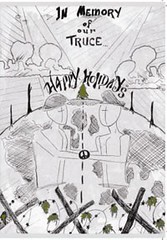
Click HERE to purchase above holiday card.


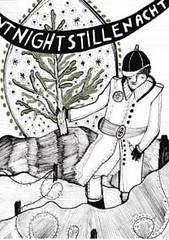
Click HERE to purchase above holiday card.


Detailed Description

VFP Holiday Card - Printed on white-linen cardstock paper, each packet contains 10 cards, 11 envelopes ($10)

Inside right of card (where holiday message goes):

The word "peace" in Hebrew, Arabic, Persian, Korean, and English


Inside Left of card reads:

Christmas Truce World War I combatants, during the 1914 holiday season, entrenched along the 500 mile front stretching from the Belgium coast to the Swiss border, overcame their conditioning to hate, loathe and kill one another, dropped their weapons, entered noman's land between their respective lines and, in spite of commanding officer's threats to charge those who would fraternize with the enemy with treason and send them to the firing squad, extended the hand of peace and goodwill. Mortal enemies became friends for a time. They played soccer, decorated Christmas trees, exchanged gifts, sang carols in their respective languages and, before being forced back behind their front lines by their officers, promised that when the shooting started again that they would fire high, harmlessly into the air. This spontaneous effort of the lower ranks to create a peace may have blossomed if it were not for the interference of their politicians and generals.

The Christmas Truce remains a moving manifestation of the absurdities of war.

"I like to think that people in the long run are going to do more to promote peace than our governments. Indeed, I think that the people want peace so much that one of these days governments had better get out of the way and let them have it."
- Dwight D. Eisenhower, US President


Back of card reads:

Veterans For Peace includes men and women veterans of all eras and duty stations, many of whom served in World War II, Korea, Vietnam, Gulf and current Iraq wars as well as other conflicts. We draw on our personal experiences and perspectives gained as veterans to raise public awareness of the true costs and consequences of militarism and war - and to seek peaceful, effective alternatives. Our collective experience tells us wars are easy to start and hard to stop and that those hurt are often the innocent.


Visit the VFP Online Store for some gift ideas also.

There are also a few links to Other Progressive Resources at this link along with link to the VFP online store for Gift Ideas.


VETERANS WORKING TOGETHER FOR PEACE AND JUSTICE THROUGH NON-VIOLENCE.

WAGE PEACE!

Veterans For Peace, 216 S. Meramec, St. Louis, MO 63105, 314-725-6005

Thursday, November 16, 2006

School of the Americas Watch

Thursday, November 16, 2006
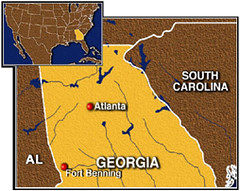
People from all walks of life from across the Western Hemisphere have begun to converge in Columbus, Georgia for the November vigil and nonviolent direct action to close the School of the Americas and to change the racist system of violence and repression that the school represents.
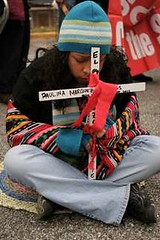


Civil rights veterans and other social justice activists who have been walking since November 12 in an historic march from Montgomery, Alabama to Columbus, Georgia, are expected to arrive here tomorrow to join the thousands who will converge at the gates of Fort Benning, Georgia. Together, we will stand in solidarity with the people in Oaxaca, Mexico, and with all the people throughout the world who have become the targets of SOA-style repression, torture and injustice. Simultaneous internationally coordinated actions against the School of the Americas and U.S. militarism in Latin America are taking place over the next three days in Argentina, Ecuador, Chile, Paraguay, El Salvador and Colombia.

Visit the SOA Watch webpage for frequent updates from the events.


Help make this weekend a success! Please donate to support the convergence and the Campaign to close the SOA: Click here

The November Vigil has grown into a massive convergence and organizing space with close to 100 side events including nonviolence trainings, a labor caucus, regional organizing meetings, counter-recruitment workshops, teach-ins with activists from Latin America and with farm workers from Florida, puppet shows, film screenings and more.
For a complete Schedule of Events, click here

In the News: Read Patrick Mulvaney's article Dismay Grows Over US Torture School that talks about the annual protest, the growing international movement to reject US military policy and the Bush Administration's decision to increase training and aid for the militaries of Latin America so as to reverse the region's leftward swing. Click here to read the article.

“I believe that unarmed truth and unconditional love will have the final word.”
– Martin Luther King Jr.


November 16, 2006: We remember 14 year old Celina Ramos, her mother Elba and six Catholic priests, professors of the University of Central America, who were murdered 27 years ago in El Salvador.
Presente!

If you haven’t made your travel plans yet, it’s not too late! Gather your friends to drive to Columbus, Georgia or check out the ride board on the SOA Watch webpage.
Plan to bring...
Please bring banners, crosses, Stars of David and other commemorative symbols for the funeral procession. On Sunday, as the funeral procession ends, we will transition into a celebration of life. Bring flowers of all kinds – fresh, plastic, paper, clot – and trumpets, drums, and conch shells for this ritual of life and resistance.

If you plan to cross the line onto Fort Benning, plan to bring $1,000 for bail money, and plan to attend the direct action preparation sessions in the convention center on Friday and Saturday nights.

During the funeral procession, there will be a space for non-arrestable actions in the center of the street for groups to reenact massacres and to create commemorative vignettes. If your group would like to be a part of one of these vignettes, please plan to attend the direct action session.

Accessibility & Interpretation
Braille programs, a wheelchair access area and sign-language and simultaneous interpretation into Spanish will be available on Saturday & Sunday at and near the stage.


School of the Americas Watch
202-234-3440|Click to subscribe
PO Box 4566
Washington, DC 20017

*****

* Argentine Torture Survivor Patricia Isasa Returns to Police Station Where
She Was Imprisoned and Abused *


Patricia Isasa was 16 years old in 1976 when she was kidnapped by Argentine
police and soldiers. She was tortured and held prisoner without trial for
two and a half years. Before she joins thousands heading to Fort Benning,
Georgia to protest what used to be called the School of the Americas, Isasa
joins us in our firehouse studio to tell her story and of her lifelong
campaign to bring her torturers to justice.
Listen/Watch/Read

Wednesday, November 15, 2006

How We Let Veterans Suffer In Lonely Silence

Iraq, Vietnam vets share the 'high cost of war' with Manhattanville students


The seminar, called "The High Cost of War," brought students, parents and the public together to hear Gerard Matthew, who served in Iraq, and Jim Murphy, who was in Vietnam, share their insights on the effects of being in combat and how it had impacted their lives.


* Out of Iraq or More Troops? A Debate on Withdrawal with Fmr. Senator George McGovern, Congressman Dennis Kucinich and AEI's Joshua Muravchik *

As leading Democrats call on President Bush to soon begin withdrawing U.S. troops from Iraq some Republicans are calling on more troops to be deployed. We host a debate on the issue with former Democratic presidential candidate and South Dakota senator, George McGovern, Ohio Congressmember Dennis Kucinich and the American Enterprise Institute's Joshua Muravchik.
Listen/Watch/Read


Mom questions Marine's death in California military hospital

The 23-year-old Camas, Wash., man was found dead Friday morning in his room at a military medical facility near San Diego, where he was undergoing treatment and evaluation for post-traumatic stress disorder.


* Battle Brewing in Congress as Bush Admin Seeks Closure of Iraq
Reconstruction Corruption Monitor *


A new battle is brewing in Congress over how the US government monitors the
billions of dollars it spends on the reconstruction of Iraq. Leading
Congressional Republicans recently passed legislation that would close the
Office of the Special Inspector General for Iraq Reconstruction. The special
agency has uncovered several cases of waste and abuse, and has helped indict
several American officials on charges of corruption.

Listen/Watch/Read


How We Let Veterans Suffer In Lonely Silence


Though the feds have spent millions of dollars and the press has devoted thousands of inches to the new Air Force Memorial in Washington, D.C., neither shows similar concern for our needy ex-combatants.


U.S. Distress Flag


Impeach than Indict

Tuesday, November 14, 2006

"What Was Asked of Us"

If any missed this, you can view with links below.

This is a Great Review with the Writer and two Veterans, one a Vietnam Vet the other an Iraq War Vet.

The book is a First Hand Account of the Iraq War by the Soldiers who Fought There, not Spin, not Propaganda

Ilona Meagher and Cho posted a Diary, over the Veterans Day Weekend, about the book and this review, that C-Span Book, were having televised over that weekend.


Bobby Muller and Garett Reppenhagen on CSPAN


CSPAN Book TV


Nov 13, 2006


What Was Asked of Us: An Oral History of the Iraq War by the Soldiers Who Fought It


Trish Wood


Watch HERE (requires Realplayer)


Description: Trish Wood talks to Iraq War veteran Garett Reppenhagen about his experiences while serving in Iraq. Ms. Wood has collected a number of testimonies from Iraq War veterans for her new oral history of the Iraq War. Bobby Muller, founder of Vietnam Veterans of America, makes opening remarks. This event was hosted by the Chicago Council on Global Affairs. If you would like to hear some of the interviews from this book, listen to C-SPAN Radio at 90.1 in the Washington, DC area or nationwide on satellite radio. You can also list online on Book TV.org or C-SPANRadio.org.


Listen to Trish Wood from American Political Archive, Nov. 11, 2006


Author Bio: Trish Wood is an investigative reporter who has been working with veterans of the Iraq war for more than two years.


Trish Woods Book: What Was Asked of Us: An Oral History of the Iraq War by the Soldiers Who Fought It

Monday, November 13, 2006

Update on Haider - Baghdad

November 13, 2006
Haider's Story
Correspondent Terry McCarthy blogs:

Haider captured our hearts at the ABC Baghdad bureau. We have been humbled to discover how many of our viewers have been similarly touched.
The 11 year-old Iraqi boy had found his father’s body, beheaded by insurgents, on the side of the road near where he lived earlier this year. Since then he has retreated into his own mind, staring into nothingness for hours on end, crying, not playing with the other kids, no longer going to school. We did a story on Haider – and others with mental damage from this war – last Friday night on World News. Since then we have received over 50 messages by phone and email from viewers offering to help Haider in whatever way they can.
This is deeply moving to us. Iraq is a country that many Americans probably feel they have heard way too much about recently, nearly all of it bad news. And yet the story of one vulnerable boy in need of help was able to transcend all that, and bring out a level of generosity and concern that is beyond anything we expected.
We have come across many moving stories in Iraq. War always produces an overflow of suffering and tragedy – the important thing for reporters is to stay alive to the human dimension, not to get lost in dehumanizing abstractions: body counts, territory won or lost… Haider captured the human dimension of this conflict for us, and also for many of you – and for that alone we are very grateful.
Iraq is not an easy country in which to dispense aid – pretty much all the charities and NGO’s who typically perform such tasks in other countries have been forced to leave Iraq, after a series of kidnappings and attacks against the UN and NGO’s back in 2003 and 2004 that left many good people dead. We are working on getting Haider some psychological counseling and making sure he and his family have the help they need to get over the tragedy they have endured. For those of you who want to contribute, we ask you to bear with us as we work out the best mechanism for getting assistance to Haider. And we thank you from the bottom of our hearts for showing us that you care for individuals in a country that is going through one of its darkest hours.

Leaving Iraq......

Jan Barry-NewsLetter


There are two ways out of Iraq—with a plan or without a clue. American
voters turned thumbs down on the White House fantasy of fighting on until
Baghdad wears the brand of the Bush ranch in Texas. The newly elected
Democratic Congress got a mandate to provide a better plan.

If Congress punts and leaves the planning to the Pentagon, the exit from
Iraq may well look like the last helicopter scramble out of Saigon. The US
military has assault plans, battle plans and more battle plans. It doesn’t
have exit plans. It still hasn’t figured out how to leave Germany or
Japan, 61 years after the end of World War II. So when it comes to Iraq,
the Pentagon doesn’t have a clue. Indeed, it never had a plan to leave.

So the Democrats have a problem. Who’s going to tell the Pentagon it’s
time to bring the troops home? Entire careers, in and out of the military,
are invested in having a war in Iraq. Billions of dollars flow into the
Department of Defense and still the military chiefs demand more—because
there’s a war on. Does Congress, even a Democratic Congress, have the
gumption to say no?

Congress, to its credit, eventually cut off funds for the war in Vietnam.
Yet the Pentagon still didn’t develop an exit plan. The last military
units scrambled out of Saigon on helicopters that whisked a clueless US
embassy staff and other frantic Americans off a rooftop. Long before that
stunning maneuver, American war planners had transformed Saigon and
environs from the Pearl of the Orient that I marveled to see as a GI in
1962-63 into the original set for the horror film “Apocalypse Now.”

That’s how Iraq has been looking for quite awhile, too. Surely there are
competent GI’s—in my day, savvy enlisted men and junior officers—who can
whip up a viable plan to pack up and leave Iraq smartly and with a sense
of pride in acknowledging that it’s time to let the Iraqis work out the
future of their country.

"Eyes Wide Open" - Charlotte NC - Veterans Day '06


The North Carolina showing of the 'Eyes Wide Open' Memorial of the Fallen of North Carolina in Iraq and Afganistan with Names on shoes and little teddy's, for the children, of some of the Innocent Iraqi's Killed!


You can view the photo's seperately HERE

Depeche Mode:

"John The Revelator"

Sunday, November 12, 2006

Invitation to Combat PTSD Book Review

Veteran’s Day Invitation

ePluribus Media’s Journal today publishes The Stories They Tell: Iraq War Vets Bear Witness, a review of author and award-winning reporter Trish Wood’s new book What Was Asked of Us: An Oral History of the Iraq War by the Soldiers Who Fought It

You are invited to read it at: ePluribus Media - Reviews

In What Was Asked of Us, Wood lets 29 young men and women who fought in and returned from the Iraq War speak without anyone spinning, packaging, cherry-picking, or pre-digesting their words. Some of the voices are convinced of America's rightness to be in Iraq; others are less sure. Some are angry; some feel guilt. And chillingly, others admit to missing the adrenaline rush of the fire fights, the "fun" of posing dead bodies for photographs--and even the killing.

"There is also a heroism in telling the unvarnished truth about war." – Bobby Muller, Vietnam veteran and co-founder of Veterans for America

Ilona Meagher, Editor
PTSD Combat: Winning the War Within
Pre-order: Moving A Nation to Care: Post-Traumatic Stress Disorder and America's Returning Troops
PTSD Combat-Insight

~~~~~~~~~~

Some Excerpts:

Davis concludes:
What makes us always right? That's what I always ask myself: America, what makes us always right? In the Christian tradition, it is very clear that if you've sinned, acknowledge your sin. And even if that's not enough, you go to your brothers and your sisters, and they help lift you up. But if you will not admit your sin, God will shine his light on it and show you. Someone's got to stand up and take the blame for this war and say. . . we're sorry (p 99).


According to a poll reported by CNN, only 37 percent of 18 -24 year old Americans polled could even find Iraq on a map. Only 12 percent could find Afghanistan. Troop reaction to this ignorance is swift and unflinching:
"It really pisses me off when people don't have an understanding of Jalal Talabani. Who's the prime minister of Iraq? Who's the president of Iraq? When did we assault Falluja? A lot of people died during those times." -- Benjamin Flanders, New Hampshire Army National Guard (p. 238).


Dominick King, a Marine who served in Falluja during the second taking of the city, provides another example of the impatience some troops have for our simplistic slogans on war and freedom:
"When we got back from Iraq, me and my friend Tabor were in the car driving to Dunkin Donuts or something in the morning, and we were at the stop sign with a car in front of us saying, 'Freedom Is Not Free,' and he just looks at me. He goes, 'Can you believe this? Freedom's not free, what has he paid?' " (pp. 230-231)


These men and women do not make their memories pretty for our consumption, and in their halting words and repetition, we can sense the depth of the horror that even now their subconscious won't let go:

"You don't want to look at your friend who's just been shot. You know, it's sort of a
hard thing to digest ... I didn't want to look at him ... You know, you just ... but once
you see it, I mean ... I mean, it's not a good expression on their face." (p.226-227).
• "I pulled the poncho liner off him, and his head was missing. He just had half --
he just had a quarter of it where the hair was and that's what was showing" (pg.167).
• "By that time, you know -- everyone -- everyone in the crew except for two died, drowned.
... I heard the pounding. ... They were pounding on the side of the tank. You could hear
them pounding on the doors" (p.245).
• "There was one little kid that was -- his whole family, mother and father, sister --
they were all killed, and he was all by himself. I kind of ... That takes a toll too. Seeing
stuff like that, especially little kids, kind of ... It bothers you. It takes a toll" (p.12).


Unlike the 63% of Americans polled who couldn't find Iraq on a map, those who finish this book will be intimate with the names of Iraq towns, provinces and the horrific battles that took place in them: Tall Afar, Kirkuk, Nasiriya, Baquba, Samarra, Karbala. Falluja. Readers will experience firefights at ground level, through the soldiers' eyes: hand-to-hand combat in cemeteries, in suburban streets, on the banks of the Tigris, the Euphrates and in the scorching desert.


He served in Iraq during an explosive period, arriving just two months before one of the bloodiest months of the war, April 2004. He was there during the kidnapping and brutal public execution of four contractors in Falluja. He was in Iraq during the second taking of the city in November of 2004. And he was in-country during the Abu Ghraib scandal, which he says hurt their collective effort:
In the first Gulf War, hundreds of Iraqi soldiers just laid down their arms and joined the American side. They surrendered. That's not happening anymore. They're fighting to the death. No Iraqi, no insurgent, wants to be captured by American forces now because they envision themselves in Abu Ghraib (p.192).