Friday, December 18, 2009

Iraq War Inquiry, Day 15, Breaks for 'Merry Christmas'

We lead off with the ending of the first part of the Chicot {British} Iraq War Inquiry, as we will shortly celebrate the day of the birth of the 'Prince of Peace' around the World, or at least that's the now myth I was taught all these years. Myth because apparently with the birth of Jesus as well as in other religious beliefs Religious Ideology is invoked and we ask to be protected and blessed by God as we all Blow Each Other Up when ever possible and when reasons can be fixed to engage our War Machines. For modern christians?, just like those of old, the religious ideology has been turned on it's head, Jesus son of God can't be a 'Prince of Peace' not to believers of who cheer on destructive Wars and Occupations of others, for any reason, as they raise the rhetoric of Intolerance, sounds exactly like the other major religious ideologies doesn't it, coming from the ones who are on the extremist fringes of them preaching their cherry picked religious quotes to justify their hate and intolerances, non religious, towards others they fear, so much for Peace!

A damning picture painted by the Chilcot inquiry

From politics to planning, the invasion of Iraq was a disastrous business

The mandarins have spoken. The first evidence-gathering session of the Chilcot inquiry into the disastrous Iraq war has come to an end after three weeks of testimony from senior civil servants, generals, diplomats, advisers and intelligence chiefs. Some of that testimony has been self-serving; an attempt to deflect blame for the shambles that occurred after the invasion. But valuable information has emerged too.

Snip

Of course we need to be sceptical of attempts by British generals and diplomats to pin the blame for the disastrous fate of the Iraq occupation on American stupidity, a line that handily absolves them of responsibility for the disaster that unfolded....>>>>>


In the above we find this sentence: "Predictions that this inquiry would yield nothing of any worth" which hasn't been the case especially if on this side of the pond and looking for the little pieces of the criminal intent puzzle, conspiracy among the players civilian and military who would give the orders for, War Crimes, never mentioned in a public forum and that fit well into what was thought and spoken by many starting before the invasion, and not only much has been proven since but none has been disproved, and over these years of the occupations of two countries not just Iraq.

Chilcot says Iraq war inquiry is not entertainment

Chairman responds to critics by says he was not out to 'ambush witnesses or score points'

The chairman of the Iraq inquiry today defended the way he has conducted the hearings, saying he was not out to "ambush witnesses or score points". He added: "We are not here to provide public sport or entertainment."

In a statement issued as he and his panel held the last session before a Christmas break, Sir John Chilcot also said he would seek the publication in the new year of highly classified documents during questioning of former and serving ministers, most notably Tony Blair....>>>>>


Waging War On The Brain: Psycho Neurological Consequences Of War

War is hell, as the old saying goes — with loss of life and limb, destruction of infrastructure and the environment, and devastating costs. Recent biomedical research has shed light on another pernicious consequence of military conflict: psychological and neurological conditions like post-traumatic stress disorder and traumatic brain injury. At the same time, researchers have worked to uncover some of the motives and meanings of war.

The 89th Annual Meeting of the Association for Research in Nervous and Mental Disease (ARNMD), organized by the ARNMD in collaboration with New York-Presbyterian Hospital/Weill Cornell Medical Center and held today at The Rockefeller University, examines the psychological and neurological aspects of war from a variety of perspectives — from the experience of a Marine colonel during wartime and a presentation on “the mind of the terrorist,” to a lecture on preventing mass violence given by Weill Cornell Medical College’s Dr. David A. Hamburg, a leading expert on genocide....>>>>>

The travails of the young war criminal

That may seem a bit harsh, for never has an alleged war criminal seemed more sincere, more open, even more innocent. As he said about his 2003 decision to involve Britain in the American invasion of Iraq in his resignation speech four years later: "Hand on heart, I did what I thought was right." But EVERYBODY does what they think is right.

They may mean pragmatically right, or morally right, or even ideologically right, but one way or another people will find ways to justify their actions to themselves: Even Pol Pot believed that his actions were justified. When people's choices lead to the deaths of others, they must eventually be judged by more objective criteria than mere sincerity. That is now happening to Tony Blair.

Snip

Yet the mere existence of the Chilcot inquiry has so shaken Blair that he has made an extraordinary admission. He admitted on December 13 that he would have invaded Iraq even if he had known at the time that the "intelligence" about weapons of mass destruction (WMD) in Iraq was wrong.

Now, I realize that you must be wondering why I am devoting all this space to a discredited ex-leader whose country once played a minor role in the invasion of a middle-sized Arab country. The war is mostly over now, the dead cannot be brought back to life, and we have lots of new things to worry about. The point is that there is a law, and they deliberately broke it. Since 1945, it has been a crime to invade another country: That was the main charge brought against the Nazi leaders at Nuremberg. The new rule was written into the United Nations Charter, principally at the behest of the U.S., and there are virtually no exceptions to it.

You have the right to defend yourself if another country attacks you, but you are not allowed to attack another country on the grounds that it has a wicked ruler, or follows policies you disapprove of, or even because you think it might attack you one of these days. No unilateral military action is permitted, and even joint action against a genuinely threatening country is only permissible with the authorization of the UN Security Council....>>>>>


That 'wicked ruler' was installed with our help and then supported for many years as he waged destruction on his own people as well as waged war on a neighbor! Those 'policies' held and practiced by that 'wicked ruler' were given a wink and a nod and excused as they were brought into the meme of helping our National Security!

More than six years later, what was the aim of invading Iraq?

Although Britain tried desperately to get some kind of authorization from the UN Security Council as a legal basis for armed action, its efforts to do so failed

Before the Iraq War was launched in March 2003 the world was given the impression by the US and Britain that the goal was to eradicate weapons of mass destruction.

Recent comments by former British prime minister Tony Blair suggest, however, that regime change was the essential aim. He would have thought it right to remove former Iraqi president Saddam Hussein even if he had known that there were no weapons of mass destruction (WMD), he said, but he would obviously have had to “deploy” different arguments.

Must we not conclude that the WMD arguments were “deployed” mainly as the best way of selling the war? Blair’s comments do not exclude a strong — but mistaken — belief in the existence of WMD even when the invasion was launched. However, given that hundreds of inspections had found no WMD and evidence had fallen apart, such a belief would have reflected a lack of critical thinking....>>>>>


Britain Under Bush: Chilcot Inquiry

In an early leading article on the Chilcot inquiry, the Guardian observed:

"What is already clear from the first week alone is that the decisions, secret or otherwise, that led to war were the product of systemic failure. Intelligence analysts, diplomats, in fact the entire machinery of the British government, proved supine against Washington's will. Under that pressure, almost everyone buckled." (Leading Article: Iraq inquiry: Dancing to American drums,' The Guardian, November 28, 2009)...>>>>>


Snip

Buckling Under Bush

Unfortunately, almost no-one had cared to study anything. Former chief UN weapons inspector, Scott Ritter, put the issue in perspective last month:

"As of December 1998, both the U.S. and Britain knew there was no 'smoking gun' in Iraq that could prove that Saddam's government was retaining or reconstituting a WMD capability. Nothing transpired between that time and when the decision was made in 2002 to invade Iraq that fundamentally altered that basic picture.

"But having decided on war using WMD as the justification, both the US and Great Britain began the process of fabricating a case after the fact. Lacking new intelligence data on Iraqi WMD, both nations resorted to either recycling old charges that had been disproved by UN inspectors in the past, or fabricating new charges that would not withstand even the most cursory of investigations."

He added:...>>>>>


Blair accused over WMD evidence

Tony Blair faced fresh accusations that he covered up evidence that Saddam Hussein had no weapons of mass destruction before invading Iraq.

The father of a serviceman killed in the conflict alleged that the former prime minister used WMD as a "way in" to the war despite being told by former UN weapons inspector Hans Blix that the weapons did not exist.

Richard Green urged members of the Iraq Inquiry to look closely at how arguments about WMD were used in the run-up to the March 2003 invasion.

His son, Royal Navy Lieutenant Philip Green, 30, from Caythorpe, Lincolnshire, was one of seven personnel killed when two Sea King helicopters collided over the northern Arabian Gulf two days after the start of the war.

Speaking at a special session of the inquiry in central London for bereaved families, Mr Green said: "It is the weapons of mass destruction that this centres upon. I believe that Blair used this as a way in. He couldn't do it with regime change because that would not have been allowed."...>>>>>


Witnesses for the prosecution: how Blair is suffering trial by Chilcot

As the Iraq inquiry pauses for the Christmas break, Michael Savage reviews the growing evidence against the former PM

Yet, as its first four weeks of public hearings draws to a close, Sir John Chilcot's inquiry into the decision to invade Iraq has already exposed a string of failings within the British Government during the 70 hours of testimony given by the 38 witnesses that have appeared so far. One theme has emerged above all others.

"This time, in contrast to previous inquiries, where it becomes essential, they are prepared to leave Blair in the firing line,"

Snip

Though Mr Blair has been left exposed by his decision to back the US-led invasion, the early weeks of the inquiry have laid bare that both he and his Government were given precious little influence in return. Sir Christopher Meyer, the former ambassador in Washington, said Britain had gained almost nothing, save for the "applause factor" it garnered Mr Blair and British diplomats. "It is wonderful stuff being applauded wherever you go," he said. "I said to London, 'The key thing now, quite apart from Iraq, is to translate this popularity into real achievements'. We failed."

Snip

Five questions that Blair needs to answer

* When did he decide that he would back the US in any military action? Was it as early as his meeting with President Bush in April 2002?

* Does he accept that his foreword to the September 2002 dossier, which said that Saddam Hussein's possession of WMD was "beyond doubt", was overstated?

* Why did he appear to throw away the influence he had over President Bush as his main ally in the war?

* Why did he not delay the invasion after the warning from Maj Gen Tim Cross, two days before the invasion, that post-war planning wasn't ready?

* Did he receive any intelligence that contradicted his claims in the 2002 September dossier on Iraq's WMD? It's alleged that he did in March 2003...>>>>>


Former PM 'will give evidence in public'

Speaking at the end of the first session of public hearings, Sir John also said that "most witnesses" had been "open and candid". Sir John Scarlett, the former head of MI6, has been accused of being misleading over the reliability of intelligence on Iraq.

He attempted to quash speculation that Mr Blair would be allowed to give evidence behind closed doors. "Evidence will only be heard in private in the narrow circumstances we have set out in the protocols on our website," he said. "But I would like to be absolutely clear about this – evidence sessions with key decision-makers, including the former Prime Minister, will be in public."

The hearings will resume in the New Year, when Mr Blair, Geoff Hoon, former Defence Secretary, and Clare Short, former International Development Secretary, will appear....>>>>>


Sir John Chilcot's closing statement, 17 December 2009

The Inquiry has now completed its first four weeks of public hearings, examining 38 witnesses over 23 sessions. Since July we have received more than 40 thousand Government documents (more than 12,000 from No.10 alone); and have held two public seminars, six meetings with families and veterans with a further one tomorrow.

This is no more than the end of the beginning. We expect to hold five more weeks of public hearings in the New Year: a further week to complete the narrative, covering the period 2007 to 2009, and then four weeks in January and February with the most senior decision-makers. This will mark a new phase to this round of public hearings but in subject matter we will be returning to examine more closely many of the issues that have been raised in the past few weeks....>>>>>


Watch the Inquiry Live when in Session

Written Transcripts by Date

Oral: The Video's by Date

See how the Inquiry is unfolding on the Sky News Timeline

BBC Iraq inquiry - day by day timeline of evidence given

Merry Christmas to those who celebrate the Birth of The Prince of Peace, not of War, and Holiday Wishes to others who actually not only believe in but try to live their lives by the ideologies of their religious beliefs and not the fanaticism of extremist religious ideology under the recognized main religions on this planet, Peace and Tolerance to All!!

For You 'wacky!' 'fundy!' christian's?

Of the late 20th and now 21st century, under the politically correctness of the day and season of 'Merry Christmas', the Crucifixion thus the Cross Have Nothing To Do With The Celebration of the 'Birth' of Christ!!!

Thursday, December 17, 2009

Angry 'Stop-Loss' Hip Hop Song=Jail

Marc Hall jailed for angry 'Stop-Loss' Hip Hop song

By Courage to Resist. Updated 16, 2009

Stop-lossed Army Specialist Marc Hall (aka Hip Hop artist Marc Watercus) was placed in the Liberty County Jail Friday, December 11 for speaking out against the continuing policy that has barred him from exiting the military, including recording an angry and explicit song. He was shipped off to jail after talking to to his Ft Stewart, Georgia commander Captain Cross about not wanting to redeploy...Who To Contact to Help Marc Out

Iraq War Inquiry, Day 14 {With an Article Change Note}

Drip, drip, drip............... more from the faucet of recent history coming out from across the pond. When following this Inquiry, especially in viewing, insert American faces of those known from the cheney/bush administration and multiply the known and unknown ten, twenty, thirty..........times as they were the ringleaders and intelligence manipulators seeking justification to invade and destroy an innocent people and their country.

Just think how long before the Brits found out about the following did our administration and probably many in the 'lockstep rubber stamping congress' know:

Brits 'knew of abuse at Abu Ghraib', says MI6 boss

Britain knew about abuse of Iraqi prisoners, the MI6 boss said yesterday.

Sir John Sawers told the Iraq inquiry UK officials learned of "difficulties" at Abu Ghraib jail in mid-2003. But he said the scale of mistreatment by US troops was "way beyond" what they expected.

He added: "The revelations were definitely a shock to us, as they were to everybody on the American side as well as across the world....>>>>>


MI6 chief reveals advance warning of Abu Ghraib problems

British officials were aware of possible violence against Iraqi detainees in Abu Ghraib prison almost a year before revelations of torture and abuse finally emerged, the head of MI6 has revealed.

Sir John Sawers said that poor conditions and possible violent mistreatment of inmates by the US troops running the prison were known within months of the invasion in March 2003. It was not until the Spring of 2004 that cases of physical, psychological and sexual abuse were exposed publicly.

Snip

However, he insisted that the extent of the abuses that eventually came to light were “way beyond” anything that British officials in Iraq had imagined. “We knew of difficulties in the conditions for detainees dating back to June, July of 2003,” said Sir John, who arrived in Baghdad in May 2003 to represent Tony Blair in the Iraqi capital. “But the revelations at Abu Ghraib were definitely a shock to us, as they were to everybody on the American side as well as across the world.”

He added: “We thought the basic problems were about poor conditions and possibly unnecessary violence, but Abu Ghraib was an extra dimension.” Eleven US soldiers were convicted of committing abuses against prisoners within the facility. Two soldiers were sentenced to ten years and three years in prison.

Sir John said that the high-profile inquiry in 2004 into the torture claims at Abu Ghraib marked the low point for the British team working to try to rebuild Iraq after the invasion. “It was then that we realised the scale of the task that was ahead of us and the need to really put our heads down and be in it for the longer term because the insurgency and the violence was clearly not at a peak,” he said. “The Abu Ghraib issues just added another nasty twist to the difficulties that we faced.”...>>>>>


This was already known, and spreading, in Iraq! Any atrocity, any perceived atrocity is known about and word spreading quickly in any occupied country. This not only causes some in these occupied countries to pick up arms and join the fight but it raises the support of the population to that fight keeping an insurgency against an invading occupying force alive and growing. These incidents, while hawks and especially those not willing to serve cheer them on, they bring on devastating blowback of killing and maiming of the soldiers ordered into these theaters and most trying to stabilize and help the innocent people. One incident causes any steps forward to be quickly erased and not forgotten moving any good back into the negatives, many incidents greatly compound the death and destruction.

Every decade or so it seems a few come along and think they're going to do War and Occupation better then any previous actions carried on by megalomaniacs of power and wealth:

Tony Blair might have been put off Iraq war by violent aftermath, says adviser

{Note From the Guardian: This article contained a mistake by the Guardian, which they have now corrected. It attributed incorrectly a quotation to Nigel Sheinwald. As the Guardian explain on their website: "This article was amended on Thursday 17 December 2009. We quoted Sir Nigel Sheinwald as saying Britain was concerned about the prospect of "US marines going in with all guns blazing". In fact he did not use that phrase: it came from a question posed to him by Sir Lawrence Freedman, a member of the Chilcot inquiry. This has been corrected." See Here}

Government shocked by level of post-war violence

Inquiry asks if invasion hurt Britain's reputation

The Blair government might not have invaded Iraq had it envisaged the scale of violence it might provoke, Sir John Sawers, the head of MI6 and former adviser to the prime minister, said today.

Very few observers predicted the violence produced by a combination of jihadists, former Ba'athist officials who had melted away immediately after the invasion, and Shia extremists supported by Iraq, he told the Chilcot inquiry.

"Frankly, had we known the scale of the violence, it might well have led to second thoughts about the entire project," said Sawers. "It was not thought through."

Sawers, who was an adviser to Tony Blair and spent three months as Britain's special envoy in Baghdad in 2003, said the only person he could think of who got it right was Egyptian president Hosni Mubarak, who warned the conflict would create "100 new Bin Ladens".

Snip

There was concern that the US would exacerbate Sunni and Shia insurgencies in both the centre and south of Iraq. The issue was "one of the key things" on the agenda of Blair's agenda at a meeting with George Bush in the US in April that year, Sheinwald told the Chilcot inquiry. It was known, and reported, at the time, that defence chiefs urged Blair to warn Bush of the consequences of US attacks on Falluja, including the use of white phosphorus {my highlight}.

According to previously leaked documents about the April 2004 White House meeting between the two leaders, Bush was so angry about attacks on US soldiers that he allegedly suggested that the offices of the Arabic satellite TV station al-Jazeera should be bombed.

Snip

Referring to the abuse of Iraqi detainees by US soldiers, he added: "The Abu Ghraib issues just added another nasty twist to the difficulties that we faced." As for Britain's role in occupying southern Iraq, Sawers told the inquiry: "We had no plan for handling Basra when we went in"....>>>>>


One needn't have gone back in history to far of the powerful against weaker thought of foes, the Afghan/Soviet debacle, to see what results when invading and not quickly stabilizing and working towards re-building to see what develops. And as the leading power of might bringing in others to be the backups, us here in the United States, have our own very recent history who's lessons were ignored and those welding the push to war this time didn't serve in with many of us. We saw what was to come why didn't they!

Iraq inquiry – live

Two of Tony Blair's foreign policy advisers and the former Ministry of Defence policy director give evidence to the Chilcot inquiry

5.27pm: There are a couple of other quotes that are worth putting up in full. They are from the exchange at 3.41pm. At one point Sawers read out a passage listing the objectives the government had set itself for Iraq in early 2003.

A stable, united and law-abiding Iraq, within its present borders, cooperating with the international community, no longer posing a threat to its neighbours or international security, abiding by all its international obligations and providing effective, representative government, sustainable economic growth and rising living standards for all its peoples.


Sawers said Iraq had achieved those goals.

But Chilcot disagreed. He told Sawers:

The picture that is painted in that statement of objectives is not, I think, what you would find in Iraq today.


5.19pm: Here's what Chilcot said at the very end of the hearing.

I think we have talked a lot about potential, if not final judgements, at any rate provisional judgements about the whole six years. And I think the committee itself is extremely ... aware of the casualty list, the blood. Treasure you can rebuild. Blood you can't get back. I don't know whether at this stage we shall come to the kind of final judgement that these last questions have raised. This may be the first draft of history. But we are conscious throughout of that cost that has been incurred by humankind. I think I'll close with that.


Very curious. What does he mean by that? It didn't sound like a ringing endorsement of the war to me ....>>>>>


Scarlett accused of misleading inquiry

Former MoD expert contradicts claim that Iraq evidence was reliable

Britain's former spy chief has misled the Iraq inquiry by exaggerating the reliability of crucial claims about Saddam Hussein's ability to launch weapons of mass destruction, according to the leading Ministry of Defence expert who assessed the intelligence behind the decision to go to war.

Sir John Scarlett, who was responsible for drafting the Government's controversial 2002 dossier outlining the case for invading Iraq, claimed last week that intelligence indicating Iraq possessed missiles that could be launched within 45 minutes was "reliable and authoritative". But Scarlett's evidence is contradicted by the most senior WMD analyst who saw the original intelligence. Brian Jones said that it was vague, inconclusive and unreliable....>>>>>


Now Blair's key Iraq war aides desert him: Spy chief and top envoy tell inquiry of their doubts

The head of MI6 and Britain's top diplomat yesterday refused to back Tony Blair's assertion that the war in Iraq was worth the human and financial cost.

In testimony to the Chilcot Inquiry, spymaster Sir John Sawers and Sir Nigel Sheinwald, Britain's ambassador in Washington, both admitted they now agonise over whether the UK should have joined the invasion.

They warned that, in doing so, Britain had damaged its reputation around the world.

Snip

Sir John was forced to correct evidence that he gave last week after the panel made clear that his claims were disputed by official documents.

He admitted that the Department for International Development was 'not substantially involved' in Iraq policy in the two years before the war after denying claims from aid officials on Friday....>>>>>


Civil servants intent on evading all responsibility

Chilcot has heard a litany of excuses. Officials are out to blame others

Whatever else the Chilcot inquiry does – and I still believe it won't be much – it will at least have served to remind people just what a disastrous exercise the whole invasion of Iraq was and how Tony Blair must carry the personal responsibility for it. In overall terms the evidence so far has changed little of the picture we already knew. But in testimony after testimony of the players involved it has filled out the picture of war that was fought on the flimsiest of excuses, conducted with the minimum of preparation and pursued in blithe disregard for its consequences.

Which is why, of course, Tony Blair is apparently so furious that Chilcot has rained on his parade just as he was hoping to become President of Europe. And it is why presumably he has chosen to come out and say in a BBC interview last Sunday what we had all suspected but never quite believed would come out in the open – that he was determined on regime change in Baghdad come what may and that, if he hadn't had weapons of mass destruction as a reason, he would have found another....>>>>>


Scarlett will be asked to justify reliability of 45-minute claim

John Scarlett's evidence to the Iraq inquiry has been questioned by a WMD analyst

Pressure on inquiry witness after Independent revealed doubts about his evidence

The Iraq inquiry committee has come under pressure to recall Britain's former spy chief to give further public evidence after allegations that he misled them over Saddam Hussein's ability to use weapons of mass destruction.

Sir John Scarlett, who oversaw the drafting of the government's controversial 2002 dossier outlining the case for invading Iraq, had claimed that intelligence indicating that Iraq could launch missiles within 45 minutes was "reliable and authoritative". But Dr Brian Jones, the most senior WMD analyst who saw the original intelligence, told The Independent that it was vague, inconclusive and unreliable.

MPs from all parties raised concerns about the evidence given by Sir John....>>>>>


Nailing the Iraq Lie

How right Edward Gibbon was when he said history is little more than the register of crimes, follies and misfortunes of mankind. But perhaps no register is enough to chronicle the crimes double-speaking and double-dealing politicians routinely commit against humanity.

Look at Tony Blair. You would think two years out of power would have narrowed down the gap between the former British prime minister and what is commonly known as common sense. But then there’s no antidote to hubris.

In the countdown to the Iraq invasion and long since, Blair insisted ad nauseam that Saddam Hussein had stockpiles of Weapons of Mass Destruction. Speaking in the world’s oldest parliament, a grim faced Blair solemnly warned the British public — and the world — that Saddam had the capability and the intent to launch a WMD attack against Britain “within 40 minutes.”

In fact, with his gift of the gab the man once known as Britain’s most successful politician played a crucial role in building the case for Iraq war, and gifting the much-needed legitimacy to with-us-or-against-us Bush and his cowboy coalition....>>>>>


Replace the names and faces of the British Inquiry with those from here, the ringleaders of war, and multiply by whatever high number as to involvement and guilt and we're watching our own Inquiry we fear to hold!!

Watch the Inquiry Live when in Session

Written Transcripts by Date

Oral: The Video's by Date

See how the Inquiry is unfolding on the Sky News Timeline

BBC Iraq inquiry - day by day timeline of evidence given

Wednesday, December 16, 2009

Global Security

This first link is to the report, a 20 page PDF, from the Oxford Research Group.

Global Security After the War on Terror

Paul Rogers assesses the impact of the "war on terror" on international peace
and stability, and argues for a fundamental re-thinking of those current
approaches to security that focus prmarily on military instruments. Instead,
the major global trends of a wider socio-economic divide, mass
marginalisation and environmental constraints all require an approach rooted
in what is now being termed sustainable security.


Casualty recorders issue joint communique

Saturday, 28 November 2009

The Recording Casualties of Armed Conflict International Practitioner's Network is pleased to announce the release of its first joint communique on 25th November 2009. Twenty organisations so far, from around the world, declare: "We will collaborate to raise our capacity, visibility and collective strength, thereby enhancing casualty recording activities worldwide." The full communique and a list of signatories is available here.

Shell shock!

Saw a report on this yesterday, first thought was, as we watch the asinine actions of humans, as we are Evolving Backwards the rest of the Animal Kingdom on earth is Evolving Forward to Replace a Species, Us, that can't get it straight. There are plenty of examples.

Octopus spotted using coconuts as shelter in first sign of tool use among invertebrates

Researchers 'gobsmacked' after watching species off Indonesia collecting and adapting shells for use as hiding place

Australian scientists have discovered an octopus in Indonesia that collects coconut shells for shelter, unusually sophisticated behaviour that researchers believe is the first evidence of tool use in an invertebrate animal.

The scientists filmed the veined octopus, Amphioctopus marginatus, selecting halved coconut shells from the sea floor, emptying them, carrying them under their bodies up to 65ft (about 20 metres), and assembling two shells together to make a spherical hiding spot...>>>>>


Tuesday, December 15, 2009

Iraq War Inquiry, Day 13

Iraq - Phase Four, Fissiparous and Catastrophic Success!!

Blair’s critics are asking the wrong questions

All the talk is of WMD, lies and the decision to go to war. But the Chilcot inquiry is uncovering a much bigger scandal

Snip

One is a recollection from my own private meeting with Sir John Chilcot, some weeks ago, as part of his meticulous trawl through the people he thought might have something to add or suggest. He told me then, as he reminds each witness now, that the inquiry team has already received and sifted through thousands of documents, many of them with the top level of classification. This means that some of the questioning is much less innocent than it sounds.

One should recall here that the removal of the sovereign government of Iraq left the invaders with the full moral responsibility for the country in the immediate postwar period, a responsibility given legal force by UN Resolution 1438. What was to happen after the war was no detail to be tacked on after a military campaign, but a major strategic question that would affect that country and the future of the whole region. It was reasonable to expect that massive effort would go into planning that future.

Listening to the questioners at the inquiry, and particularly Sir Roderic Lyne, it seems to me they are asking some uncomfortable questions about the resources and co-ordination that were put into Phase Four...>>>>>


And right the writer is except I wouldn't place it as bigger but very equal to everything connected with this Historic Debacle of Death and Destruction that will affect the coming decades!!

This directly below is the start of a running description transcript as the inquiry is being held:

Sir Jeremy Greenstock at the Iraq war inquiry

Greenstock criticised the way the CPA operated in Iraq in 2003 and 2004. He said that he was warned before he arrived that he would find the adminstration "dysfunctional" and he said this turned out be true. He suggested that Paul Bremer, the American in charge, was partly to blame because he refused to take advice, but he also said there was a wider problem caused by the failure of the American military to liaise properly with the civilian administration. American leadership was "fissiparous"...>>>>>


Now there are times, though from what I can find or hear if streaming, where a few have actually praised the U.S., mostly as to the Military personal, but those do seem rare occurrences.

Iraq inquiry: in search of the pro-war voices

As Sir John Chilcot continues his inquiry into the Iraq conflict, Channel 4 News online discovers pro-war voices are now a rare breed.

Apart from Tony Blair himself, it is increasingly difficult to find people who were pro-Iraq war in 2003 and remain so today. MPs who voted for the war declined to comment to Channel 4 News online and figures in the arts world, previously outspoken in favour of removing Saddam, were conspicuously quiet.

The former prime minister has said the "threat to the region" posed by Saddam Hussein was enough to convince him it was right to attack, and that he stands by his decision.

Snip

Hilal Chalabi came to the UK in the 1960s and could not return under Saddam Hussein's regime because he was accused of being a communist. He has campaigned for the Union of Iraqi Democrats.

He said: "I supported the invasion, but I wasn't very happy after that because there was no planning for post-invasion....>>>>>


Saddam lawyer seeking consent to prosecute former UK PM Blair for war crimes

Saddam Hussein's former lawyer on Saturday asked the British attorney general for consent to prosecute former prime minister Tony Blair [official profile; JURIST news archive] for violations of the Geneva Conventions [materials]. Giovanni di Stefano, who represents former Iraqi deputy prime minister Tareq Aziz [JURIST news archive], sent a letter [text, DOC] asking for consent to prosecute Blair after Blair said in a BBC interview aired Sunday that he would have invaded Iraq [BBC report] even if he knew there were no weapons of mass destruction. According to the letter:...>>>>>


Blair misled us on Iraq, says ex-DPP

Ken Macdonald, the former director of public prosecutions, accuses the former PM of ignoring public opinion to "mislead and cajole" the British people into a deadly war.
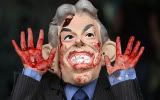
In an article far more damning than the evidence so far given to the Iraq inquiry by ex-civil servants, the former chief prosecutor criticises Blair for engaging "in an alarming subterfuge with his partner George Bush", and taking Britain to war "on a basis that it’s increasingly hard to believe even he found truly credible".

Macdonald attacks the former prime minister as "weak", saying his "fundamental flaw was his sycophancy towards power"....>>>>>


Chilcot censors Iraq inquiry's live broadcast

Sir Jeremy Greenstock's evidence on political mistakes after invasion is interrupted

Sir John Chilcot, chairman of the Iraq inquiry, cut the live video of today's hearings, raising fears that he is suppressing evidence on grounds of embarrassment rather that any damage to national security.

"I interrupted the broadcast because of a mention of sensitive information," he said after hearing evidence from Sir Jeremy Greenstock, Britain's UN ambassador before the invasion and special envoy in Baghdad afterwards.

The broadcast was stopped as Greenstock was speaking about how the US drew up plans on the basis of a "best-case scenario" in Iraq. Immediately before being cut off he said: "When I talked to other members of the American team, when I talked informally to the military, to the intelligence agencies, to other people who were operating, I found a very much more gloomy prognosis of what was going on than I felt or understood ambassador Bremer [Paul Bremer, the chief US civil administrator in Baghdad] was reporting back to the Pentagon."

Greenstock added as the broadcast was cut: "I reported these things …"

Most people following the inquiry do so by listening to it in an adjacent media room or remotely via the inquiry's website. There is a very brief time gap between what is said in the inquiry chamber itself and what is heard via the live video feed.

A member of the audience in the inquiry chamber said that after the feed was cut Greenstock went on to say that Colin Powell, who was then secretary of state, used British intelligence reports about the situation in Iraq because they were more accurate than the more optimistic dispatches that Bremer was sending to Washington...>>>>>


From what it has been sounding like after Bremer came onto the scene was he apparently wasn't doing a good job, or maybe he was according to the wants in the White House and then Halls of Congress, and it was being noticed by a number of people, especially coalition partners. Though according to above someone in the administration, Powell, was noticing the problem as well.

Iraq invasion 'catastrophic success'

The 2003 invasion of Iraq was a “catastrophic success”, the official inquiry into the war heard today.

Sir Jeremy Greenstock, the UK’s former special representative to Iraq, said Saddam Hussein was toppled so quickly that US and British forces were left “holding a baby without the materials for looking after it”.

He also criticised the planning of the post-invasion period, saying the operation was under-resourced and rushed.

The inquiry faced fresh questions about its openness today after the live video feed of Sir Jeremy’s evidence was halted for more than a minute for reasons of national security...>>>>>


And the huge crowds came, massing on either side of the paved highway, pushing among each other trying to get as close to the front as each could, carrying bundles of flowers wrapped in their arms to be able to throw at the conquering military forces that had invaded their land and freed them, Whoops Wrong Movie........................

Britain was warned about Iraq's 'capacity for violence'

Britain was warned to be wary of attacking Iraq because its people had a huge ''capacity for violence'' before the 2003 invasion, the inquiry into the war has heard.

The UK's former ambassador to the United Nations said his Egyptian counterpart cautioned him about the dangers of launching military action against Iraq.

Sir Jeremy Greenstock said there was anger and resentment among UN officials that Britain and the United States had decided to go to war despite widespread international opposition.

He recalled that Ahmed Aboul Gheit, then Egypt's ambassador to the UN, told him: ''You will not believe the degree of violence of which these people are capable when you come to it. So be careful what you take on.''.

He said: ''There were people who felt that we had far exceeded any possible legal or legitimate authority that we had and we were going to cause problems in the country whose history was violent and whose people would show us that they had a capacity for violence which would shake us to the core when we actually had to deal with them.'' ...>>>>>


Gotta stop drinking so much coffee.

Memories are so short, why many already knew that's why they liked Saddam when he was a young man and a brutal street thug. Helped even more being related to the powers so who better to help topple the government then and place their on the payroll buddy Saddam at the top!

Entering The Language

I think we've just witnessed another moment which will go down in history.

Sir Jeremy Greenstock, the British ambassador to the United Nations at the time of the Iraq war, has just come up with a phrase which will become part of the language.

He's told the Iraq war inquiry that the invasion was a "catastrophic success".

Sir Jeremy explained: "That is, it would happen so quickly and Saddam's regime would collapse so fast that we would be left holding a baby without the materials for looking after it. And that, indeed, is what happened."

A "catastrophic success" is a classic example of an oxymoron. It's bound to enter the language - you heard it first on Sky News....>>>>>


He might have liked that one but he missed this one "fissiparous", ahhh that old europe queens english.

Well here's another shot at our very distinguished rummy, the media's love child at the time.

Donald Rumsfeld dismissed Iraq insurgents as 'bunch of no-hopers'

Donald Rumsfeld, the former US secretary of defence, dismissed the Iraq insurgency as "a bunch of no-hopers carrying out some terrorist acts", the Chilcot inquiry was told.

Lieutenant General John Kiszely, who was senior British military representative in Iraq from October 2004 to April 2005, told the inquiry forces faced a "security situation with a growing insurgency" but there was a "reluctance for people to call it an insurgency".

Reconstruction efforts were also made difficult by an uncertain political situation, economic struggles and the fact that the "basic wheels of bureaucracy just did not exist", Gen Kiszely said.

He added: "I think (US) secretary of defence Donald Rumsfeld had instructed that it wasn't to be called an insurgency.

"I think he called it a 'bunch of no-hopers carrying out some terrorist acts' - but it was an incipient insurgency." ...>>>>>


Diplomat urges UK to 'avoid' Iraq mistakes in future

Mistakes made before and after the US-led invasion of Iraq in 2003 must not happen again, a top diplomat has said.

Sir Jeremy Greenstock, the former UK ambassador to the UN, said the entire mission was "rushed" and did not have enough international input.

He told the Chilcot inquiry the UK was a "minor partner" and did not have enough clout to affect key decisions.

The broadcast of Tuesday's hearing was cut off for more than a minute by its chairman on national security grounds....>>>>


Good advice above, trouble is they should have thought much more long before any invasion. The actions taken have sealed the already thought descriptions by many of what so called western powers really are, we showed and sealed their propaganda by the invasion then occupation, The next couple of decades, and probably longer as surviving children grew up in the devastation and death, at least will bear the results of this past one!

A "Tortured" Gitmo Carol

Gather around the warm glow of your monitor and let us at New Security Action tell you a holiday tale about a certain "Scrooge" and his responsibility for America's tortured past. Say a hearty "Bah humbug" to Dick Cheney in this "Tortured" Christmas Carol.


Sign On Here

Monday, December 14, 2009

The 'Sycophant' Tony Blair

I really like that descriptive name used as to Mr Blair, fits him well, editorial link for same below along with others.


Will the statements open up what others will say or bring forward as they might try and distance themselves from him?

"Iraq War was right even if there were no WMDs"

Tony Blair would have invaded Iraq even if he had known that there were no weapons of mass destruction in the country, he has admitted.
Mr Blair replied: "I would still have thought it right to remove him. I mean, obviously you would have had to use and deploy different arguments about the nature of the threat."

He added: "I can't really think we'd be better off with him and his two sons still in charge but it's incredibly difficult... and that's why I sympathise with the people who were against it for perfectly good reasons and are against it now but, for me, in the end I had to take the decision."

Snip

At a memorial service in St Paul's Cathedral in October to honour British military and civilian personnel who served in Iraq, Mr Blair offered his hand to Peter Brierley, whose son, Lance Corporal Shaun Brierley, was killed in 2003. Mr Brierley told him: "I'm not shaking your hand, you've got blood on it."..>>>>>


Now what with him coming out and over explaining to spin his side of the story it makes one wonder, what with came out already, will others start speaking their minds as to what really went down as the heat starts boiling under the Blair.

Blair Iraq war admission sparks fresh outrage

Tony Blair's admission that Britain would have backed the Iraq war even if he knew it did not have weapons of mass destruction (WMD) sparked outrage Sunday and calls for his prosecution for war crimes.

The former prime minister, who backed the US-led invasion in 2003, told the BBC it would "still have been right to remove" Iraqi leader Saddam Hussein because of the threat he posed to the region.

Lawyers representing the deposed Iraqi leadership said they would seek to prosecute Blair following his remarks, while one newspaper commentator said it was a "game-changing admission" for the ongoing official inquiry into the war...>>>>>


Not yet scathing enough for you, stay tuned.

'Sycophant' Tony Blair used deceit to justify Iraq war, says former DPP

Tony Blair used "deceit" to persuade parliament and the British people to support war in Iraq, Sir Ken Macdonald, the former director of public prosecutions, said today.

In an article in the Times, Macdonald attacked Blair for engaging in "alarming subterfuge", for displaying "sycophancy" towards George Bush and for refusing to accept that his decisions were wrong.

Macdonald's comments about Blair's decision to go to war are more critical than anything that has been said so far by any of the senior civil servants who worked in Whitehall when Blair was prime minister.

Macdonald was DPP from 2003 until 2008 and he now practises law from Matrix Chambers, where Blair's barrister wife, Cherie, is also based.

Snip

Macdonald wrote: "The degree of deceit involved in our decision to go to war on Iraq becomes steadily clearer. This was a foreign policy disgrace of epic proportions, and playing footsie on Sunday morning television does nothing to repair the damage.

"It is now very difficult to avoid the conclusion that Tony Blair engaged in an alarming subterfuge with his partner, George Bush, and went on to mislead and cajole the British people into a deadly war they had made perfectly clear they didn't want, and on a basis that it's increasingly hard to believe even he found truly credible."

Macdonald said that Blair's fundamental flaw was his "sycophancy towards power" and that he could not resist the "glamour" he attracted in Washington...>>>>>


See I told ya, oh he says much more, it was getting hotter under the blair and this is just the beginning, We Hope!

Who will turn the heat on Tony Blair over Iraq?

If it has achieved nothing else, Sir John Chilcot's inquiry into the Iraq war has at least brought Tony Blair out of the woodwork.

Only two weeks ago, Mr Blair was saying to CNN: "I think the best thing with this inquiry is actually to let us all give our evidence to the inquiry… I think the appropriate place to [go through the issues] is at the inquiry."

Snip

Blair's remarkable pre-emptive strike comfortably overshadows anything so far said to Sir John Chilcot. It goes to the very nub of the issue Sir John is considering: was the war necessary, and was the prime minister's official justification, weapons of mass destruction, merely a pretext for something decided long before?

Mr Blair's statement that he wanted rid of Saddam all along, and would simply have "deploy[ed] different arguments" to do so in the absence of WMD, is his clearest admission to date that the famous weapons were indeed a pretext. His belief that a war on Iraq would have been necessary even without WMD is both significant – and highly questionable.

Snip

The task for Chilcot and his panel is now rather different than it was last week. Mr Blair's game-changing admission gives them a licence to be tougher and more prosecutorial. The question for Sir John and his panel is whether they can match the interrogative skills of Fern Britton; whether they can extract such important confessions of their own from their guests on the Iraq Inquiry sofa...>>>>>


Blair sold Iraq on WMD, but only regime change adds up - Hans Blix

The PM seems to have deployed arguments as they suited him. Our weapons inspections were telling another story

Before the Iraq war was launched in March 2003 the world was given the impression by the US and Britain that the goal was to eradicate weapons of mass destruction. Recent comments by Tony Blair suggest, however, that regime change was the essential aim. He would have thought it right to remove Saddam Hussein even if he had known that there were no WMD, he said, but he would obviously have had to "deploy" different arguments. Must we not conclude that the WMD arguments were "deployed" mainly as the best way of selling the war? Blair's comments do not exclude a strong – but mistaken – belief in the existence of WMD even when the invasion was launched. However, given that hundreds of inspections had found no WMD and important evidence had fallen apart, such a belief would have been based on a lack of critical thinking.

Snip

Many are convinced that the American and UK military plans moved on autopilot, and the inspections were a charade. I am sure that many in the Bush team felt that way. It seems likely that British and American leaders expected that UN inspections would again be obstructed or that Iraqi violation of the draconian new resolution 1441 would persuade the security council to authorise military action to remove the regime. For my part, I tended to think of the war preparations rather as a train moving slowly to the front and helping to make Iraq co-operative. If something removed or reduced the weapons issue, the train, I thought, might stop.

Snip

Unlike the US, the UK and perhaps other members of the alliance were not ready to claim a right to preventive war against Iraq regardless of security council authorisation. In these circumstances they developed and advanced the argument that the war was authorised by the council under a series of earlier resolutions. As Condoleezza Rice put it, the alliance action "upheld the authority of the council". It was irrelevant to this argument that China, France, Germany and Russia explicitly opposed the action and that a majority on the council declined to give the requested green light for the armed action. If hypocrisy is the compliment that virtue pays to vice then strained legal arguments are the compliments that violators of UN rules pay to the UN charter....>>>>>


Iraq - Phase Four!!

Blair’s critics are asking the wrong questions

All the talk is of WMD, lies and the decision to go to war. But the Chilcot inquiry is uncovering a much bigger scandal

Snip

One is a recollection from my own private meeting with Sir John Chilcot, some weeks ago, as part of his meticulous trawl through the people he thought might have something to add or suggest. He told me then, as he reminds each witness now, that the inquiry team has already received and sifted through thousands of documents, many of them with the top level of classification. This means that some of the questioning is much less innocent than it sounds.

One should recall here that the removal of the sovereign government of Iraq left the invaders with the full moral responsibility for the country in the immediate postwar period, a responsibility given legal force by UN Resolution 1438. What was to happen after the war was no detail to be tacked on after a military campaign, but a major strategic question that would affect that country and the future of the whole region. It was reasonable to expect that massive effort would go into planning that future.

Listening to the questioners at the inquiry, and particularly Sir Roderic Lyne, it seems to me they are asking some uncomfortable questions about the resources and co-ordination that were put into Phase Four...>>>>>


And right the writer is except I wouldn't place it as bigger but very equal to everything connected with this Historic Debacle of Death and Destruction that will affect the coming decades!!

What the British do with what has been coming out of the Chilcot Inquiry, as to their Countries reputation and accountability for those involved are theirs to make. My interest, across the pond here, are the tidbits coming out about what was going on here in the States as to their American Counterparts in our Government and what they were and were not doing in leading to their wanted invasion and occupation of Iraq and regime change of the once good friend of many involved, like these:

Drip, drip, drip, ""He recalled noting that: "the dog didn't bark - it grizzled." Don't forget - this 'grizzling' for regime change was 6 months BEFORE 9/11."". drip, drip, drip, ""But there was a 'sea change' in attitude after the atrocities, with former national security adviser Condoleezza Rice targeting Iraq on the very day of the outrage."", drip, drip, drip, ""George Bush tried to make a connection between Iraq and al-Qaida in a conversation with Tony Blair three days after the 9/11 attacks, according to Blair's foreign policy adviser of the time."", drip, drip, drip, ""There was "a touching belief [in Washington] that we shouldn't worry so much about the aftermath because it was all going to be sweetness and light"."", drip, drip, drip, ""Boyce mentions the "dysfunctionalism" of Washington. He says that he would find himself briefing his American counterparts on what was happening in different parts of the US adminstration. Rumsfeld was not sharing information"", drip, drip, drip...........!

And the Blair statements, along with the earlier ones about what was known, add to the above as it opens the window a crack to what he was being told to do by his counterpart president bush, or is that cheney!!

Sunday, December 13, 2009

Meet The Second Lady

This morning on the CBS "Sunday Morning" show they had a real good story and interview, only about a ten minute segment, with the Second Lady of the Land, Dr Jill Biden.

Second Lady of the Land


Watch CBS News Videos Online


But you can just call her Jill. Rita Braver goes on the road and gets candid with Dr. Jill Biden, wife of Vice President Joe Biden.

Exclusive Interview With Dr. Jill Biden: Vice President's Spouse, Mother, Educator and Advocate for Military Families

Dr. Jill Biden at Kingsborough Community College in Brooklyn, N.Y., where she delivered a commencement address.
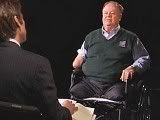
Many a Washington figure expects to be addressed by his or her full name and title. Not so the nation's current Second Lady . . . Rita Braver explains why in our Cover Story.

When you watch Jill Biden shaking every hand in sight . . . stuffing gift bags for soldiers . . . inviting veterans and their families to the vice president's house, you may be tempted to say, "Isn't she nice!"

That would be a mistake!

"'Energetic,' interesting,' 'vivacious,' but 'nice' is blah. It's just too bland. So I never want to be 'nice.'"

Her friend, First Lady Michelle Obama, says Jill Biden is so much more than nice: "She's an incredibly passionate, focused woman."

"I think, after her family, you are the number one fan?" Braver asked.

"Oh yeah, I'm up there, I'm up there. But you know my husband loves her, my mom loves her, so she's got a lot of fans."...This gives you the article transcript


Photo Essay: Inside the Life and Times of Vice President Joe Biden's Wife

Ex Senator Faced '2nd Vietnam'

Former Sen. Max Cleland Details Political War Wounds in Memoir: Post-Traumatic Stress Syndrome

Vietnam Vet Tells ABC News' David Muir: 'I Went Down Into Almost a Death Spiral'

As a young Army platoon leader in Vietnam, Max Cleland sent hours of audio dispatches home to his parents not knowing just how true his words would become.

"I'm definitely coming back a little bit differently than when I came here," he said on tape.

On April 8, 1968, just days from the scheduled end of his tour in Vietnam, Cleland spotted a hand grenade in the grass as he jumped off a helicopter. It had been dropped by another soldier, and Cleland reached for it, not knowing it was live.

In a flash of fire, Cleland lost both legs, his right arm and, almost, his life.

Snip

Cleland's descent began after he lost a bruising battle for re-election to Republican Saxby Chambliss in 2002. Losing was tough enough, but the way he lost added to the pain. Chambliss' campaign questioned Cleland's "courage to lead" in a campaign ad that flashed pictures of Osama bin Laden and Saddam Hussein.

Snip

Playing on television screens at Walter Reed was the inspirational video Cleland had starred in as a senator to help the newly injured returning from war.

"The irony was overwhelming," he said. "I mean, you know, because I could see myself saying those things and they were great and accurate at the time, but I hadn't received the second wound, the second Vietnam, the second loss of sense of meaning and purpose and direction in life.

"I would look down the hall," he added, "and I would see a younger generation, you know, missing arms, legs ... and I thought, 'Oh my God.'"..>>>>>


Max Cleland talks to David Muir


Max's Book: "Heart of a Patriot: How I Found the Courage to Survive Vietnam, Walter Reed and Karl Rove"

Click here to read an excerpt of Cleland's book, "Heart of a Patriot," in PDF form

The Effects of War One in six Americans soldiers suffers from post-traumatic stress disorder


US: Soldiers Forced to Go AWOL for PTSD Care

With a military health care system over-stretched by two ongoing wars in Afghanistan and Iraq, more soldiers are deciding to go absent without leave (AWOL) in order to find treatment for post-traumatic stress disorder (PTSD).

Snip

"What I saw and what I did in Iraq caused my PTSD," Jasinski, 23-years-old, told IPS during a phone interview, "Also, I went through a divorce - she left right before I deployed - and my grandmother passed away when I was over there, so it was all super rough on me."

In addition, he lost a friend in Iraq, and another of his friends lost his leg due to a roadside bomb attack.

Snip

During his pre-deployment processessing "they gave me a 90-day supply of meds to get me over to Iraq, and I saw a counsellor during that period, and I told him "I don’t know what I’m going to do if I go back to Iraq."

"He asked if I was suicidal," Jasinski explained, "and I said not right now, I’m not planning on going home and blowing my brains out. He said, ‘well, you’re good to go then.’ And he sent me on my way. I knew at that moment, when they finalised my paperwork for Iraq, that there was no way I could go back with my untreated PTSD. I needed more help."...>>>>>