Showing posts with label National Security Archive. Show all posts

Tuesday, November 10, 2009

Peaceful End to Cold War in Europe

From: National Security Archive

New video: the Archive's Svetlana Savranskaya discusses the peaceful end to the Cold War in Europe


In this video, Russia Programs Director Svetlana Savranskaya discusses the 20th anniversary of the fall of the Berlin Wall. A new book from the National Security Archive, Masterpieces of History: The Peaceful End of the Cold War in Europe (forthcoming in 2010, Central European University Press), chronicles the role of peaceful revolutions in Eastern Europe in 1989 and 1990 through documents collected from US, European, and Russian archives.


Fall of Berlin Wall Caused Anxiety More than Joy at Highest Levels
Secret Documents Show Opposition to German Unification

The fall of the Berlin Wall 20 years ago generated major anxiety in capitals from Warsaw to Washington, to the point of outright opposition to the possibility of German unification, according to documents from Soviet, American and European secret files posted on the Web today by the National Security Archive...>>>


Prague Communists Called for Wall to Open on November 8, 1989
East German Refugee Crisis in Embassies in Prague Turned Hardliners into Advocates for Change 20 Years Ago

New Documents from Prague, Berlin, and Bonn detail the pressure on the "System" from East Germans voting with their feet

Just before the fall of the Berlin Wall 20 years ago, even the hardline Czechoslovak Communist leaders called for the opening of the German border, according to documents from high-level archives in Berlin, Bonn and Prague published for the first time in English and posted on the Web today by the National Security Archive at George Washington University...>>>

Monday, November 09, 2009

Fall of Berlin Wall

Fall of Berlin Wall Caused Anxiety More than Joy at Highest Levels
Secret Documents Show Opposition to German Unification

The fall of the Berlin Wall 20 years ago generated major anxiety in capitals from Warsaw to Washington, to the point of outright opposition to the possibility of German unification, according to documents from Soviet, American and European secret files posted on the Web today by the National Security Archive...>>>


Prague Communists Called for Wall to Open on November 8, 1989
East German Refugee Crisis in Embassies in Prague Turned Hardliners into Advocates for Change 20 Years Ago

New Documents from Prague, Berlin, and Bonn detail the pressure on the "System" from East Germans voting with their feet
Just before the fall of the Berlin Wall 20 years ago, even the hardline Czechoslovak Communist leaders called for the opening of the German border, according to documents from high-level archives in Berlin, Bonn and Prague published for the first time in English and posted on the Web today by the National Security Archive at George Washington University...>>>

Wednesday, August 26, 2009

GWU Edu. NSA: The CIA's Vietnam Histories

On the heals of What were they hiding? concerning the torture policies of the cheney/bush administration/CIA/Private Contractors/Military, the George Washington University National Security Archives brings a slew of documents on the CIA and Vietnam conflict years, before our invasion, during and after.

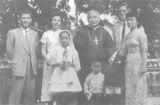
The CIA's close relationship with Ngo Dinh Nhu, chief political adviser to his brother President Ngo Dinh Diem, is demonstrated by the presence of CIA officer Paul Harwood and his spouse at the confirmation ceremony for the Nhu's daughter Le Thuy. From left: Ngo Dinh Nhu, Mrs. Paul Harwood, Le Thuy, Bishop Ngo Dinh Thu, with Nhu's son Qunh, son Trac, {CIA officer} Paul Harwood, Madam Nhu." {Source, The CIA and the House of Ngo, p. 26}
The CIA's Vietnam Histories

Newly-Declassified CIA Histories Show Its Involvement in Every Aspect of the Indochina War

Washington, D.C., August 26, 2009 - The Central Intelligence Agency participated in every aspect of the wars in Indochina, political and military, according to newly declassified CIA histories. The six volumes of formerly secret histories (the Agency's belated response to a Freedom of Information Act (FOIA) request by National Security Archive senior fellow John Prados) document CIA activities in South and North Vietnam, Laos, and Cambodia in unprecedented detail. The histories contain a great deal of new material and shed light on aspects of the CIA's work that were not well known or were poorly understood. The new revelations include: {Link brings you the rest, to the brief descriptions and documents links.}


On the right side you'll find a description titled: "A TALE OF OBSESSIVE SECRECY" starting with,

Before addressing the substance in the new CIA histories it will be useful to pause and consider what this case also shows about the U.S. Government's broken system for declassifying and releasing records. In actuality, this CIA release was not at all a voluntary contribution to American history, but was compelled by a Freedom of Information Act (FOIA) request. Filed in 1992, that FOIA request may be the longest running case in the CIA's files, and its treatment shines a blinding light on how the agency handles its statutory duty to release records.........................


That you might want to read the rest of.

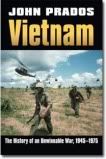
It continues with a brief synopsis of John Prados book on Vietnam Vietnam: The History of an Unwinnable War, 1945-1975

The CIA's Vietnam Story

The Central Intelligence Agency's Vietnam war history actually begins in 1950, when agency officers moved to French Indochina as part of the United States legation in Saigon. During the French war in Indochina the CIA's involvement grew to encompass a base in Hanoi but not much more, since the French did not encourage CIA activity. The French tamped down further after an incident in which CIA officers were revealed as reaching past them to open channels to Vietnamese nationalists. When the lands of Indochina—Vietnam, Laos, and Cambodia—became independent "associated states" the CIA expanded its activity somewhat, and during the last year of the French war, 1953-1954, agency involvement grew considerably as the French were obliged to accept U.S. assistance with unconventional warfare activities as a condition of expanded military aid from the Eisenhower administration, and with the use of CIA proprietary aircraft of Civil Air Transport (later Air America) in Laos and at Dien Bien Phu.......................


Between the Torture documents and reports, still coming in, and this new addition on the CIA's involvement in Vietnam, for years, there is a whole host of information to absorb. But their archives don't stop with these, they've been researching and archiving a whole host of issues, especially on National Security for a long time, and will be adding much more, so explore.

After our failed policies concerning Vietnam it will be more then interesting to one day read of the lead up to our numerous failed policies in the regions of Afghanistan, support and supplying the Mujahadeen then walking away, and Iraq. Especially concerning Iraq and our connections, through the CIA and more, with Saddam's reign leading up to and including the First Gulf War then to Operation Iraqi Freedom, OIF, and continuing, along with 9/11 and Operation Enduring Freedom, OEF! Maybe they won't trickle out many years later, hopefully for the rest of the World we'll get the facts and truth much earlier, but us 'Nam Vets will probably mostly be long gone.

Lets hope that what this Country, if it still exists, didn't learn from 'Nam, it will Finally absorb from these times, OEF and OIF, and stop the few from pushing for these War and Occupations, of others, Of Choice! But unlike 'Nam, these times will bring blowback on our country and citizens!

Tuesday, August 25, 2009

What were they hiding?

Their arguments have always been, and continue to be especially from their propaganda machines, TV and Radio, that what they did was cleared by the administrative lawyers, as I heard one say this morning "Highly experienced Lawyers!", and they were are then legal!

The George Washington University National Security Archives have posted up the reports, side by side, from the Bush administration, in May 2008, and the newly released same report from the Obama administration, August 24th 2009.

A side-by-side Comparison of the Bush and Obama Versions of the CIA Inspector General's Report on Torture

Posted - August 25, 2009

Posted below is a side-by-side comparison of the Bush and Obama administration versions of the 2004 CIA Inspector General Report on Torture..............To View Visit Here


So if this was all legal, and they were comfortable to carryout these practices, In This Countries Name, what were they hiding when they redacted so much in their release of!

From the University E-Report sent on 8.25.09:

Washington, DC, August 25, 2009 - Today, the National Security Archive posted a side-by-side comparison of two very different versions of a 2004 report on the CIA's "Counterterrorism Detention and Interrogation Activities" by Agency Inspector General John Helgerson. Yesterday, the Obama administration released new portions of the report including considerably more information about the use of torture and other illegal practices by CIA interrogators than a version of the report declassified by the Bush administration in 2008.

New revelations include:

* Details on "specific unauthorized or undocumented torture techniques," including the use of guns, drills, threats, smoke, extreme cold, stress positions, "stiff brush and shackles," waterboarding, mock executions and "hard takedown."

* A look at the legal reasoning behind the Agency's use of "enhanced interrogation techniques" and the development of Agency guidance on capture, detention and interrogation.

* A brief discussion of the history of the CIA interrogation program, including the "resurgence of interest in teaching interrogation techniques" in the early 1980s "as one of several methods to foster foreign liaison relationships."

* The conclusion that, while CIA interrogations had produced useful intelligence, the "effectiveness of particular interrogation techniques in eliciting information that might not otherwise have been obtained" is not "so easily measured."

The National Security Archive also announced today the publication of the Torture Archive -- more than 83,000 pages of primary source documents (and thousands more to come) related to the detention and interrogation of individuals by the United States, in connection with the conduct of hostilities in Iraq and Afghanistan as well as in the broader context of the "global war on terror." The goal of the Torture Archive is to become the online institutional memory for essential evidence on torture in U.S. policy. {JS: my highlighting}

With support from the Open Society Institute and the JEHT Foundation since 2006, this initial launch of the Torture Archive includes the complete set of declassified Combatant Status Review Tribunal and Administrative Review Board files from the Pentagon, and thousands of documents resulting from FOIA litigation brought by the American Civil Liberties Union, the Archive and other plaintiffs. The Torture Archive will continue to add documents as they are released through Freedom of Information Act (FOIA) litigation or Executive discretion.

The National Security Archive

The Torture Archive


There's a wealth of information right at the finger tips, with backlinks and your own ability to take it even further.

Friday, June 19, 2009

The Secret Sentry Declassified

The Secret Sentry: National Security Archive Electronic Briefing Book No. 278

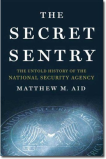
The Secret Sentry: The Untold History of the National Security Agency discloses that the U.S. invasion of Iraq in 2003 was far from the first time when U.S. government officials, including senior military commanders and the White House, “cherry picked” intelligence information to fit preconceived notions or policies and ignored intelligence which ran contrary to their expectations. The Secret Sentry and the documents posted today show that widespread manipulation of intelligence also occurred during the Korean and Vietnam Wars for example, when Washington ignored intelligence on Chinese intervention in Korea, resulting in catastrophic consequences..................


Today's posting of 24 documents consists of a selection of reports and memoranda prepared by NSA officials concerning the role played by Signals Intelligence (SIGINT) in selected military conflicts and crises, a number of classified internal histories written by NSA historians on key events in the agency's past, and a selection of declassified articles from NSA internal journals..........

Saturday, February 14, 2009

The Soviet Withdrawal 20 Years Later

This fits, for further study, especially with Brandon Friedman's posts on Afghanistan, over at Vet Voice, which can be found here and here and the present to future of.

In my opinion we lost there already, when they pulled out to destroy Iraq.

Memories don't die, and we, as well as many others, made promises we didn't keep in not filling the vacuum after the Soviet pullout in helping that country rebuild. That vacuum was filled which led to this present!!

General Alexander Lyakhovsky
Afghanistan and the Soviet Withdrawal 1989 20 Years Later

Tribute to Alexander Lyakhovsky Includes Previously Secret Soviet Documents

1985 Decision to Withdraw Delayed by Face-Saving and Stability Concerns

Washington D.C., February 15, 2009 – Twenty years ago today, the commander of the Soviet Limited Contingent in Afghanistan Boris Gromov crossed the Termez Bridge out of Afghanistan, thus marking the end of the Soviet war which lasted almost ten years and cost tens of thousands of Soviet and Afghan lives.

As a tribute and memorial to the late Russian historian, General Alexander Antonovich Lyakhovsky, the National Security Archive today posted on the Web ( NSA Archive ) a series of previously secret Soviet documents including Politburo and diary notes published here in English for the first time. The documents suggest that the Soviet decision to withdraw occurred as early as 1985, but the process of implementing that decision was excruciatingly slow, in part because the Soviet-backed Afghan regime was never able to achieve the necessary domestic support and legitimacy – a key problem even today for the current U.S. and NATO-supported government in Kabul.

The Soviet documents show that ending the war in Afghanistan, which Soviet general secretary Mikhail Gorbachev called “the bleeding wound,” was among his highest priorities from the moment he assumed power in 1985 – a point he made clear to then-Afghan Communist leader Babrak Karmal in their first conversation on March 14, 1985. Already in 1985, according to the documents, the Soviet Politburo was discussing ways of disengaging from Afghanistan, and actually reached the decision in principle on October 17, 1985.

But the road from Gorbachev’s decision to the actual withdrawal was long and painful. The documents show the Soviet leaders did not come up with an actual timetable until the fall of 1987. Gorbachev made the public announcement on February 8, 1988, and the first troops started coming out in May 1988, with complete withdrawal on February 15, 1989. Gorbachev himself, in his recent book (Mikhail Gorbachev, Ponyat’ perestroiku … Pochemu eto vazhno seichas. (Moscow: Alpina Books 2006)), cites at least two factors to explain why it took the reformers so long to withdraw the troops. According to Gorbachev, the Cold War frame held back the Soviet leaders from making more timely and rational moves, because of fear of the international perception that any such withdrawal would be a humiliating retreat. In addition to saving face, the Soviet leaders kept trying against all odds to ensure the existence of a stable and friendly Afghanistan with some semblance of a national reconciliation process in place before they left.

The documents detail the Soviet leadership’s preoccupation that, before withdrawal of troops could be carried out, the Afghan internal situation had to be stabilized and a new government should be able to rely on its domestic power base and a trained and equipped army able to deal with the mujahadeen opposition.

The Rest Can Be Found Here


The release is of the historic nature of not only the conflict but the final withdrawal from their debacle in Afghanistan, but also as a tribute to one General Alexander Lyakhovsky.

This posting is also a tribute to and a commemoration of one of our long-standing partners in the pursuit of opening secrets and writing the new truly international history of the Cold War. General Alexander Lyakhovsky passed away from a heart attack while standing on a Moscow Metro platform on February 3, 2009, less than two weeks before the 20th anniversary of the end of the war in which he served as an officer, and which he studied for many years as a scholar. He is survived by his wife Tatyana and their children Vladimir and Galina.

The National Security Archive mourns the passing of our dear friend and partner, Alexander Antonovich. It is fitting and proper that here we express our deepest appreciation for his remarkable knowledge, his scholarly and personal integrity, and his generosity both in expertise and the documents that he always shared with us, while he educated us and the world. His memory lives on in all of us who ever read his work, heard him speak, or best of all, listened to him sing the sad songs of the Afghan war.


The Document Links, in pdf, can be found starting at the middle of the page to the bottom with short descriptions of most, like this:

Document 4. Politburo Session, June 26, 1986.

The Politburo discusses the first results of Najibullah’s policy of national reconciliation. Gorbachev emphasizes that the decision to withdraw the troops is firm, but that the United States seems to be a problem as far as the national reconciliation is concerned. He proposes early withdrawals of portions of troops to give the process a boost, and proposes to “pull the USA and Pakistan by their tail” to encourage them to participate in it more actively.


Or this:

Document 8 Politburo Session, February 26, 1987

In his remarks to the Politburo, General Secretary returns to the issue of the need to withdraw Soviet troops from Afghanistan several times. He emphasizes the need to withdraw the troops, and at the same time struggles with the explanation for the withdrawal, noting that “we not going to open up the discussion about who is to blame now.” Gromyko admits that it was a mistake to introduce the troops, but notes that it was done after 11 requests from the Afghan government.


And this:

Document 13 Excerpt from Statement of the Soviet Military Command in Afghanistan on the Withdrawal of Soviet Troops, February 14, 1989

On April 7, 1988, USSR Defense Minister signed an order on withdrawal of troops from Afghanistan. In February 1989, the Defense Ministry prepared a statement of the Soviet Military Command in Afghanistan on the issue of withdrawal of troops, which was delivered to the Head of the UN Mission in Afghanistan on February 14, 1989—the day when the last Soviet soldier left Afghanistan. The statement gave an overview of Soviet-Afghan relations before 1979, Soviet interpretation of the reasons for providing internationalist assistance to Afghanistan, and sending troops there after the repeated requests of the Afghan government. It criticized the U.S. role in arming the opposition in disregard of the Geneva agreements, and thus destabilizing the situation in the country. In an important acknowledgement that the Vietnam metaphor was used to analyze Soviet actions in Afghanistan, they military explicitly referred to “unfair and absurd” comparisons between the American actions in Vietnam and the presence of Soviet troops in Afghanistan.


Soviet vets, 20 years on, warn Obama on Afghanistan

MOSCOW (Reuters) - Soviet veterans marking 20 years since their defeat in Afghanistan warned the United States it would never truly control the country, citing bitter memories of a fiercely proud people and unforgiving landscape.

The withdrawal of the last Soviet troops from Afghanistan on Feb. 15, 1989 ended a decade of fighting that killed an estimated 15,000 Soviet troops and convinced a generation of soldiers they had been sent to fight a war they could not win.

The United States, preparing to pour more troops into Afghanistan to fight a growing Taliban-led insurgency, is reliving their nightmare, they said.

"It's like fighting sand. No force in the world can get the better of the Afghans," said Oleg Kubanov, a stocky 47-year-old former officer with the Order of the Red Star pinned to his chest at an anniversary concert in Moscow.

Wednesday, January 14, 2009

Court Grants National Security Archive Motion - WH E-Mails {UpDated 2}

The following was in the e-notice sent out by The George Washington University - The National Security Archive which is what can be found also on the page link to the announcement.

For Immediate Release:
January 14, 2009

To Search White House Computers and Preserve E-mails


On the eve of transition, federal judge orders outgoing White House staff
to surrender electronic media containing e-mails.

Washington, D.C., January 14, 2009 – The United States District Court for the District of Columbia today granted the National Security Archive’s emergency motion for an extended preservation order to protect missing White House e-mails. With the transition from the Bush Administration to the Obama Administration taking place in six days, and all the records of the Bush White House scheduled for a physical transfer to the National Archives and Records Administration (NARA) on that same day, the Court has directed the Executive Office of the President (EOP) to search all its computer work stations and has ordered EOP employees to surrender any media in their possession that may contain e-mails from March 2003 to October 2005.

“There is nothing like a deadline to clarify the issues,” said Archive Director Tom Blanton. “In six days the Bush Executive Office of the President will be gone and without this order, their records may disappear with them. The White House will complain about the last minute challenge, but this is a records crisis of the White House's own making.”

Counsel for the Archive, Sheila Shadmand from Jones Day made clear: “The White House has been on notice since we filed our lawsuit a year and a half ago that they would have to retrieve and preserve their e-mail. Instead of coming clean and telling the public what they have been doing to solve the crisis, they refused to say anything. At this point, it is critical to preserve evidence that can help get to the bottom of the problem and prevent it from happening again.”

Magistrate Judge John M. Facciola has scheduled an emergency status conference today at 2 p.m. to consider additional measures that may be necessary to protect the records during the transition. (Courtroom 6 of the E. Barrett Prettyman Federal Courthouse)

The Archive filed its emergency motion for an extended preservation order on March 11, 2008. After considering the objections of the White House, Magistrate Judge Facciola issued two reports, on April 24 and July 29, 2008, recommending that District Judge Henry H. Kennedy issue an order requiring search, surrender and preservation of the computer workstations and external media devices, such as CDs, DVDs, memory sticks, and external hard drives. Today’s order adopts those reports and recommendations, granting in part the Archive’s emergency motion.

The National Security Archive filed its lawsuit on September 5, 2007 against the Executive Office of the President and NARA, seeking to preserve and restore missing White House e-mails. A virtually identical lawsuit filed subsequently by Citizens for Responsibility and Ethics in Washington (CREW) has been consolidated with the Archive's lawsuit. A chronology of the litigation is available here.


If you visit this link The George Washington University - The National Security Archive, which is the same link as the second one at the top, they have a number of back links along the left hand side of the page to review.

UpDate:

White House admits it has not recovered files from computer workstations or collected external computer storage media that may contain missing e-mails

Scope of missing e-mails acknowledged in court today, although Department of Justice claims they are working on a solution

UpDate 2:

White House e-mail in "true emergency conditions"

Magistrate judge orders search of all White House computers, grants plaintiffs' request for inventories and preservation of evidence

Monday, January 05, 2009

"Riveting" - U.S. Presidents and the Middle East

The present, National Security Archive Electronic Briefing Book No. 265 Posted - January 5, 2009, looks mighty interesting, especially reading the few documents they have linked there.

Details inconsistent policies and influence of foreign leaders

New Patrick Tyler book narrates: "A World of Trouble: The White House and the Middle East--from the Cold War to the War on Terror"

American Presidents from Eisenhower to George W. Bush have sought to distinguish themselves from their predecessors with sudden shifts in Middle East policy and questionable strategies that have contributed to undermining American credibility in the region, according to a new book, A World of Trouble, by veteran correspondent Patrick Tyler, a fellow of the National Security Archive at George Washington University.

Tyler's account begins with a raucous night of recriminations over George W. Bush's Middle East diplomacy by former CIA Director George Tenet, and then rewinds to the grand deception of Dwight Eisenhower by Britain, France and Israel, in the Suez Crisis. In bringing the narrative forward to the Iraq war and the Israeli-Palestinian conflict of today, Tyler gives the reader an intimate portrait of presidential decisions and the out-sized influence of White House aides and foreign leaders and their emissaries.


These are but a few, of the documents, that they have listed at the archives site:

* The private pleadings of Soviet leader Leonid Brezhnev, who in June 1973 sought to convince President Nixon that war was coming in the Middle East and that the only way to avert it was by a robust diplomatic intervention by the superpowers. Nixon and Kissinger, fearing domestic blowback in the midst of the Watergate scandal, refused to be drawn in and war broke out four months later.

* The Reagan Diary entry that sheds light on how the White House and the Saudi royal family circumvented the law on presenting lavish gifts to the President, in this case, a pair of Arabian horses.

* The top-secret channel opened by the Nixon White House with the Shah of Iran to discuss "contingency" planning by the Iranian leader to seize Saudi Arabia and its oil resources in the event of a coup or an external assault on the Saudi kingdom. (two documents)

* The confidential debate within the Nixon National Security Council on how to invent a claim of "Russian treachery" in order to justify the U.S. tilt toward Israel, and a massive resupply of its forces, during the 1973 October War. (two documents)

* The CIA's confidential description of the internal pressures within the Israeli leadership that tipped the Jewish state toward a preemptive attack on the Egyptian army in Sinai after the closure of Israeli shipping lanes in the run-up to the the Six Day War. (two documents)


Haven't read the book yet, so can't add much more, except to raise the curiosity of those that might be interested

Monday, October 06, 2008

OK, I Got A Couple Of Important Thingies Here...........

First off it's October 6th, and most days bring with them a history of the past, much forgotten quickly and lessons not learned.


Here's just one for today which I'll call The bush Families & GOP's Favorite Terrorist Pal, and no it's not the one nobody thinks about anymore, especially the little bush:


Today in History: October 6, 1976

An airliner, Cubana Airlines Flight 455, exploded in midair, killing 73 mostly young passengers including the entire Cuban youth fencing team. The plot was engineered by Orlando Bosch and Luis Posada Carriles, a Cuban former CIA agent, who was based in Venezuela at the time.

The Posada Carriles file from the National Security Archive

Update - May 18, 2005 - Documents featured on May 17, 2005 edition of ABC's Nightline

Washington D.C. May 18, 2005 - The National Security Archive today posted additional documents that show that the CIA had concrete advance intelligence, as early as June 1976, on plans by Cuban exile terrorist groups to bomb a Cubana airliner. The Archive also posted another document that shows that the FBI's attache in Caracas had multiple contacts with one of the Venezuelans who placed the bomb on the plane, and provided him with a visa to the U.S. five days before the bombing, despite suspicions that he was engaged in terrorist activities at the direction of Luis Posada Carriles.

Both documents were featured last night on ABC Nightline's program on Luis Posada Carriles, who was detained in Miami yesterday by Homeland Security.

In addition, the Archive posted the first report to Secretary of State Kissinger from the State Department's Bureau of Intelligence and Research on the bombing of Cubana flight 455. The report noted that a CIA source had overheard Posada prior to the bombing in late September 1976 stating that, "We are going to hit a Cuban airliner." This information was apparently not passed to the CIA until after the plane went down.
There is no indication in the declassified files that indicates that the CIA alerted Cuban government authorities to the terrorist threat against Cubana planes. Still classified CIA records indicate that the informant might actually have been Posada himself who at that time was in periodic contact with both CIA and FBI agents in Venezuela.


SNIP Files can be found at above link


Our Government has been protecting and hiding in plain site the Terrorist Luis Posada Carriles for Decades, a Mass Murderer, and apparently keeping hidden any more information about other actions by Carriles and Friends!


Now if you're curious, and little bush, his father and the group that were dealing with him, seem not to be, 60min had a pretty good report on last night about the failed leadership at the top in this so called War on Terror.


Elite Officer Recalls Bin Laden Hunt
Delta Force Commander Says The Best Plan To Kill The Al Qaeda Leader In 2001 Was Nixed


After watching or reading ask yourself the same questions this Delta Force leader has been asking himself, Why were their plans Nixed, and while thinking about those questions remember that good ole binny was a pal of the CIA, daddy bush and company, characters known by many now, think cheney, rummy and more!!!


Oh and ask yourself where was the 'Maverick' all these years, as to Both subjects above!


Took a visit over to After Downing Street and found that Dave had a post up with just a title and a link to a PDFile, opened it and found the Vetting of one Vice Presidential Candidate that the GOP nor the McCain Camp felt a need to do even before her name popped into someones empty head:


The Palin Papers yes 63 pages of all you might want to know about Sarah, all in one place.


Download the PDF Vetting and find out All About Sarah, wink wink there hockey mom, from the friends of Alaska growing in numbers as they themselves find out more and more about you and your leadership.


Mac seems to want to allow his Campaign to run her as not only the Attack Dog, with lipstick and fake folksy , but as seemingly the Tickets Top not Second, and Mac apparently approves!!


My guess would be if she stays on the National Stage much longer they will be adding many pages to the above and I would say her Political Careerer days are numbered, even the GOP wil shun her after their through with her!


Now I know that many now know about the following, just wanted to add this reminder:


At noon Eastern on Monday, October 6th, we're releasing a 13-minute documentary about the scandal called "Keating Economics: John McCain and the Making of a Financial Crisis"


Here's the snippet of what's to come:


This look like it'll be real good and for many bring back the memories, by the way, anyone heard about Neal Bush lately!!

Wednesday, August 20, 2008

Before 9/11 - Taliban - al Qaeda

The National Security Archive has just released a Load of Files Electronic Briefing Book No. 253 Posted - August 20, 2008 under the title: 1998 Missile Strikes on Bin Laden May Have Backfired with a subtitle: Extensive 1999 Report on Al-Qaeda Threat Released by U.S. Dept of Energy,
Taliban Told U.S. They Wanted to Bomb Washington


With backlinks to the PDF's and more links in the sidebar on the left.


On the tenth anniversary of U.S. cruise missile strikes against al-Qaeda in response to deadly terrorist attacks on U.S. embassies in Kenya and Tanzania, newly-declassified government documents posted today by the National Security Archive (NS Archive) suggest the strikes not only failed to hurt Osama bin Laden but ultimately may have brought al-Qaeda and the Taliban closer politically and ideologically.


I've just glanced through some but the same questions come up that have with the remembering the reports on the Taliban and al Qaeda prior to 9/11, the many unanswered questions from the commission on 9/11, the dodging of questions and outright lies from some within the government, especially the administration, at the time and since, with more added as the policies of the administration exploded into the negatives for this country and it's national security and now negative standing amoung nations on this planet.


One question keeps growing, "With all this country must have known, through it's extremely well financed and technology advanced Intelligence Agencies, how were the acts of 9/11 allowed to happen?"!


The reasons given, intelligence sharing etc., are just to simplified to carry any weight, not after being told, and shown some, for years what our monies were buying and suspecting much more that was not told in the interest of National Security.


A 400-page Sandia National Laboratories report on bin Ladin { this is a big pdf download }, compiled in 1999, includes a warning about political damage for the U.S. from bombing two impoverished states without regard for international agreement, since such action "mirror imag[ed] aspects of al-Qaeda's own attacks" [see pp. 18-22 {pdf}]. A State Department cable {pdf} argues that although the August missile strikes were designed to provide the Taliban with overwhelming reason to surrender bin Laden, the military action may have sharpened Afghan animosity towards Washington and even strengthened the Taliban-al-Qaeda alliance.

Following the August 20 U.S. air attacks, Taliban spokesman Wakil Ahmed told U.S. Department of State officials {pdf} "If Kandahar could have retaliated with similar strikes against Washington, it would have." Such an attack, although unfeasible at the time, was at least in part actualized by al-Qaeda on 9/11.

Following the 1998 embassy bombings, the U.S. sought to extradite bin Laden to Saudi Arabia or possibly Egypt, but failed to get bin Laden out of Afghanistan because, at least according to the U.S. Department of State {pdf}, Saudi Arabia and Pakistan were unable or unwilling to apply enough pressure to coerce Taliban Supreme Leader Mullah Omar to surrender bin Laden.

The lengthy Sandia report compiled by Dr. Gary W. Richter {pdf} synthesizes an impressive volume of public-source information available on bin Laden into a coherent summary of the al-Qaeda terrorist threat following the August embassy bombings. The report concludes that the bombings did not take U.S. intelligence and diplomatic services by surprise, as the U.S. in 1998 had capable counterterrorism intelligence gathering and interdiction capabilities. However, according to the report, in retrospect, the August 20 retaliatory cruise missile strikes may have caused long-term political harm to U.S. national security and counterterrorism interests [see pp. 18-22 {pdf}]. The report contains extensive timelines, biographies and issue summaries and is useful for researchers interesting in the evolution of al-Qaeda and the American response.


The see pp. 18-22 above are small pdf's giving some quick interesting bullet points.


Read the Documents. This link is the same as the very first above. There are a number of documents at the bottom of the page to sort through.
Note: The following documents are in PDF format. You will need to download and install the free Adobe Acrobat Reader to view.


Under Document 1 dated December 6, 1999 ou will find some information and backlinks along with these bullet points:


* The "war" against terrorism will never be "won," as terrorism will always be a global problem.

* The August 7, 1998, embassy bombings should not be taken as an indication that U.S. counterterrorism efforts are entirely ineffective.

* The August 20, 1998, retaliatory cruise missile strikes did little to help solve the problem posed by bin Laden and may ultimately prove to have done more harm than good.

* The risk of future attacks by Osama bin Laden or his associates using weapons of mass destruction (WMDs) is not insignificant.

* The root cause of the militant threat is the widespread and deep-seated discontent among a large segment of the Islamic world, as opposed to the actions or agitation of any one individual or group of individuals. As such, diplomatic options are likely to be the most effective strategies at reducing the threat.

And:

* The U.S. was not "blindsided" by a new threat, as much was already known about al-Qaeda, including its anti-American aspirations and the existence of an East African al-Qaeda cell. [page 18]

* Members of this East African cell had been identified before August 7, and were under "intense scrutiny." It is likely "that this campaign of disruption had done much to dissipate the threat." [page 18]

* In response to the ongoing surveillance, threat evaluation and disruption operations, the members of this cell "felt themselves to be at "100% danger." [page 18]

* "In retrospect there were also specific indications of a bomb plot," however "it seems as if threat assessment personnel in Washington did not take the warning signs as seriously as did the embassy personnel in Nairobi." [page 19]

* The number of bombings prevented far exceeds the number of bombings that were not stopped by U.S. security efforts. [page 18]

And:

* High cost

* International criticism

* Questionable justice in that the strikes "killed only (or nearly only) individuals who were innocent of the embassy bombings"

* Reputational damage from disregarding alliances

* Questionable effectiveness in destroying or disrupting al-Qaeda or perspective terrorists

* Possible diminished impact for any future U.S. strikes by "demonstrating how little [the U.S] could achieve (e.g., limited physical damage)," by depleting ammunition, providing adversaries with an opportunity to observe and reformulate strategies based on observed vulnerabilities, and convincing bin Laden that the U.S. is unwilling to use higher-cost forms of force that would put U.S. personnel at risk

* "The attack provoked a new round of terrorist bombing plots."

* Bin Laden received a good deal of publicity and "appeared to many as an underdog standing firm in the face of bullying aggression."

* The Taliban's poor control over Afghanistan "may mean that they shouldn't bear responsibility for the acts of those on their soil."

* The U.S. may have given away the moral high ground by mirroring certain aspects of bin Laden's strategy with the attacks, and the U.S. bombed targets in independent third-world countries without concern for the sensitivities or sovereignty of those nations.

And:

* Justified under domestic law

* Calling attention to the bin Laden-Taliban connection, which complicated the Taliban's ability to gain international recognition as well as their future ability to justify support for Muslim fundamentalist groups

* Demonstrated U.S. resolve, dedication to dealing with terrorism as a matter of national security, and the reach of U.S. military power

* Provides incentives for nations to cooperate in U.S. counterterrorism activities, if for no other reason but to avoid unilateral action

* May deter terrorists and nations from harboring terrorists


There's alot of reading and research that can be found and added to the already known and suspected.


Where Iraq fits into all this sits only in the minds of those who wanted an invasion an regime change for years before, those who once supported that dictatorship, and saw wealth and extreme power in toppling their once friend and allie, and controlling a country in the center of the region to grant expansion of that extreme wealth and power.


What the invasion and occupation of Iraq has accomplished is far beyond what any extremist anywhere in the region or not hoped for, total unrest and hatreds. One needs only look at Afghanistan today, the Pakistan border region and Pakistan, the continuation of actions in the Iraq theater, the push back by the Iranians and their preparations to ward off attack by anyone, Guerilla Insurgents reportedly flowing into the border region from all over and waging growing destructive attacks on Nato forces and the Afghans, and the growing Criminal Terror attacks in other points outside of these theaters.


Where we once might have had friends an allies we created enemies.


Where we had the chance to better relations with the other powers they are ignoring us and recently sticking our own actions right back in our faces, they will allie with the region those few wanted to control, against us.


And we as a Nation will move on in our Apathy, holding No One Accountable, an with no knowledge of what the future brings, only knowing it will not be what it should have been!