
Vietnam Vet Tells ABC News' David Muir: 'I Went Down Into Almost a Death Spiral'
As a young Army platoon leader in Vietnam, Max Cleland sent hours of audio dispatches home to his parents not knowing just how true his words would become.
"I'm definitely coming back a little bit differently than when I came here," he said on tape.
On April 8, 1968, just days from the scheduled end of his tour in Vietnam, Cleland spotted a hand grenade in the grass as he jumped off a helicopter. It had been dropped by another soldier, and Cleland reached for it, not knowing it was live.
In a flash of fire, Cleland lost both legs, his right arm and, almost, his life.
Snip
Cleland's descent began after he lost a bruising battle for re-election to Republican Saxby Chambliss in 2002. Losing was tough enough, but the way he lost added to the pain. Chambliss' campaign questioned Cleland's "courage to lead" in a campaign ad that flashed pictures of Osama bin Laden and Saddam Hussein.
Snip
Playing on television screens at Walter Reed was the inspirational video Cleland had starred in as a senator to help the newly injured returning from war.
"The irony was overwhelming," he said. "I mean, you know, because I could see myself saying those things and they were great and accurate at the time, but I hadn't received the second wound, the second Vietnam, the second loss of sense of meaning and purpose and direction in life.
"I would look down the hall," he added, "and I would see a younger generation, you know, missing arms, legs ... and I thought, 'Oh my God.'"..>>>>>
Max's Book: "Heart of a Patriot: How I Found the Courage to Survive Vietnam, Walter Reed and Karl Rove"
Click here to read an excerpt of Cleland's book, "Heart of a Patriot," in PDF form
US: Soldiers Forced to Go AWOL for PTSD Care
With a military health care system over-stretched by two ongoing wars in Afghanistan and Iraq, more soldiers are deciding to go absent without leave (AWOL) in order to find treatment for post-traumatic stress disorder (PTSD).
Snip
"What I saw and what I did in Iraq caused my PTSD," Jasinski, 23-years-old, told IPS during a phone interview, "Also, I went through a divorce - she left right before I deployed - and my grandmother passed away when I was over there, so it was all super rough on me."
In addition, he lost a friend in Iraq, and another of his friends lost his leg due to a roadside bomb attack.
Snip
During his pre-deployment processessing "they gave me a 90-day supply of meds to get me over to Iraq, and I saw a counsellor during that period, and I told him "I don’t know what I’m going to do if I go back to Iraq."
"He asked if I was suicidal," Jasinski explained, "and I said not right now, I’m not planning on going home and blowing my brains out. He said, ‘well, you’re good to go then.’ And he sent me on my way. I knew at that moment, when they finalised my paperwork for Iraq, that there was no way I could go back with my untreated PTSD. I needed more help."...>>>>>


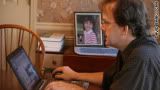 Michael White says he didn't anticipate casualities continuing at this pace, or the toll his Web site would take on him.



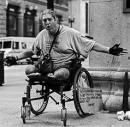 Master Sgt. Hawk Randolph lost his legs during the Gulf War and became homeless when he returned. (Photo: Keith-e / flickr)

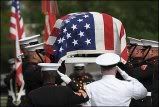 Bill Cahir joined the Marines after 9/11 to fight in Afghanistan, and he finally got there after two tours in Iraq. He was buried Monday at Arlington.
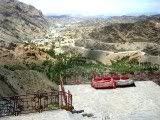 The Khyber Pass is one of the most dangerous routes from Pakistan into Afghanistan. ABC News' Martha Raddatz traveled with a NATO convoy along the route.