Showing posts with label Post Traumatic Stress. Show all posts

Thursday, November 12, 2009

Continuing the Veterans Day Messages......

On the eleventh hour of the eleventh day of the eleventh month, 11.11.09, I caught a couple of important discussions in the continuing known by us veterans are the results of wars and occupations of choice, or any war and occupation, as to the veterans and military personal once they've been sent to serve in and then return home, most being discharged from their service obligation after serving the time they signed up for, all at that point or later becoming the veterans of their service.

This first one is just a news report I happened upon but hits on the issue many of us are long time advocates of and adds to the rest posted below it.

Veterans struggle with stress, PTSD


November 11, 2009 (CHICAGO) (WLS) -- Along with the common bond of serving the country, many veterans share the burden of dealing with post-war stress...>>>>>


On the NPR Diane Rehm show the following discussion took place in the first hour of her show:

Diane Rehm NPR Show: America's Wars Observed

Guest host: Susan Page

On the ground in Iraq and Afghanistan: A journalist and a photographer document, in unflinching detail, the complex, contradictory and often tragic experiences of U-S troops at war.
Guests

Tammy Duckworth, assistant secretary, Department of Veterans Affairs

David Finkel, author of "The Good Soldiers" (Farrar,Straus & Giroux) national enterprise editor, The Washington Post

Peter van Agtmael, photographer, "2nd Tour Hope I Don't Die"

Listen to the Show:

Windows Media Player

Real Audio Player


Publisher Comments:

It was the last-chance moment of the war. In January 2007, President George W. Bush announced a new strategy for Iraq. He called it the surge. Many listening tonight will ask why this effort will succeed when previous operations to secure Baghdad did not. Well, here are the differences, he told a skeptical nation. Among those listening were the young, optimistic army infantry soldiers of the 2-16, the battalion nicknamed the Rangers. About to head to a vicious area of Baghdad, they decided the difference would be them.

Fifteen months later, the soldiers returned home forever changed. Pulitzer Prize-winning Washington Post reporter David Finkel was with them in Bagdad, and almost every grueling step of the way.

What was the true story of the surge? And was it really a success? Those are the questions he grapples with in his remarkable report from the front lines. Combining the action of Mark Bowden's Black Hawk Down with the literary brio of Tim O'Brien's The Things They Carried, The Good Soldiers is an unforgettable work of reportage. And in telling the story of these good soldiers, the heroes and the ruined, David Finkel has also produced an eternal tale--not just of the Iraq War, but of all wars, for all time.


Publisher Comments:

A collection of Peter van Agtmael's photography of America's Wars from January 2006 to December 2008


Then on last nights PBS News Hour this was part of their show, first part of a discussion with a veteran of our recent occupations then a discussion on Post Traumatic Stress in many military personal and veterans of all conflicts as to the stress of war:

PBS News Hour: For Some Veterans, the Battle Continues Against PTSD

After returning home from Iraq, Marine Staff Sgt. Jeremiah Workman struggled with the memories of war. As Betty Ann Bowser reports, soldiers like Workman are finding that often time, returning home can mean a new battle with post-traumatic stress disorder.

Snip

BETTY ANN BOWSER: Eventually, Workman was diagnosed with post-traumatic stress disorder.

In his new book, "Shadow of the Sword: A Marine's Journey of War, Heroism, and Redemption" Workman chronicles that traumatic day in Fallujah and his five-year struggle with PTSD. After returning from Iraq, Workman was sent to Parris Island to be trained as a drill instructor, a much-respected job in the Marine Corps, but he found it made his PTSD worse.

SGT. JEREMIAH WORKMAN: It was pretty bad. I mean, mentally, it was just killing me inside...>>>>>Rest of Transcript Here with Audio Link


Part 1: Staff Sgt. Jeremiah Workman


Part 2: Counseling Soldiers with Traumatic Stress


Extended Comments with Staff Sgt. Jeremiah Workman


Publisher Comments:

Awarded the Navy Cross for gallantry under fire, Staff Sergeant Jeremiah Workman is one of the Marine Corps' best-known contemporary combat veterans. In this searing and inspiring memoir, he tells an unforgettable story of his service overseas-and of the emotional wars that continue to rage long after our fighting men come home.

Raised in a tiny blue-collar town in Ohio, Jeremiah Workman was a handsome and athletic high achiever. Having excelled on the sporting field, he believed that the Marine Corps would be the perfect way to harness his physical and professional drives.

In the Iraqi city of Fallujah in December 2004, Workman faced the challenge that would change his life. He and his platoon were searching for hidden caches of weapons and mopping up die-hard insurgent cells when they came upon a building in which a team of fanatical insurgents had their fellow Marines trapped. Leading repeated assaults on that building, Workman killed more than twenty of the enemy in a ferocious firefight that left three of his own men dead.

But Workman's most difficult fight lay ahead of him-in the battlefield of his mind. Burying his guilt about the deaths of his men, he returned stateside, where he was decorated for valor and then found himself assigned to the Marine base at Parris Island as a Kill Hat: a drill instructor with the least seniority and the most brutal responsibilities. He was instructed, only half in jest, to push his untested recruits to the brink of suicide. Haunted by the thought that he had failed his men overseas, Workman cracked, suffering a psychological breakdown in front of the men he was charged with leading and preparing for war.

In Shadow of the Sword, a memoir that brilliantly captures both wartime courage and its lifelong consequences, Workman candidly reveals the ordeal of post-traumatic stress disorder: the therapy and drug treatments that deadened his mind even as they eased his pain, the overwhelming stress that pushed his marriage to the brink, and the confrontations with anger and self-blame that he had internalized for years.

Having fought through the worst of his trials-and now the father of a young son-Workman has found not perfection or a panacea but a way to accommodate his traumas and to move forward toward hope, love, and reconciliation.


I recently was contacted by Michael Anthony, who last October returned home from a tour of duty from Iraq as an Operating Room Medic with the Army reserves. Upon returning home he began writing a memoir of his time in Iraq. A few months ago he signed a deal and his memoir is now in bookstores. The book is titled: "Mass Casualties: A Young Medic's True Story of Death, Deception, and Dishonor in Iraq"

Publisher Comments:
From the Introduction:

Look around, the drill sergeant said. In a few years, or even a few months, several of you will be dead. Some of you will be severely wounded or so badly mutilated that your own mother can't stand the sight of you. And for the real unlucky ones, you will come home so emotionally disfigured that you wish you had died over there.

It was Week 7 of Basic Training . . . 18 years old and I was preparing myself to die.

They say the Army makes a man out of you but for 18-year-old SPC Michael Anthony, that fabled rite of passage proved a very dark journey. After soliciting his parentsa approval to enlist at only 17, Anthony began his journey with an unshakeable faith in the military born of his family's long tradition of service. But when thrust into a medical unit of misfits as lost as he was, SPC Anthony not only witnessed the unspeakable horror of war but the undeniable misconduct of the military firsthand. Everything he ever believed in dissolved, forcing Anthony to rethink his loyalties, and ultimately risk his career and his freedom to challenge the military he had so firmly believed in.

This searing memoir chronicles the iconic experiences that changed one young soldier forever. A seasoned veteran before the age of twenty-one, he faced the truth about the war and himself in this shocking and unprecedented eyewitness account.


This is Michael Anthony's Website with more information about him as well as his book.

Sunday, November 01, 2009

Women at Arms: Coping with PTSD

A Combat Role, and Anguish, Too

For Vivienne Pacquette, being a combat veteran with post-traumatic stress disorder means avoiding phone calls to her sons, dinner out with her husband and therapy sessions that make her talk about seeing the reds and whites of her friends’ insides after a mortar attack in 2004.

As with other women in her position, hiding seems to make sense. Post-traumatic stress disorder distorts personalities: some veterans who have it fight in their sleep; others feel paranoid around children. And as women return to a society unfamiliar with their wartime roles, they often choose isolation over embarrassment.

Many spend months or years as virtual shut-ins, missing the camaraderie of Iraq or Afghanistan, while racked with guilt over who they have become.

Snip

Some psychiatrists say that women do better in therapy because they are more comfortable talking through their emotions, but it typically takes years for them to seek help. In interviews, female veterans with post-traumatic stress said they did not always feel their problems were justified, or would be treated as valid by a military system that defines combat as an all-male activity...>>>Rest Found Here


Women at Arms

A record number of women are coming home from war with post-traumatic stress disorder. Four years after leaving Iraq, Shalimar Bien explains her continuing struggle.


Women at Arms
The Psychological Scars

Articles in this series explore how the wars in Iraq and Afghanistan have profoundly redefined the role of women in the military.
Previous Articles in the Series


A series many should visit and read.

Saturday, June 06, 2009

D-Day: Another Side of All Wars

Back on the 25th, of last month, for Memorial Day I put up a post to cover an interview about a new book release I caught on NPR's WBUR Here and Now, out of Boston.

While waiting for them to put up the stream link after the show I did some searching, for information on the book as well as some back information on what's covered in same.

Below you will find that post but UpDated, with a few more links and audio discussion, I've found since the posting.

Today is the Celebration for Europe and the United States of D-Day President will address veterans at American cemetery on Omaha Beach, this is not to celebrate but to Remind, and in many cases Instill in everyones minds, there's other sides, long living results, of All Wars Waged and not only for those who serve in them!

********************

The Greatest Generation’s Troubled Homecoming

I had a first hand view, though very young than, and like the rest of the extended family didn't realize it, of what War does to those that serve in them, and you then have to extend that to those that live in where they occur.

I won't go into the details but to say it was an Uncle who was one of my favorites, he was a gifted craftsman but a troubled soul. He was full of life trying to live it that way, than he suddenly snapped! He died alone in the little home he built, more the size of a shed it was supposedly to become, by the lake, shortly before I left Panama and went to 'Nam. There were a couple of other uncles who showed the results of serving in WWII in other ways as well, and like the book and articles, it was just said "They cam back different then how they left.". While in 'Nam I started to understand what he might possibly had been going through, understanding what the rest of the extended family, and his friends, didn't. And probably still do, as I'm the only one of the recent branch of the family, especially my large immediate family, till a couple of younger distant cousins kids served in Gulf War I, that has served in a combat/occupation theater.

Caught a discussion of a new book on NPR's "Here and Now" and did abit of searching for some more information.

Book looks at the effects of combat stress on WWII vets

But there’s something else Gold keeps from the war that you can’t see, not unless you’re with the 88-year-old retired obstetrician in the dark of morning. That’s when his nightmares come — and he’s back in a burning bomber in which two friends were killed, or back in that German prison and starving. That’s when Gold shows his greatest WWII keepsake: post-traumatic stress disorder (PTSD). Actually it comes at other, less private times, too. Take for instance, a meal. “Don’t mess with my food,” he says...........


Technically no one during WWII or immediately after it suffered from PTSD; because it didn’t exist. The disorder wasn’t officially recognized until 1980. So before that, few sought help for something they didn’t have. They just suffered in silence............


Found the above after the discussion and book info linked below.

Memorial Day {this link brings up their player page to listen}

{You can also click here to listen with Real Player or here to listen with Windows Media Player }

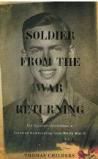
A new book paints a devastating picture of life for American veterans returning from war. "Soldier from the War Returning: The Greatest Generation's Troubled Homecoming from World War II" interweaves the stories of three families whose soldiers were, as the phrase goes, never the same after the war, and the effect that had on their families. Author Thomas Childers joins us for a Memorial Day conversation. Childers is professor of history at the University of Pennsylvania.


Book Description:
One of our most enduring national myths surrounds the men and women who fought in the so-called "Good War." The Greatest Generation, we're told by Tom Brokaw and others, fought heroically, then returned to America happy, healthy and well-adjusted. They quickly and cheerfully went on with the business of rebuilding their lives.

In this shocking and hauntingly beautiful book, historian Thomas Childers shatters that myth. He interweaves the intimate story of three families—including his own—with a decades' worth of research to paint an entirely new picture of the war's aftermath. Drawing on government documents, interviews, oral histories and diaries, he reveals that 10,000 veterans a month were being diagnosed with psycho-neurotic disorder (now known as PTSD). Alcoholism, homelessness, and unemployment were rampant, leading to a skyrocketing divorce rate. Many veterans bounced back, but their struggle has been lost in a wave of nostalgia that threatens to undermine a new generation of returning soldiers.

Novelistic in its telling and impeccably researched, Childers's book is a stark reminder that the price of war is unimaginably high. The consequences are human, not just political, and the toll can stretch across generations.


Listening to the discussion the book isn't only about the mental stress of War but also what many returned to especially right after, living conditions and much more.

I than found the following:

Was there more to the man known as ‘town drunk’?

Henry David Thoreau wrote, “Most men lead lives of quiet desperation and go to the grave with the song still in them.”
One could only guess the unsung songs of Thomas Cecil Berzett when he crawled into the back of a parked Tennison taxicab to sleep off a night of drinking on March 26, 1975, and died...........


The above is the first, apparently, of a two part report about Thomas Cecil Berzett and his life after World War II, the second to be printed tomorrow, 5.26.09.

Earlier this morning I just caught a rather short report, on the top of the hour News, about an Ohio Mental Health Center. Tried to find some more about it as it mentioned soldiers, before the the time of Vietnam and the Finally realization of what we now call PTSD, Post Traumatic Stress. All I could come up with was this short local report.

Service to honor former patient

The Ridges Cemeteries in Athens

There are nearly 2,000 former mental health patients buried at The Ridges Cemeteries in Athens and, as locals do more research, they are finding that some of the men and women buried there were courageous war heroes before entering the Athens Mental Health Center.

Records reveal a number of veterans entered mental hospital post-war.

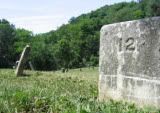
According to Tom Walker, chairman of the Ridges Cemeteries Committee, the 1,965 former patients buried at The Ridges have graves marked simply by small gravestones with numbers. He said the men and women were buried separately and given a numbered marker............


You have to be a subscriber to view the rest of the above. I do hope that what is found someone will bring out for others to read, and I'm sure similar can be found around this Nation, as well as others, to teach us much more!

And apparently this Athens Mental Health Center has quite a history, as well as being suspected of being haunted. If you do a search of it the web site links that pop up lean in that direction.

The following The Ridges Cemetery Project you can find more information, with links, about this project, along with these two audio discussions:

Click the players below to listen to a one hour Conversations from Studio B interview of NAMI member Tom Walker, by WOUB library archivist Doug McCabe (Oct 2008):

First half hour


Second half hour


Ceremony honors vets, others buried on OU's Ridges
A number of Athens residents gathered at the Ohio University Ridges’ cemeteries on Memorial Day to hold a ceremony in honor of the servicemen and servicewomen buried there.

Since 2005, these ceremonies have been held to honor the many veterans from the Mexican and Civil Wars through the Korean War who never previously received any such recognition.

Ridges Cemeteries Committee chair Tom Walker said the ceremonies the committee has been organizing are for the purpose of dignifying those buried on the Ridges, not just the vets but all 1,965.........


The more we ignore what War does the easier it is to be led into Wars of Choice by those that don't serve in them. We also need to better understand the lasting remnants of, not only for those who fight them but those that live where they take place. Leading to the understanding of what we now call Post Traumatic Stress and that it occurs to many who never serve in Wars but experience extreme Trauma Events in their lives, and live silently or lashing out on others, with the results from those events on their minds and lives.

Wednesday, May 27, 2009

PTSD's Toll on our Soldiers

'Support our troops' rings hollow when it comes to post-traumatic stress disorder

My brother, Jim, was a soldier once, but when he died, at age 53, he was long past the time when anyone called him a hero. He died alone, in poverty, alienated from family and friends, his life and death complicated by war wounds that penetrated far deeper than the pieces of shrapnel that won him his Purple Heart. Jim was a Vietnam combat engineer who survived the war but later became another kind of statistic -- a lost soul, a veteran who never recovered from his experiences.......Read Rest Here


Catherine Whitney is the author of "Soldiers Once: My Brother and the Lost Dreams of America's Veterans"

Monday, May 25, 2009

The Greatest Generation’s Troubled Homecoming {UpDated}

I had a first hand view, though very young than, and like the rest of the extended family didn't realize it, of what War does to those that serve in them, and you then have to extend that to those that live in where they occur.

I won't go into the details but to say it was an Uncle who was one of my favorites, he was a gifted craftsman but a troubled soul. He was full of life trying to live it that way, than he suddenly snapped! He died alone in the little home he built, more the size of a shed it was supposedly to become, by the lake, shortly before I left Panama and went to 'Nam. There were a couple of other uncles who showed the results of serving in WWII in other ways as well, and like the book and articles, it was just said "They cam back different then how they left.". While in 'Nam I started to understand what he might possibly had been going through, understanding what the rest of the extended family, and his friends, didn't. And probably still do, as I'm the only one of the recent branch of the family, especially my large immediate family, till a couple of younger distant cousins kids served in Gulf War I, that has served in a combat/occupation theater.

Caught a discussion of a new book on NPR's "Here and Now" and did abit of searching for some more information.

Book looks at the effects of combat stress on WWII vets

But there’s something else Gold keeps from the war that you can’t see, not unless you’re with the 88-year-old retired obstetrician in the dark of morning. That’s when his nightmares come — and he’s back in a burning bomber in which two friends were killed, or back in that German prison and starving. That’s when Gold shows his greatest WWII keepsake: post-traumatic stress disorder (PTSD). Actually it comes at other, less private times, too. Take for instance, a meal. “Don’t mess with my food,” he says...........


Technically no one during WWII or immediately after it suffered from PTSD; because it didn’t exist. The disorder wasn’t officially recognized until 1980. So before that, few sought help for something they didn’t have. They just suffered in silence............


Found the above after the discussion and book info linked below.

Memorial Day {this link brings up their player page to listen}

{You can also click here to listen with Real Player or here to listen with Windows Media Player }

A new book paints a devastating picture of life for American veterans returning from war. "Soldier from the War Returning: The Greatest Generation's Troubled Homecoming from World War II" interweaves the stories of three families whose soldiers were, as the phrase goes, never the same after the war, and the effect that had on their families. Author Thomas Childers joins us for a Memorial Day conversation. Childers is professor of history at the University of Pennsylvania.


Book Description:
One of our most enduring national myths surrounds the men and women who fought in the so-called "Good War." The Greatest Generation, we're told by Tom Brokaw and others, fought heroically, then returned to America happy, healthy and well-adjusted. They quickly and cheerfully went on with the business of rebuilding their lives.

In this shocking and hauntingly beautiful book, historian Thomas Childers shatters that myth. He interweaves the intimate story of three families—including his own—with a decades' worth of research to paint an entirely new picture of the war's aftermath. Drawing on government documents, interviews, oral histories and diaries, he reveals that 10,000 veterans a month were being diagnosed with psycho-neurotic disorder (now known as PTSD). Alcoholism, homelessness, and unemployment were rampant, leading to a skyrocketing divorce rate. Many veterans bounced back, but their struggle has been lost in a wave of nostalgia that threatens to undermine a new generation of returning soldiers.

Novelistic in its telling and impeccably researched, Childers's book is a stark reminder that the price of war is unimaginably high. The consequences are human, not just political, and the toll can stretch across generations.


Listening to the discussion the book isn't only about the mental stress of War but also what many returned to especially right after, living conditions and much more.

I than found the following:

Was there more to the man known as ‘town drunk’?

Henry David Thoreau wrote, “Most men lead lives of quiet desperation and go to the grave with the song still in them.”
One could only guess the unsung songs of Thomas Cecil Berzett when he crawled into the back of a parked Tennison taxicab to sleep off a night of drinking on March 26, 1975, and died...........


The above is the first, apparently, of a two part report about Thomas Cecil Berzett and his life after World War II, the second to be printed tomorrow, 5.26.09.

Earlier this morning I just caught a rather short report, on the top of the hour News, about an Ohio Mental Health Center. Tried to find some more about it as it mentioned soldiers, before the the time of Vietnam and the Finally realization of what we now call PTSD, Post Traumatic Stress. All I could come up with was this short local report.

Service to honor former patient

The Ridges Cemeteries in Athens

There are nearly 2,000 former mental health patients buried at The Ridges Cemeteries in Athens and, as locals do more research, they are finding that some of the men and women buried there were courageous war heroes before entering the Athens Mental Health Center.

Records reveal a number of veterans entered mental hospital post-war.

According to Tom Walker, chairman of the Ridges Cemeteries Committee, the 1,965 former patients buried at The Ridges have graves marked simply by small gravestones with numbers. He said the men and women were buried separately and given a numbered marker............


You have to be a subscriber to view the rest of the above. I do hope that what is found someone will bring out for others to read, and I'm sure similar can be found around this Nation, as well as others, to teach us much more!

And apparently this Athens Mental Health Center has quite a history, as well as being suspected of being haunted. If you do a search of it the web site links that pop up lean in that direction.

The following The Ridges Cemetery Project you can find more information, with links, about this project, along with these two audio discussions:

Click the players below to listen to a one hour Conversations from Studio B interview of NAMI member Tom Walker, by WOUB library archivist Doug McCabe (Oct 2008):

First half hour


Second half hour


Ceremony honors vets, others buried on OU's Ridges
A number of Athens residents gathered at the Ohio University Ridges’ cemeteries on Memorial Day to hold a ceremony in honor of the servicemen and servicewomen buried there.

Since 2005, these ceremonies have been held to honor the many veterans from the Mexican and Civil Wars through the Korean War who never previously received any such recognition.

Ridges Cemeteries Committee chair Tom Walker said the ceremonies the committee has been organizing are for the purpose of dignifying those buried on the Ridges, not just the vets but all 1,965.........


The more we ignore what War does the easier it is to be led into Wars of Choice by those that don't serve in them. We also need to better understand the lasting remnants of, not only for those who fight them but those that live where they take place. Leading to the understanding of what we now call Post Traumatic Stress and that it occurs to many who never serve in Wars but experience extreme Trauma Events in their lives, and live silently or lashing out on others, with the results from those events on their minds and lives.

Tuesday, February 10, 2009

"The Death Dealers took my life!"

Salon.com has a series running all this week called "Coming Home", researched and written by Mark Benjamin and Michael de Yoanna.

The following is the description and lead in information on the series:

"Coming Home" is a week long investigative series on preventable deaths at Fort Carson, a U.S. Army post in Colorado, among troops who have returned from combat tours in Iraq.

Salon national correspondent Mark Benjamin and Colorado-based journalist Michael de Yoanna reviewed more than two dozen incidents of suicide, suicide attempts, prescription drug overdoses and murder involving Fort Carson troops and examined 10 of those cases painstakingly. They interviewed troops, their families and survivors of suicide attempts, studied thousands of pages of medical and Army records and conducted a prison interview with a soldier convicted of being an accessory to the murder of one of his comrades. They learned that much of the violence could have been avoided if the Army did a better job of recognizing and treating the symptoms of PTSD.


A friend sent me the first in the series, which was posted yesterday, 2.09.09, called "The Death Dealers took my life!"

Army Pvt. Adam Lieberman attempted suicide on October 30, 2008, leaving a suicide note scrawled on the wall of his Fort Carson, Colorado barracks.

Adam Lieberman tried to kill himself when he returned from Iraq. Only then did the Army take his mental health seriously.

This is the first story in a week long series called "Coming Home." Read an introduction to the series here; see photos of Heidi Lieberman painting over her son's suicide note, and a copy of the "Hurt Feelings Report," here.


The first page of this report starts out thus:

Feb. 9, 2009 | FORT CARSON, Colo. -- The day before Halloween 2008, Army Pvt. Adam Lieberman swallowed handfuls of prescription pain pills and psychotropic drugs. Then he picked up a can of black paint and smeared onto the wall of his room in the Fort Carson barracks what he thought would be his last words to the world.

"I FACED THE ENEMY AND LIVED!" Lieberman painted on the wall in big, black letters. "IT WAS THE DEATH DEALERS THAT TOOK MY LIFE!"


With more following, about his unit, what happened, his mother and commander, leading into the second page, I am a queer; I am a little bitch; I am a cry baby; I want my mommy; All of the above. Leading to the third and final page of installment number one, "I wanted to rip her jaw off and scrape the skin off her face with her Goddamn teeth"


The second in the series comes on 2.10.09 is called "Kill yourself. Save us the paperwork":

Pfc. Ryan Alderman in Iraq in an undated photo.

Pfc. Ryan Alderman, now deceased, sought medical help from the Army. He got a fistful of powerful drugs instead.

This is part of the second installment in a week long series called "Coming Home." Read Ryan Alderman's sworn statement, written a week before his death, here, and a description of three other suicides of Fort Carson-based soldiers here. See the introduction to the series here.


The second, in this series, starts out with the following:

Feb. 10, 2009 | FORT CARSON, Colo. -- It was unseasonably warm for November in Colorado as Heidi Lieberman approached the door of the Soldiers' Memorial Chapel at Fort Carson. She walked past a few of the large evergreens that dot the chapel grounds and then entered the blockish, modern beige and brown chapel topped with a sharp, rocketlike steeple.

Inside, the chapel was hushed. Camouflage-clad, crew-cut young men packed the pews. Up in front, an empty Army helmet hung on the butt of an upright M16. A pair of brown combat boots sat below, as if they had been tucked under a bunk. A soldier handed Heidi a program for a memorial service. On the front was the image of a soldier, kneeling in prayer below an American flag and illuminated by a beacon of light from above. The inscription just below the kneeling soldier read, "Lord, grant me the strength ..."

It had been five days since Heidi's son Adam, 21, a soldier at Fort Carson, swallowed handfuls of prescription sleeping pills and psychotropic drugs in the barracks, trying to die. With a can of black paint, Adam brushed a suicide note on the wall of his room. The Army, Adam wrote, "took my life."

Adam had lived. Pfc. Timothy Ryan Alderman wasn't so lucky. Alderman had been found dead of a similar drug overdose in his room in the barracks at Fort Carson in the early-morning hours of Oct. 20, 10 days before Adam Lieberman made his suicide attempt.

Heidi, who was at Fort Carson to deal with the aftermath of her own son's suicide attempt, had decided to attend Alderman's funeral although neither she nor her son had known him. She sank into a pew and tried to reconcile two warring thoughts.


The first page leads into the second, givin this title at the bottom link to: "It looked like a slaughterhouse operation to me", which than leads to the third, "That's shitty. That breaks all the rules. He was overmedicated"

Please go over and read these two reports, than follow this extremely important series. I'll be updating this post as each days report is posted.

With the long running occupations continuing, and as the multiple tours start weighing on some of these soldiers, add on the economic problems of the country, their families sacrificing and trying to carry on a normal existence while waiting, over and over, and we're just witnessing the beginning of what may be coming!

Just as those of us who served in another long running occupation, without having to serve more than one tour, watched as our own brothers and sisters returned, never leaving behind what they had experienced nor completely returning home!

Take In A Deep Breath America


As far as suicides among active duty soldiers
and veterans of the wars in Iraq and Afghanistan
are concerned,
we in America have just seen the tip of the iceberg.
Two tours will be twice the chance of suicide.
Three tours will be triple the chance of suicide.
Four tours will be four times the chance of suicide.
These soldiers will be deleted by this country like
unwanted e-mails.
Why?
Because the American people do not support the troops.
Nobody wants to do the math.
Take in a deep breath America,
the wars are coming home to the stuffed closets of your
mind.
When you fall asleep at the wheel,
people die in your neighborhood.
Eventually,
they may die in your own home.
When I was in Vietnam toward the end of the war,
this is what I saw.
Blood on my hands,
brains in my lap.

Mike Hastie
U.S. Army Medic
Vietnam 1970-71
February 9, 2009

Sunday, January 25, 2009

That Feeling of 'Aliveness' Combat Veterans Miss Most:

Ilona Meagher, of PTSD Combat: Winning the War Within, shares with us, from her Blogspot, the writings of another blogger, a Combat Veteran, Scott Lee, a Gulf War I Veteran , who writes about his experiences with PTS and returning to civilian life after the military and combat experiences and more.

Can it Be Recaptured in Ho-Hum Civilian Life?

A powerful post by Scott Lee, a Gulf War veteran who blogs over at PTSD, A Soldier's Perspective, arrived on Friday. We Cannot Make it Through the Confines of Our Minds Without the Help of Others is so full and rich and speaks entirely to my current research that I hope he doesn't mind my reprinting it here to share with you:

I am a Gulf War I vet, I felt the same as you when I returned home from combat. For me it was the total sense of feeling alive and being a part of my squad that I missed, although I did not figure this out until after 15 years of insanity.


Ilona commented at his blog on the post, just above, by Scott, the one in the blockquotes, and it seems they are both sharing their thoughts on each others blogs for all. Ilona's is above and Scott has this Some Insights From Ilona Meagher on Presence of Mind posted at his.

The more I write here, the more blessings God gives me. Lately I have been talking with people on the national scene, some of the leading PTSD advocates. A high profile PTSD lawyer, some of the leading proponents in the veterans court movement, and authors. Such as the veteran blogger of PTSD: Winning the War Within, Ilona Meagher, who had commented on one of my latest articles. Additionally, Ilona has authored Moving A Nation to Care: Post-Traumatic Stress Disorder and America's Returning Troops. I do not think that she will mind me dropping her name (I hope).


You will find both writings informative and open.

As Ilona points out you really should read what other thoughts Scott has put out for all to read and learn from, especially for those who've never experienced the Military and especially engaging in what you train for actual Conflicts and Occupations. But it, as any writings and research about PTS, will also inform and bring to light the suffering many go through after their own traumatic experiences in their lives, PTS is not only related to Combat, War and Occupations, for the soldiers or the civilians of!

Here's a few links to Scott's recent writings:

Structural Dissociation of the Personality

Not One, But Two Stars Died to Make You

Dissociation, Fructose, Insomnia & Escape

Visit and read more of Scott's writings and thoughts at PTSD, A Soldiers Perspective

Sunday, December 28, 2008

Washington Times-PTSD-Treatments

While we'll take Any In Depth Reports about what already should have been common knowledge on Post Traumatic Stress I do have just a couple of minor irritations with an otherwise Stellar Report on the Treatments for PTSD in the Washington Times edition today. let me get them out of the way.

The report, called VA grapples with veterans' mental traumas, is a six page writeup of which one Audrey Hudson deserves alot of credit for reporting and apparently has done a few others this year as the previous link would show.

It starts out with the following:

Service members returning from Afghanistan and Iraq increasingly are suffering from mental trauma that dampens their homecomings, hobbles their re-entry into civilian life and imperils their continued military service - a situation the Department of Veterans Affairs (VA) has sought to address with treatment, counseling and even drug experimentation.

But even as the VA has worked to provide quality health care for millions of veterans at its facilities across the country, it has endured a series of failures - from not notifying test subjects about new drug warnings to ignoring safeguards during experiments. Those failures have damaged the reputation of the agency charged with supporting vulnerable veterans.

But it also has compromised the speedy recovery of those vets.

President-elect Barack Obama, who has named retired Gen. Eric K. Shinseki as incoming VA secretary, will have to deal with those long-standing discrepancies in the agency, as well as seek out new solutions to remedy the mental health problems plaguing an ever-growing population of veterans.


What I would ask is why the pointing at the incoming President Obama and his named Appointment of Gen. Shinseki to head the VA? Where is a start to this report of the total incompetence of the present administration and the republican controlled congress, who you were beating the War Drums with in the lead up to both occupations?

We know what you, and others wrote, about us Veterans, 300 to 400 strong at American University on the weekend of "Shock and Awe" for "Operation Dire Distress", where much of what the New Generation of Veterans were going to face, not only as to the occupations but Long After, was discussed, it was even televised live, all day, on C-Span.

We also know where you, the rest of the media, and the american public have been for thirty plus years on the subject of Post Traumatic Stress, Combat PTSD, you've been absent from the discussion and condemning those who either suffered from or are advocates for those suffering, as lier's, as we've tried to raise the knowledge of Post Traumatic Stress and that it isn't only some sort of Combat Theater Mental Disorder Alone, but can be brought on by any traumatic experience any individual lives through, but only in the 'Hell On Earth' of Mans Wars can it become such a debilitating result and can we learn more about and how to help.

It isn't only the media and civilian population,

"Wars are supposed to end when the last shots are fired, but some of our new veterans will unfortunately have to cope with internal demons that may last their lifetime," said Joe Davis, spokesman for the Veterans of Foreign Wars.


Mr Davis, brother vet, you're right and that score, but if you look most of us 'Nam Vets didn't join your ranks in the VFW nor the American Legion, you folks not only thought our War and Occupation wasn't a War you All have been more than a Day and a Whole Bunch of Dollars Short as to PTSD, TBI, and in recent history 'Gulf War Syndrom'! Where were your supposed strong advocacy for the Veterans as us Veterans were Fighting to be Heard!!

And great job there Washington Times:

The Washington Times has focused throughout the year on the VA and scrutinized the agency's handling of human subject drug tests using veterans, its treatment of veterans and the impact it has on service members and their families.


Five and Six years into these occupations and this sixth and seventh year You Noticed what Citizen Journalists, NPR, the Washington Post, CBS, and ABC, along with McClatchy and a few other media outfits have been Finally Reporting these last three or so years.

But at least You are now following everyones leads, why not inform FOX and Rush to take this meaningful National Subject into their folds as well!

It is a great report you have here, hitting on very important issues and care as to the Veterans of these two occupations which in their care will only help their communities and the nation, but also help the civilians who experience traumatic events in their lives and develop their own Post Traumatic Stress, and we as a Nation have the responsibility to help those citizens of the Countries we occupied and destroyed come to terms and re-build, their countries and their own Trauma's we've waged on them.

It also will increase pressure on the federal government to conduct even more questionable clinical trials on this vulnerable population to find a cure for the elusive psychological trauma.

"Despite heightened risks in trying to study drugs in a vulnerable population like recently returned vets with PTSD, the currently available treatments are not especially useful or efficacious," said Arthur Caplan, medical ethicist and director of the Center for Bioethics at the University of Pennsylvania.

"So more studies will surely be undertaken," he said. "This means those charged with human subjects protection will have to be especially vigilant."


In our already drug filled society if threating PTSD or any other development of war with more, and especially experimental, there must be a strong will as to control, oversight and warning to the patients who must know the potential possible long term dangers, we as a Nation have used Military Personal as Guinea Pigs to many times before than walked away from our National Responsibility of caring for them!

The trend likely will continue. Soldiers returning from Iraq and Afghanistan are increasingly being recruited for new experiments.

"Medical research is vital to understanding and treating such maladies, but equally important is that research subjects know what they're getting into," Mr. Davis said.

"Military veterans have already voluntarily done more for their country than virtually everyone else. They must not be used unwittingly for the sake of science," Mr. Davis said.

Drug testing on vulnerable veterans, failures by the VA to notify study participants when new drug warnings were issued and high suicide numbers among the retirees dominated the agenda of veteran support groups and Democrats on Capitol Hill this year.

Gen. Shinseki will be responsible for shaping the future of medical research conducted on veterans with PTSD and to develop new and innovative treatments including stricter ethical standards.


Once again my hats off to Audrey Hudson for a fine piece of reporting and hitting on a number of important issues. These should have been in the National Language for over thirty years, not only as to the Washington Times but all the Media and the Population, they should have been One of Many issues Discussed in Congress and the Administration in their Rush To War, With No Exit Plan For Neither Theater!

So you don't have to scroll back up to get the link I give it to you once again, a report you should read, along with all the others you might see on these subjects!

But as back in our day, Lets look at the Real Cause and the Incompetence and Neglect from those Responsible, not just pushing off the search for solutions on to someone else.

We didn't look at our years of 'Nam and what the country put the returning troops through, and we're repeating those mistakes, as to care, as to occupations, as to this false sense of being superior beings in a world of human beings!

We have a responsibility to care for those we send to invade others and that responsibility extends to the countries we invade and their innocent populations!!

Thursday, December 04, 2008

"Invisible Wounds" a Documentary and Michelle Obama

Yesterday as I was searching out a few things I came across a recent documentary that was up on the UPI site in three parts, not long but another real good look at a subject many of us, especially Veterans, have been fighting a long battle to get into the public conscious, and stuck there once in, with the realization of the hidden damages, wounds, that Wars cause to those that are sent to occupy and the occupied.


American Life TV network brought this documentary into the homes, it aired on Oct 21st at 8pm est.. The following is what is posted on their site:


“INVISIBLE WOUNDS” ADDRESSES VETERANS POST TRAUMATIC STRESS SYNDROME


Post Traumatic Stress Disorder
PTSD is an anxiety disorder that is developed after exposure to a traumatizing experience that is either physically harmful or threatening to a person. Events that cause PTSD include horrific accidents, natural disasters, personal attacks and most commonly military combat. People with this disorder usually have a difficult time controlling their emotions, feelings and thoughts. Frequently nightmares and frightening reoccurring images and memories cause people with this disorder to either feel emotionally numb or be easily startled. Following the Vietnam War, PTSD began to be seen and diagnosed much more frequently in soldiers. Since the U.S. involvement in Vietnam, the U.S. government has been reviewing whether to provide benefits and compensation to those soldiers diagnosed with PTSD. Following the entry of soldiers into Iraq and Afghanistan, the U.S. Marine Corps has instituted programs to help marines readjust to civilian life after returning from battle. In addition the Army has developed a medical program called Battlemind to aid and assist soldiers in their recovery from PTSD after their military involvement.


Below, and you can visit to watch all three parts there, is what is up over at UPI. But I bring the video's to you in the three parts with run times. They combine footage and veterans from WWII, Vietnam, and OIF/OEF Veterans along with a couple of Veterans Administration personal in discussion of PTSD.


Our Veterans: "Invisible Wounds"


A Documentary on Post-Traumatic Stress Disorder


"Invisible Wounds" is the powerful and moving documentary that portrays the suffering of combat veterans and their families from the effects of post-traumatic stress disorder (PTSD). Interviews with returning soldiers and their families bring to light the rarely discussed challenges they face back home. Further interviews with Vietnam and World War II vets add perspective to the problem, showing that it is not something new.


You can also watch all three video's at UPI site


"Invisible Wounds" Part 1 {This is about 11min long}


"Invisible Wounds" Part 2 {This is about 81/2min long}


"Invisible Wounds" Part 3 {This is 41/2min long}


Why Michelle Obama's name in the subject title, you might ask. Well we know that early on Barack Obama, the In-Coming President of these United States, though I'm beginning to wonder just how United, apparently was not only reading what was posted on the online political blogs but was also posting up his own thoughts on sites like Daily KOS, you can view his
two '05 posts here. We also know he likes his technology, so I'm only assuming here but I would think that Michelle also surfs the net and reads what others have on their minds, especially as to what the important matters are that face our Country and it's people, if not them than those who worked with them on their Campaign.


It became very clear, as Michelle traveled around the Country, that due to the two theaters of occupation this country has engaged in these last seven years that Military and Veterans Health Care and their Families were a Topic that Michelle has placed at the top of her agenda as the new First Lady of this country.


I've said it before, that with this technology, the interest in researching from us ordinary folks, combining with the ability to set up individual sites of information and thoughts, as well as sharing them with countless others on the interactive blogs, be they on specific subject material or combined with loads of other political and non political subjects, has forced what we call the main stream media outlets to start doing their own research and reporting through good ole leg work and investigative reporting.


Because of all of this a subject we Veterans have been fighting to get into the publics conscious has been Post Traumatic Stress or Combat PTSD, having little success as to the greater majority, but that has been growing rapidly these last few years. The others, concerning those of us who serve and are Advocates and Activist of, are the Veterans Health Care as well as the matters concerning the Families of those serving and those who have served.


Our success in getting these important subjects into the apathetic minds of the American Public, as well as the Worlds Populations, on matters like PTSD and TBI, seems to now have not only an ear to listen but a force to make things happen right at the top in the peoples White House in President Elect Barack Obama and his wife Michelle.


Below you will find a few of the articles about Michelle and her start of the National Dialog and Actions planned. She will need our Help, as will Barack, on not only these important issues but the many others as we try and bring this country back from the brink of falling over the cliff of total societal destruction we have been led to!


Bolster military families


Thanks to Michelle Obama, the issue of their struggles is finally getting the attention it deserves


Michelle Obama has yet to move into the White House, but she has already begun to do our country a great service by beginning a critical national conversation about the struggles of many military families.


Thanks to intense media coverage, the public knows about the very serious health problems of returning war veterans and the difficulties they face returning to the work force. But the public is far less aware of the everyday difficulties that confront so many military families - whether their service members go to war or not.


Bases brace for surge in stress-related disorders


15,000 returning from war; one base nearly doubles its mental health staff

FORT CAMPBELL, Ky. - Some 15,000 soldiers are heading home to this sprawling base after spending more than a year at war in Iraq and Afghanistan, and military health officials are bracing for a surge in brain injuries and psychological problems among those troops.


Facing prospects that one in five of the 101st Airborne Division soldiers will suffer from stress-related disorders, the base has nearly doubled its psychological health staff. Army leaders are hoping to use the base's experiences to assess the long-term impact of repeated deployments.


Michelle Obama and Military Families


The incoming first lady is poised to make veterans' affairs one of her top issues -- and we could all take a cue from her.


The experiences of vets like my cousin Lang are about to gain more prominence. In recent interviews with major media outlets -- from 60 Minutes to Glamour Magazine -- Michelle Obama has been hinting that she may use her access and power come January to improve the state of affairs for military families and veterans. When Steve Kroft of CBS asked how she would "imprint" the job of first lady, Michelle Obama responded, "Well, the thing we've learned, you know, as we've watched this campaign, is that people, women, are capable of doing more than one thing well at the same time. And I've, you know, had to juggle being mom-in-chief and having a career for a long time. The primary focus for the first year will be making sure that the kids make it through the transition. But there are many issues that I care deeply about. I care about military families."


Michelle Obama first in line to be criticized


She’ll face public scrutiny but can turn to former first ladies such as Rosalynn Carter for advice


“The primary focus for the first year will be making sure that the kids make it through the transition,” she said, sitting alongside her husband. “But there are many issues that I care deeply about.” She cited two that she focused on during the campaign: Military families and the work-family balance.


And I pass this announcement on as well, to take place this afternoon, for those who might be interested:

PTS in Military Families‏


Coming Home Project Event


Join us this Thursday, Dec. 4th 12-2pm pdt
For A Live Video Teleconference
Treating Post Traumatic Stress
in Military Families


Herbst Hall at UCSF, Mount Zion Campus
1600 Divisadero St. - 2nd floor


The impacts of war-related trauma don't reside solely in the Soldier,
Marine, Sailor, Airman or woman. Because humans are wired to
connect, the ripples radiate out and affect many, in particular those
close to the veteran: including his or her spouse, children, siblings,
parents, marital relationship, extended family, and significant others.
In this training, two experts on the dynamics of post traumatic stress
in military families and their treatment will provide a clear review that
will help us understand and treat the impacts on couples and families
of PTSD.


***
If you have questions related to the topic, you can have them
addressed on air by sending them to: Coming Home Project


Viewing options:


* In Person at UCSF,Mount Zion {NO REGISTRATION NECESSARY}


* Watch live online or on Dish Network channel 9412.


* To view past programs go to UCTV's website


Part of "Treating the Invisible Wounds of War: Iraq and Afghanistan
Veterans, Families and Care Providers" series, a collaboration among
the Coming Home Project, UCSF, and UCTV.


"Stain on America" - Much More Than Just That, Much More....

* US Interrogator in Iraq Says Torture Policy Has Led to Deaths of Thousands of American Soldiers *


We speak with a former special intelligence operations officer who led an interrogations team in Iraq two years ago. His nonviolent interrogation methods led Special Forces to Abu Musab al-Zarqawi, the head of al-Qaeda in Iraq. He has written a new book, How to Break a Terrorist: The US Interrogators Who Used Brains, Not Brutality, to Take Down the Deadliest Man in Iraq. The publication date for the book was delayed for six weeks due to the Pentagon's vetting of it. The soldier wrote it under the pseudonym, Matthew Alexander, for security reasons. He says the US military's use of torture is responsible for the deaths of thousands of US soldiers by inspiring foreign fighters to kill Americans.


Listen/Watch/Read


The Interrogator and Author was also on MSNBC last night, you can Watch The Interview Here


I'm Still Tortured by What I Saw in Iraq


I learned in Iraq that the No. 1 reason foreign fighters flocked there to fight were the abuses carried out at Abu Ghraib and Guantanamo. Our policy of torture was directly and swiftly recruiting fighters for al-Qaeda in Iraq. The large majority of suicide bombings in Iraq are still carried out by these foreigners. They are also involved in most of the attacks on U.S. and coalition forces in Iraq. It's no exaggeration to say that at least half of our losses and casualties in that country have come at the hands of foreigners who joined the fray because of our program of detainee abuse. The number of U.S. soldiers who have died because of our torture policy will never be definitively known, but it is fair to say that it is close to the number of lives lost on Sept. 11, 2001. How anyone can say that torture keeps Americans safe is beyond me -- unless you don't count American soldiers as Americans.


"A veteran is someone who,at one point in his life wrote a blank check made payable to "The United States of America" for an amount of "up to and including my life".


"that I will support and defend the Constitution of the United States against all enemies, foreign and domestic"

Friday, June 13, 2008

Fighting the Army - "NOW"

On PBS NOW Tonight 6-13-08


Of the thousands of U.S. troops getting discharged from the Army each year, many who are suffering from post traumatic stress disorder and brain injuries aren't getting the vital care they need. The Army claims these soldiers have pre-existing mental illnesses or are guilty of misconduct. But advocates say this is a way for the Army to get rid of "problem" soldiers quickly, without giving them the treatment and benefits to which they're entitled.

This week, NOW travels to Fort Hood in Texas to meet traumatized soldiers fighting a new battle, this one against the army they served. Are soldiers being wrongfully discharged for honorable service?


You can find your Local Viewing Listing here


Visit the site link above to view a few related stories you'll find in a box on the right, if you have the time before tonights airing. If time is limited visit at your leasure, information and incidents that need the public viewing to better understand and educate to the seriousness of what you may not know and aren't told!


Because this is taking place at Ft Hood Tx. it will be Carissa Picard, of Military Spouses for Change, who's husband has either left already or will shortly for a tour in Iraq, who will be discussing the personality disorder discharges and PTSD/misconduct discharges and the cases MSC has been involved in ion this weeks show.


The following comes from Medill Reports: Washington { Northwestern.edu }


Helping warriors find peace of mind


It's about a program started by psychiatrists called Give An Hour


"Give an Hour" is a network of psychiatrists hoping to change the way troops receive mental health care upon their return home


Much more is needed, and has been for a long time, but this is a good start, especially for the civilian professional, there have been some in the past but not enough , to not only try to help the soldier but to gain a better knowledge of PTSD themselves. That would help greatly in their profession in helping the civilian population that suffer through their own traumatic life experiances and develope PTSD usually suffering in silence not knowing how to explain what they've been through and how it has changed their lives forever, or being diagnosed with other trauma disorders.


And while many learn more about PTSD, Combat and Civilian, don't forget the Never Mentioned, the Trauma to those of Invasion and Occupation of their countries and what happens from those. Combat PTSD is not only suffered in the military ranks but also in those who fight the invasions and occupations of their countries, and Especially in the civilian populations of those countries!


These people Need as much Help, or more, not only in attempting to releave their suffering as well but for some how they handle what they are going through, will they lash out in retaliation, further, for what they've been forced to live through, on their own people or others, will they become radicalized beyond the extreme and create terror on others, anyone!


Think how you would feel if placed into the same hell those others are living in!


Also found at the Medill Report site is a series dedicated to the forgotten soldiers, serving their country. When we, the press, and others talk about the occupations, the fallen, the maimed, and wars, a group of this countries soldiers are rarely mention, we talk about the boys and men who serve, describing the military troops in that manner as well, rarely mentioning the Women who serve in uniform and as Honorably.


Women at War
by Melissa Schmitt

This series offers a glimpse into the lives of several women who served in the United States military -- their personal experiences of combat, of returning to civilian life, their dual roles as service member and mother, and some of the more difficult issues that women veterans face -- military sexual trauma and homelessness.


Women in our military today: an overview
by Melissa Schmitt

Women now represent 14 percent of the U.S. military, and they are playing new roles in the current conflicts in Iraq and Afghanistan. Yet little is known about the long-term effects of combat on women, and some say more services are needed for the increasing amount of women veterans who are expected to use Veterans Affairs facilites.


Wounded women warriors return home to frustration
by Melissa Schmitt

The last thing she remembers is an explosion. Years later, she's fighting other battles back at home. In a war with no true front lines, women are in the line of fire now more than ever before. But should they be there? What is military policy? And what happens to these wounded women when they get back?


Military mom takes it 'day by day' on long tour in Iraq
by Melissa Schmitt

When this Army nurse left home for a long tour as a nurse in a Green Zone hospital, the youngest of her three children wasn't even walking. When she gets back, they will be close to two years older.


Homelessness a problem for women veterans
by Melissa Schmitt

Debra Filter was looking to escape a difficult childhood, get an education and see the world when she signed up for the military. But things didn't go as planned.


A heart of gold, and purple
by Nikki Gamer

Michelle Saunders, a 34-year-old Iraq war veteran, was among the first American women to fight on the front lines. Now that she's back home, she's helping others get back on their feet and back into the workforce.


And this from CBS News


Women Vets Get Worse Care, Review Finds

Women veterans aren't receiving the same quality of outpatient care as men at many Department of Veterans Affairs' facilities, according to an agency review obtained exclusively by The Associated Press.

The review appears to validate the complaints of advocates and some members of Congress who have said the health care system needs to focus more on women's health.


Women in todays military have many more rolls than in any previous time before, many serving in Combat Situations, chopper pilots, jet pilots, participating in combat patrols........................., they are killed, wounded, develope the same mental trauma of their male counterparts and in my thinking probably more so, for women bring life into this world after carrying that life within, than are placed into the situation of war and occupation sometimes taking life to save their own and their fellow soldiers.


Visit the links above to better educate yourselves, especially you in the great majority that haven't served in the military.


And by All Means, if you receive the PBS NOW series on your local schedule, Watch Tonights Series