Showing posts with label Trauma. Show all posts

Sunday, November 01, 2009

Women at Arms: Coping with PTSD

A Combat Role, and Anguish, Too

For Vivienne Pacquette, being a combat veteran with post-traumatic stress disorder means avoiding phone calls to her sons, dinner out with her husband and therapy sessions that make her talk about seeing the reds and whites of her friends’ insides after a mortar attack in 2004.

As with other women in her position, hiding seems to make sense. Post-traumatic stress disorder distorts personalities: some veterans who have it fight in their sleep; others feel paranoid around children. And as women return to a society unfamiliar with their wartime roles, they often choose isolation over embarrassment.

Many spend months or years as virtual shut-ins, missing the camaraderie of Iraq or Afghanistan, while racked with guilt over who they have become.

Snip

Some psychiatrists say that women do better in therapy because they are more comfortable talking through their emotions, but it typically takes years for them to seek help. In interviews, female veterans with post-traumatic stress said they did not always feel their problems were justified, or would be treated as valid by a military system that defines combat as an all-male activity...>>>Rest Found Here


Women at Arms

A record number of women are coming home from war with post-traumatic stress disorder. Four years after leaving Iraq, Shalimar Bien explains her continuing struggle.


Women at Arms
The Psychological Scars

Articles in this series explore how the wars in Iraq and Afghanistan have profoundly redefined the role of women in the military.
Previous Articles in the Series


A series many should visit and read.

Monday, September 21, 2009

Children of Military Families

This is to be streamed live on Thursday, 9.24.09, at noon to two pm, 12:00 to 2:00pm pt.

Children of Military Families -- Helping Them Cope With Deployment and Trauma - UCTV

University of California Television provides informational, educational, and enrichment television programming to the public and draws upon the vast intellectual, scientific, and creative talents of the University of California.

Dr. Lieberman will explore in depth the considerable impacts on children of various ages at all stages of deployment, especially reintegration. She will explore how we can support and encourage their well being and resilience and the health of their parents and families.

Join us in person or online for this informative 2 hour training on a matter of crucial importance for all mental health professionals and all those serving our military families.

Friday, August 28, 2009

"Death was all over the place"

For those that Still don't get what War does to a Human Being, and not only those fighting, nor understand the same happens to civilians who experience extreme trauma, like the recent reports about the young girl kidnapped and now found almost two decades later, Read This Short Article!!

Friday August 28, 2009

World War II veteran can finally open up about horrific battle- "Death was all over the place"

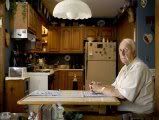
John Landry, 85, in the kitchen of his Thetford Township home, Landry fought for the NAVY in WWII as a top turret gunner and as a ground soldier in the battle of Okinawa in Japan. Landry has never talked about his experiences during the battle of Okinawa until recently, when he decided he wanted to tell his story "I didn't talk about the war because I didn't want people to hear about it, " Landry said.

He wasn't even supposed to be there.

John Landry never spoke about the island, the scattered bodies, the smell of death -- but six decades later, nightmares of one of the bloodiest battles of World War II woke him up from his sleep soaked in sweat.

"They were things I could never talk about, but it's time I told it like it was," said Landry, 85, whose buried memories began haunting him after he saw scenes of the Iraq war on television.

"I don't want to leave this world and take it with me."

Snip

"The things that went on on that island are things you never forget," Landry said. "Death was all over the place."

Except for a long time, Landry did manage to push down those memories.

Only recently have the long-blocked scenes started to come back to life.

He can suddenly see mothers clutching babies and leaping off cliffs into the water. He can see the natives fleeing into caves engulfed by fire minutes later from grenades.

"What got me was these people were trying to get away from us, and it was their island," he said. "I hadn't seen the destruction we were doing from the air. Now I'm on land and I'm seeing the bodies, the kids. I could smell burning flesh, which is something if you ever got near it, you never forget."

Snip

The father of five sons said Okinawa scenes have started coming back in bits and pieces, many times through nightmares.

"I'm lost and I can't get to where I want to be," he said of his dreams. "I think it's because I don't want to do what I have to do. I don't want to wake up in a foxhole or in the dirt."

He has finally began sharing with his family the details he had intentionally forgotten.


Many, never having problems with the realities they lived through, burying them deep in their minds, from WWII to Korea to 'Nam, and all between them, to the present past were starting to relive, in their minds,their own experiences long withheld within, as these two occupations started and continued, some right from 9/11, Our Brothers, and those the country ignores!!

Saturday, June 06, 2009

D-Day: Another Side of All Wars

Back on the 25th, of last month, for Memorial Day I put up a post to cover an interview about a new book release I caught on NPR's WBUR Here and Now, out of Boston.

While waiting for them to put up the stream link after the show I did some searching, for information on the book as well as some back information on what's covered in same.

Below you will find that post but UpDated, with a few more links and audio discussion, I've found since the posting.

Today is the Celebration for Europe and the United States of D-Day President will address veterans at American cemetery on Omaha Beach, this is not to celebrate but to Remind, and in many cases Instill in everyones minds, there's other sides, long living results, of All Wars Waged and not only for those who serve in them!

********************

The Greatest Generation’s Troubled Homecoming

I had a first hand view, though very young than, and like the rest of the extended family didn't realize it, of what War does to those that serve in them, and you then have to extend that to those that live in where they occur.

I won't go into the details but to say it was an Uncle who was one of my favorites, he was a gifted craftsman but a troubled soul. He was full of life trying to live it that way, than he suddenly snapped! He died alone in the little home he built, more the size of a shed it was supposedly to become, by the lake, shortly before I left Panama and went to 'Nam. There were a couple of other uncles who showed the results of serving in WWII in other ways as well, and like the book and articles, it was just said "They cam back different then how they left.". While in 'Nam I started to understand what he might possibly had been going through, understanding what the rest of the extended family, and his friends, didn't. And probably still do, as I'm the only one of the recent branch of the family, especially my large immediate family, till a couple of younger distant cousins kids served in Gulf War I, that has served in a combat/occupation theater.

Caught a discussion of a new book on NPR's "Here and Now" and did abit of searching for some more information.

Book looks at the effects of combat stress on WWII vets

But there’s something else Gold keeps from the war that you can’t see, not unless you’re with the 88-year-old retired obstetrician in the dark of morning. That’s when his nightmares come — and he’s back in a burning bomber in which two friends were killed, or back in that German prison and starving. That’s when Gold shows his greatest WWII keepsake: post-traumatic stress disorder (PTSD). Actually it comes at other, less private times, too. Take for instance, a meal. “Don’t mess with my food,” he says...........


Technically no one during WWII or immediately after it suffered from PTSD; because it didn’t exist. The disorder wasn’t officially recognized until 1980. So before that, few sought help for something they didn’t have. They just suffered in silence............


Found the above after the discussion and book info linked below.

Memorial Day {this link brings up their player page to listen}

{You can also click here to listen with Real Player or here to listen with Windows Media Player }

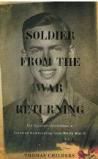
A new book paints a devastating picture of life for American veterans returning from war. "Soldier from the War Returning: The Greatest Generation's Troubled Homecoming from World War II" interweaves the stories of three families whose soldiers were, as the phrase goes, never the same after the war, and the effect that had on their families. Author Thomas Childers joins us for a Memorial Day conversation. Childers is professor of history at the University of Pennsylvania.


Book Description:
One of our most enduring national myths surrounds the men and women who fought in the so-called "Good War." The Greatest Generation, we're told by Tom Brokaw and others, fought heroically, then returned to America happy, healthy and well-adjusted. They quickly and cheerfully went on with the business of rebuilding their lives.

In this shocking and hauntingly beautiful book, historian Thomas Childers shatters that myth. He interweaves the intimate story of three families—including his own—with a decades' worth of research to paint an entirely new picture of the war's aftermath. Drawing on government documents, interviews, oral histories and diaries, he reveals that 10,000 veterans a month were being diagnosed with psycho-neurotic disorder (now known as PTSD). Alcoholism, homelessness, and unemployment were rampant, leading to a skyrocketing divorce rate. Many veterans bounced back, but their struggle has been lost in a wave of nostalgia that threatens to undermine a new generation of returning soldiers.

Novelistic in its telling and impeccably researched, Childers's book is a stark reminder that the price of war is unimaginably high. The consequences are human, not just political, and the toll can stretch across generations.


Listening to the discussion the book isn't only about the mental stress of War but also what many returned to especially right after, living conditions and much more.

I than found the following:

Was there more to the man known as ‘town drunk’?

Henry David Thoreau wrote, “Most men lead lives of quiet desperation and go to the grave with the song still in them.”
One could only guess the unsung songs of Thomas Cecil Berzett when he crawled into the back of a parked Tennison taxicab to sleep off a night of drinking on March 26, 1975, and died...........


The above is the first, apparently, of a two part report about Thomas Cecil Berzett and his life after World War II, the second to be printed tomorrow, 5.26.09.

Earlier this morning I just caught a rather short report, on the top of the hour News, about an Ohio Mental Health Center. Tried to find some more about it as it mentioned soldiers, before the the time of Vietnam and the Finally realization of what we now call PTSD, Post Traumatic Stress. All I could come up with was this short local report.

Service to honor former patient

The Ridges Cemeteries in Athens

There are nearly 2,000 former mental health patients buried at The Ridges Cemeteries in Athens and, as locals do more research, they are finding that some of the men and women buried there were courageous war heroes before entering the Athens Mental Health Center.

Records reveal a number of veterans entered mental hospital post-war.

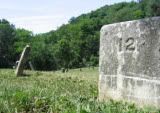
According to Tom Walker, chairman of the Ridges Cemeteries Committee, the 1,965 former patients buried at The Ridges have graves marked simply by small gravestones with numbers. He said the men and women were buried separately and given a numbered marker............


You have to be a subscriber to view the rest of the above. I do hope that what is found someone will bring out for others to read, and I'm sure similar can be found around this Nation, as well as others, to teach us much more!

And apparently this Athens Mental Health Center has quite a history, as well as being suspected of being haunted. If you do a search of it the web site links that pop up lean in that direction.

The following The Ridges Cemetery Project you can find more information, with links, about this project, along with these two audio discussions:

Click the players below to listen to a one hour Conversations from Studio B interview of NAMI member Tom Walker, by WOUB library archivist Doug McCabe (Oct 2008):

First half hour


Second half hour


Ceremony honors vets, others buried on OU's Ridges
A number of Athens residents gathered at the Ohio University Ridges’ cemeteries on Memorial Day to hold a ceremony in honor of the servicemen and servicewomen buried there.

Since 2005, these ceremonies have been held to honor the many veterans from the Mexican and Civil Wars through the Korean War who never previously received any such recognition.

Ridges Cemeteries Committee chair Tom Walker said the ceremonies the committee has been organizing are for the purpose of dignifying those buried on the Ridges, not just the vets but all 1,965.........


The more we ignore what War does the easier it is to be led into Wars of Choice by those that don't serve in them. We also need to better understand the lasting remnants of, not only for those who fight them but those that live where they take place. Leading to the understanding of what we now call Post Traumatic Stress and that it occurs to many who never serve in Wars but experience extreme Trauma Events in their lives, and live silently or lashing out on others, with the results from those events on their minds and lives.

Friday, June 05, 2009

Suicides: Military and Veterans Of

Struggling with suicide
Story by Michelle Michael


AFN's Michelle Michael takes us inside the mind of a Soldier with suicidal motives after war. Here is the story of an Army captain who is going public with her struggles for the very first time.

American Forces Network Europe

Thursday, June 04, 2009

The Unseen Wounds of War

NBC TODAY SHOW: Kerry Sanders reports on how some men and women in the armed forces battle with post-traumatic stress disorder.


Grassroots efforts to help the troops

Monday, May 25, 2009

The Greatest Generation’s Troubled Homecoming {UpDated}

I had a first hand view, though very young than, and like the rest of the extended family didn't realize it, of what War does to those that serve in them, and you then have to extend that to those that live in where they occur.

I won't go into the details but to say it was an Uncle who was one of my favorites, he was a gifted craftsman but a troubled soul. He was full of life trying to live it that way, than he suddenly snapped! He died alone in the little home he built, more the size of a shed it was supposedly to become, by the lake, shortly before I left Panama and went to 'Nam. There were a couple of other uncles who showed the results of serving in WWII in other ways as well, and like the book and articles, it was just said "They cam back different then how they left.". While in 'Nam I started to understand what he might possibly had been going through, understanding what the rest of the extended family, and his friends, didn't. And probably still do, as I'm the only one of the recent branch of the family, especially my large immediate family, till a couple of younger distant cousins kids served in Gulf War I, that has served in a combat/occupation theater.

Caught a discussion of a new book on NPR's "Here and Now" and did abit of searching for some more information.

Book looks at the effects of combat stress on WWII vets

But there’s something else Gold keeps from the war that you can’t see, not unless you’re with the 88-year-old retired obstetrician in the dark of morning. That’s when his nightmares come — and he’s back in a burning bomber in which two friends were killed, or back in that German prison and starving. That’s when Gold shows his greatest WWII keepsake: post-traumatic stress disorder (PTSD). Actually it comes at other, less private times, too. Take for instance, a meal. “Don’t mess with my food,” he says...........


Technically no one during WWII or immediately after it suffered from PTSD; because it didn’t exist. The disorder wasn’t officially recognized until 1980. So before that, few sought help for something they didn’t have. They just suffered in silence............


Found the above after the discussion and book info linked below.

Memorial Day {this link brings up their player page to listen}

{You can also click here to listen with Real Player or here to listen with Windows Media Player }

A new book paints a devastating picture of life for American veterans returning from war. "Soldier from the War Returning: The Greatest Generation's Troubled Homecoming from World War II" interweaves the stories of three families whose soldiers were, as the phrase goes, never the same after the war, and the effect that had on their families. Author Thomas Childers joins us for a Memorial Day conversation. Childers is professor of history at the University of Pennsylvania.


Book Description:
One of our most enduring national myths surrounds the men and women who fought in the so-called "Good War." The Greatest Generation, we're told by Tom Brokaw and others, fought heroically, then returned to America happy, healthy and well-adjusted. They quickly and cheerfully went on with the business of rebuilding their lives.

In this shocking and hauntingly beautiful book, historian Thomas Childers shatters that myth. He interweaves the intimate story of three families—including his own—with a decades' worth of research to paint an entirely new picture of the war's aftermath. Drawing on government documents, interviews, oral histories and diaries, he reveals that 10,000 veterans a month were being diagnosed with psycho-neurotic disorder (now known as PTSD). Alcoholism, homelessness, and unemployment were rampant, leading to a skyrocketing divorce rate. Many veterans bounced back, but their struggle has been lost in a wave of nostalgia that threatens to undermine a new generation of returning soldiers.

Novelistic in its telling and impeccably researched, Childers's book is a stark reminder that the price of war is unimaginably high. The consequences are human, not just political, and the toll can stretch across generations.


Listening to the discussion the book isn't only about the mental stress of War but also what many returned to especially right after, living conditions and much more.

I than found the following:

Was there more to the man known as ‘town drunk’?

Henry David Thoreau wrote, “Most men lead lives of quiet desperation and go to the grave with the song still in them.”
One could only guess the unsung songs of Thomas Cecil Berzett when he crawled into the back of a parked Tennison taxicab to sleep off a night of drinking on March 26, 1975, and died...........


The above is the first, apparently, of a two part report about Thomas Cecil Berzett and his life after World War II, the second to be printed tomorrow, 5.26.09.

Earlier this morning I just caught a rather short report, on the top of the hour News, about an Ohio Mental Health Center. Tried to find some more about it as it mentioned soldiers, before the the time of Vietnam and the Finally realization of what we now call PTSD, Post Traumatic Stress. All I could come up with was this short local report.

Service to honor former patient

The Ridges Cemeteries in Athens

There are nearly 2,000 former mental health patients buried at The Ridges Cemeteries in Athens and, as locals do more research, they are finding that some of the men and women buried there were courageous war heroes before entering the Athens Mental Health Center.

Records reveal a number of veterans entered mental hospital post-war.

According to Tom Walker, chairman of the Ridges Cemeteries Committee, the 1,965 former patients buried at The Ridges have graves marked simply by small gravestones with numbers. He said the men and women were buried separately and given a numbered marker............


You have to be a subscriber to view the rest of the above. I do hope that what is found someone will bring out for others to read, and I'm sure similar can be found around this Nation, as well as others, to teach us much more!

And apparently this Athens Mental Health Center has quite a history, as well as being suspected of being haunted. If you do a search of it the web site links that pop up lean in that direction.

The following The Ridges Cemetery Project you can find more information, with links, about this project, along with these two audio discussions:

Click the players below to listen to a one hour Conversations from Studio B interview of NAMI member Tom Walker, by WOUB library archivist Doug McCabe (Oct 2008):

First half hour


Second half hour


Ceremony honors vets, others buried on OU's Ridges
A number of Athens residents gathered at the Ohio University Ridges’ cemeteries on Memorial Day to hold a ceremony in honor of the servicemen and servicewomen buried there.

Since 2005, these ceremonies have been held to honor the many veterans from the Mexican and Civil Wars through the Korean War who never previously received any such recognition.

Ridges Cemeteries Committee chair Tom Walker said the ceremonies the committee has been organizing are for the purpose of dignifying those buried on the Ridges, not just the vets but all 1,965.........


The more we ignore what War does the easier it is to be led into Wars of Choice by those that don't serve in them. We also need to better understand the lasting remnants of, not only for those who fight them but those that live where they take place. Leading to the understanding of what we now call Post Traumatic Stress and that it occurs to many who never serve in Wars but experience extreme Trauma Events in their lives, and live silently or lashing out on others, with the results from those events on their minds and lives.

Tuesday, May 12, 2009

Issue of the Day

From 5.11.09

Fragging!!

Another Deja-Vu 'Nam Hits the Present Occupations!!!

U.S. service member kills 4 fellow troops in Iraq - GI in custody after killing 5 at Iraq ‘stress clinic’
Contrary to earlier reports, military says soldier did not kill self after attack


With a Report from McClatchy on the shooting

From 5.12.09

Baghdad killings reflect U.S. Army stress crisis

The tragedy at Camp Liberty, near Baghdad, where an American soldier shot and killed five U.S. personnel and wounded three others, has been at least six years in the making.......


This, video below, accompanies the above report from UPI and really shows that though the citizens of this country like to cheer on Wars of Choice they still haven't a clue as to how War affects those sent and those living in occupations. As well as traumatic experiences they themselves may live and how that affects them and others. The video is also at site page.


Also From 5.12.09

Father of Soldier in Iraq 'Fratricide' Case Speaks, Reveals Key Details

Referring to the treatment of his son at the stress clinic where the shootings took place, Russell said, “They don’t do the best job of taking care of the soldiers, both in the service and when they get out of the service, we know that. They use them.” He added: “They broke him. He thought his life was over.”

He also confirmed a report that his son was disarmed and sent away from the stress clinic after a “rhubarb” with others there, only to take a gun from a minder and return for the deadly shootout.

The father, of Grayson County, Texas, told KTEN TV, in the raw video posted at the station’s web site, that after the “rhubarb” they put Sgt. Russell “in a vehicle with a guy with a gun, and, well -- they'd trained him to kill -- and he took a gun” and returned to the clinic..........

Watch the Video


Some may find these books very helpful, others should find to be useful in the educational quality of understanding and research, and not only for combat veterans but civilian suffers of:

I Can Still Hear Their Cries, Even In My Sleep: A Journey Into PTSD

Veterans's PTSD Handbook: How to File and Collect on Claims for Post-Traumatic Stress Disorder

The War Comes Home: Washington's Battle against America's Veterans

Vets Under Siege: How America Deceives and Dishonors Those Who Fight Our Battles

After the War Zone: A Practical Guide for Returning Troops and Their Families

Life After Deployment: Military families share reunion stories and advice

Moving A Nation to Care: Post-Traumatic Stress Disorder and America's Returning Troops

Friday, March 27, 2009

Military offers many options for those in social work

Ilona Meagers Book is mentioned and being used!!

For Chelsea Tanous, a sophomore social work major and member of the Army ROTC, Young's speech exemplified what she would like to do in the future.

"I've never talked to someone who's done social work in the military," said Tanous. "It's something I've only read about in books. This is what I could do potentially so it was great to hear it firsthand."

Martha Ortmann, professor of sociology at UNH, has made the social work issues of the military the forefront of her classes. She used "Moving a Nation to Care: Post-Traumatic Stress Disorder and America's Returning Troops" by Ilona Meagher to illustrate the need for social workers in and around the military. According to Ortmann, the need is stronger than ever.

Sunday, March 22, 2009

Iraqi Children: Bearing the Scars of War

With just one child psychiatrist working at a government hospital, Iraq’s healthcare system is unprepared for the treatment of its children — many of whom suffer from post traumatic stress disorder (PTSD) from the long-running war. Middle East Times International correspondent César Chelala investigates this pressing issue.

The great number of Iraqi children affected by post traumatic stress disorder (PTSD) is one of the saddest, and least known, legacies of the Iraq war.

That a new clinic for their treatment — opened last August in Baghdad — is the first of its kind says a lot about how this problem is being addressed.

>>>Read Rest Here>>>

Thursday, March 19, 2009

Military Suicides: Senate Hearing 3.18.09

DoD Addressing Military Suicides

Chairman Ben Nelson (D-NE) is holding a Senate Armed Services Personnel Subcmte. hearing examining suicide prevention programs in each of the armed services. Defense Dept. representatives are discussing areas for improvement of access to mental health care and other initiatives that might help reduce military suicides.


This will bring up their Video Page of the Hearing

Sunday, January 25, 2009

That Feeling of 'Aliveness' Combat Veterans Miss Most:

Ilona Meagher, of PTSD Combat: Winning the War Within, shares with us, from her Blogspot, the writings of another blogger, a Combat Veteran, Scott Lee, a Gulf War I Veteran , who writes about his experiences with PTS and returning to civilian life after the military and combat experiences and more.

Can it Be Recaptured in Ho-Hum Civilian Life?

A powerful post by Scott Lee, a Gulf War veteran who blogs over at PTSD, A Soldier's Perspective, arrived on Friday. We Cannot Make it Through the Confines of Our Minds Without the Help of Others is so full and rich and speaks entirely to my current research that I hope he doesn't mind my reprinting it here to share with you:

I am a Gulf War I vet, I felt the same as you when I returned home from combat. For me it was the total sense of feeling alive and being a part of my squad that I missed, although I did not figure this out until after 15 years of insanity.


Ilona commented at his blog on the post, just above, by Scott, the one in the blockquotes, and it seems they are both sharing their thoughts on each others blogs for all. Ilona's is above and Scott has this Some Insights From Ilona Meagher on Presence of Mind posted at his.

The more I write here, the more blessings God gives me. Lately I have been talking with people on the national scene, some of the leading PTSD advocates. A high profile PTSD lawyer, some of the leading proponents in the veterans court movement, and authors. Such as the veteran blogger of PTSD: Winning the War Within, Ilona Meagher, who had commented on one of my latest articles. Additionally, Ilona has authored Moving A Nation to Care: Post-Traumatic Stress Disorder and America's Returning Troops. I do not think that she will mind me dropping her name (I hope).


You will find both writings informative and open.

As Ilona points out you really should read what other thoughts Scott has put out for all to read and learn from, especially for those who've never experienced the Military and especially engaging in what you train for actual Conflicts and Occupations. But it, as any writings and research about PTS, will also inform and bring to light the suffering many go through after their own traumatic experiences in their lives, PTS is not only related to Combat, War and Occupations, for the soldiers or the civilians of!

Here's a few links to Scott's recent writings:

Structural Dissociation of the Personality

Not One, But Two Stars Died to Make You

Dissociation, Fructose, Insomnia & Escape

Visit and read more of Scott's writings and thoughts at PTSD, A Soldiers Perspective

Saturday, December 27, 2008

Beneath A Brave Soldier's Suicide

Military Struggles With Response To PTSD

Dec. 26, 2008 CBS Evening News: Beneath A Brave Solider's Suicide, Cracks In the Mental Health System

The Pentagon says 1 in 5 service members who come home from Iraq or Afghanistan suffer from post-traumatic stress.

Some find their experiences too much to bear. There were 115 military suicides last year, and 93 through just August of this year.

The biggest obstacle to getting those numbers down may be the military culture itself, reports CBS News correspondent Kimberly Dozier.

First Sergeant Jeff McKinney was a model soldier, a newlywed, and a new father.

Now, his family says, he's a casualty of war. Two wars really: the war in Iraq, where he served honorably, and the war within the military over how to deal with post-traumatic stress disorder.


"He needed help and nobody helped him," Chrissy McKinney said. "And that's the reason why he died."


Resources: One Freedom
Creating reintegration solutions for our military service members, families and communities.

Thursday, December 11, 2008

Multiple Tours, and Not From A Soldier

CNN’s Prisoner of War

Michael Ware's Tortured World:
"I Am Not The Same Fucking Person"


"I am not the same fucking person," he tells me. "I am not the same person. I don't know how to come home."

It's October, six months after our first meeting, and Michael Ware, 39, is at his girlfriend's apartment in New York, trying to tell me why after six years he absolutely must start spending less time in Iraq. He's crying on the other end of the telephone.


Click to keep reading (server may be down, but check back because it's a must-read).

Friday, December 05, 2008

Diary of a Suicide: Iraq Veteran

For two years Jason Ermer fought to make it home from Iraq. Last New Year’s Eve, he gave up.


It was just after midnight on Dec. 31, 2007, and bitterly cold outside, when two Ogden police officers knocked on the door of Jason Ermer’s home.

Earlier that night, Danny Murchie, an addictions counselor at the U.S. Department of Veteran’s Affairs (VA) Salt Lake City office, had called Ogden police and asked for a courtesy check on Ermer, his 28-year-old client, a recent Iraq war veteran. Murchie had talked with Ermer and feared he might harm himself.

When no one answered at the Ermer home, police followed footprints in the snow a few blocks into the Ogden Canyon foothills. Near a large boulder, a man’s body lay in the snow, blood pooling near his head. His breathing was slow and gargly.


But Jason was scarcely the same man who had enlisted three and a half years earlier. He brought back to Utah constant pain from a parachuting injury to his neck and lower back, a growing addiction to painkillers and Iraq-fueled nightmares that wouldn’t let him sleep at night. One particularly graphic flashback plagued him—the last terrified look of an Iraqi child, who fell beneath the wheels of a Humvee Jason was driving near Mosul.


When he could hardly function anymore, Jason’s family says, he voluntarily entered the VA system for treatment. But the VA, after helping him with counseling, ultimately added insult to his injuries. In the early hours of Thanksgiving Day 2007, staff members suspected the confused veteran was high. In the emergency room, Jason later told his parents, he was held down and forcibly catheterized by several nurses and security personnel to obtain a urine sample for a drug test. His parents later obtained medical records from the VA that confirmed Jason’s story. The test, his parents add, came back negative. “Now I know what a woman feels like being raped,” he told his wife afterwards in tears. One month later, Jason was dead.


Jason was buried in frozen ground in Roy City Cemetery on Jan. 5, 2008. A military honor guard attended. As the last notes of Taps faded away under an overcast sky, two soldiers picked up the corners of the American flag draped over the casket and folded it into a triangle. A third pressed it to his chest, tucking in the edges. He knelt down before Brandi, then gave her the flag. She broke down in tears as Jason’s parents looked on.
Graveside service video below, provided by family


RIP Brother Jason, RIP


Read The Diary Here

Thursday, December 04, 2008

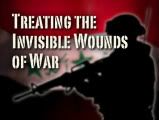
"Invisible Wounds" a Documentary and Michelle Obama

Yesterday as I was searching out a few things I came across a recent documentary that was up on the UPI site in three parts, not long but another real good look at a subject many of us, especially Veterans, have been fighting a long battle to get into the public conscious, and stuck there once in, with the realization of the hidden damages, wounds, that Wars cause to those that are sent to occupy and the occupied.


American Life TV network brought this documentary into the homes, it aired on Oct 21st at 8pm est.. The following is what is posted on their site:


“INVISIBLE WOUNDS” ADDRESSES VETERANS POST TRAUMATIC STRESS SYNDROME


Post Traumatic Stress Disorder
PTSD is an anxiety disorder that is developed after exposure to a traumatizing experience that is either physically harmful or threatening to a person. Events that cause PTSD include horrific accidents, natural disasters, personal attacks and most commonly military combat. People with this disorder usually have a difficult time controlling their emotions, feelings and thoughts. Frequently nightmares and frightening reoccurring images and memories cause people with this disorder to either feel emotionally numb or be easily startled. Following the Vietnam War, PTSD began to be seen and diagnosed much more frequently in soldiers. Since the U.S. involvement in Vietnam, the U.S. government has been reviewing whether to provide benefits and compensation to those soldiers diagnosed with PTSD. Following the entry of soldiers into Iraq and Afghanistan, the U.S. Marine Corps has instituted programs to help marines readjust to civilian life after returning from battle. In addition the Army has developed a medical program called Battlemind to aid and assist soldiers in their recovery from PTSD after their military involvement.


Below, and you can visit to watch all three parts there, is what is up over at UPI. But I bring the video's to you in the three parts with run times. They combine footage and veterans from WWII, Vietnam, and OIF/OEF Veterans along with a couple of Veterans Administration personal in discussion of PTSD.


Our Veterans: "Invisible Wounds"


A Documentary on Post-Traumatic Stress Disorder


"Invisible Wounds" is the powerful and moving documentary that portrays the suffering of combat veterans and their families from the effects of post-traumatic stress disorder (PTSD). Interviews with returning soldiers and their families bring to light the rarely discussed challenges they face back home. Further interviews with Vietnam and World War II vets add perspective to the problem, showing that it is not something new.


You can also watch all three video's at UPI site


"Invisible Wounds" Part 1 {This is about 11min long}


"Invisible Wounds" Part 2 {This is about 81/2min long}


"Invisible Wounds" Part 3 {This is 41/2min long}


Why Michelle Obama's name in the subject title, you might ask. Well we know that early on Barack Obama, the In-Coming President of these United States, though I'm beginning to wonder just how United, apparently was not only reading what was posted on the online political blogs but was also posting up his own thoughts on sites like Daily KOS, you can view his
two '05 posts here. We also know he likes his technology, so I'm only assuming here but I would think that Michelle also surfs the net and reads what others have on their minds, especially as to what the important matters are that face our Country and it's people, if not them than those who worked with them on their Campaign.


It became very clear, as Michelle traveled around the Country, that due to the two theaters of occupation this country has engaged in these last seven years that Military and Veterans Health Care and their Families were a Topic that Michelle has placed at the top of her agenda as the new First Lady of this country.


I've said it before, that with this technology, the interest in researching from us ordinary folks, combining with the ability to set up individual sites of information and thoughts, as well as sharing them with countless others on the interactive blogs, be they on specific subject material or combined with loads of other political and non political subjects, has forced what we call the main stream media outlets to start doing their own research and reporting through good ole leg work and investigative reporting.


Because of all of this a subject we Veterans have been fighting to get into the publics conscious has been Post Traumatic Stress or Combat PTSD, having little success as to the greater majority, but that has been growing rapidly these last few years. The others, concerning those of us who serve and are Advocates and Activist of, are the Veterans Health Care as well as the matters concerning the Families of those serving and those who have served.


Our success in getting these important subjects into the apathetic minds of the American Public, as well as the Worlds Populations, on matters like PTSD and TBI, seems to now have not only an ear to listen but a force to make things happen right at the top in the peoples White House in President Elect Barack Obama and his wife Michelle.


Below you will find a few of the articles about Michelle and her start of the National Dialog and Actions planned. She will need our Help, as will Barack, on not only these important issues but the many others as we try and bring this country back from the brink of falling over the cliff of total societal destruction we have been led to!


Bolster military families


Thanks to Michelle Obama, the issue of their struggles is finally getting the attention it deserves


Michelle Obama has yet to move into the White House, but she has already begun to do our country a great service by beginning a critical national conversation about the struggles of many military families.


Thanks to intense media coverage, the public knows about the very serious health problems of returning war veterans and the difficulties they face returning to the work force. But the public is far less aware of the everyday difficulties that confront so many military families - whether their service members go to war or not.


Bases brace for surge in stress-related disorders


15,000 returning from war; one base nearly doubles its mental health staff

FORT CAMPBELL, Ky. - Some 15,000 soldiers are heading home to this sprawling base after spending more than a year at war in Iraq and Afghanistan, and military health officials are bracing for a surge in brain injuries and psychological problems among those troops.


Facing prospects that one in five of the 101st Airborne Division soldiers will suffer from stress-related disorders, the base has nearly doubled its psychological health staff. Army leaders are hoping to use the base's experiences to assess the long-term impact of repeated deployments.


Michelle Obama and Military Families


The incoming first lady is poised to make veterans' affairs one of her top issues -- and we could all take a cue from her.


The experiences of vets like my cousin Lang are about to gain more prominence. In recent interviews with major media outlets -- from 60 Minutes to Glamour Magazine -- Michelle Obama has been hinting that she may use her access and power come January to improve the state of affairs for military families and veterans. When Steve Kroft of CBS asked how she would "imprint" the job of first lady, Michelle Obama responded, "Well, the thing we've learned, you know, as we've watched this campaign, is that people, women, are capable of doing more than one thing well at the same time. And I've, you know, had to juggle being mom-in-chief and having a career for a long time. The primary focus for the first year will be making sure that the kids make it through the transition. But there are many issues that I care deeply about. I care about military families."


Michelle Obama first in line to be criticized


She’ll face public scrutiny but can turn to former first ladies such as Rosalynn Carter for advice


“The primary focus for the first year will be making sure that the kids make it through the transition,” she said, sitting alongside her husband. “But there are many issues that I care deeply about.” She cited two that she focused on during the campaign: Military families and the work-family balance.


And I pass this announcement on as well, to take place this afternoon, for those who might be interested:

PTS in Military Families‏


Coming Home Project Event


Join us this Thursday, Dec. 4th 12-2pm pdt
For A Live Video Teleconference
Treating Post Traumatic Stress
in Military Families


Herbst Hall at UCSF, Mount Zion Campus
1600 Divisadero St. - 2nd floor


The impacts of war-related trauma don't reside solely in the Soldier,
Marine, Sailor, Airman or woman. Because humans are wired to
connect, the ripples radiate out and affect many, in particular those
close to the veteran: including his or her spouse, children, siblings,
parents, marital relationship, extended family, and significant others.
In this training, two experts on the dynamics of post traumatic stress
in military families and their treatment will provide a clear review that
will help us understand and treat the impacts on couples and families
of PTSD.


***
If you have questions related to the topic, you can have them
addressed on air by sending them to: Coming Home Project


Viewing options:


* In Person at UCSF,Mount Zion {NO REGISTRATION NECESSARY}


* Watch live online or on Dish Network channel 9412.


* To view past programs go to UCTV's website


Part of "Treating the Invisible Wounds of War: Iraq and Afghanistan
Veterans, Families and Care Providers" series, a collaboration among
the Coming Home Project, UCSF, and UCTV.


"Stain on America" - Much More Than Just That, Much More....

* US Interrogator in Iraq Says Torture Policy Has Led to Deaths of Thousands of American Soldiers *


We speak with a former special intelligence operations officer who led an interrogations team in Iraq two years ago. His nonviolent interrogation methods led Special Forces to Abu Musab al-Zarqawi, the head of al-Qaeda in Iraq. He has written a new book, How to Break a Terrorist: The US Interrogators Who Used Brains, Not Brutality, to Take Down the Deadliest Man in Iraq. The publication date for the book was delayed for six weeks due to the Pentagon's vetting of it. The soldier wrote it under the pseudonym, Matthew Alexander, for security reasons. He says the US military's use of torture is responsible for the deaths of thousands of US soldiers by inspiring foreign fighters to kill Americans.


Listen/Watch/Read


The Interrogator and Author was also on MSNBC last night, you can Watch The Interview Here


I'm Still Tortured by What I Saw in Iraq


I learned in Iraq that the No. 1 reason foreign fighters flocked there to fight were the abuses carried out at Abu Ghraib and Guantanamo. Our policy of torture was directly and swiftly recruiting fighters for al-Qaeda in Iraq. The large majority of suicide bombings in Iraq are still carried out by these foreigners. They are also involved in most of the attacks on U.S. and coalition forces in Iraq. It's no exaggeration to say that at least half of our losses and casualties in that country have come at the hands of foreigners who joined the fray because of our program of detainee abuse. The number of U.S. soldiers who have died because of our torture policy will never be definitively known, but it is fair to say that it is close to the number of lives lost on Sept. 11, 2001. How anyone can say that torture keeps Americans safe is beyond me -- unless you don't count American soldiers as Americans.


"A veteran is someone who,at one point in his life wrote a blank check made payable to "The United States of America" for an amount of "up to and including my life".


"that I will support and defend the Constitution of the United States against all enemies, foreign and domestic"

Monday, November 24, 2008

Special Thanksgiving Message: {2008}

Thousands of Soldiers are no longer with us but especially with their families, this or any coming Thanksgivings!


As of 11-25-2008:


U.S.: Iraq Confirmed Deaths Reported Deaths: 4205 Confirmed Deaths: 4203 Pending Confirmation: 2


U.S.: Afghanistan Confirmed Deaths 629


This message comes from the family of only one soldier who did come back, but not the same as when he left, and will not be celebrating Thanksgiving or any other Holidays with his family, but is certainly not forgotten.


This soldier, and many more, numbers unknown because no one counts them, are still War Casualties but not in the numbers listed above.


The 'Special Thanksgiving Message' comes from his Mom and Dad, Kevin & Joyce Lucey, about their son, Cpl. Jeffrey Michael Lucey, a 23 year old USMC reservist and Iraq conflict veteran.


As the Lucey's say in the beginning there is alot to found about their son on the internet, as many will find there also is about many of those who served in our recent conflicts, Wars of Choice, I'll just give a couple of links.


Jeffrey M Lucey


'Something happened to Jeff'

Jeff Lucey returned from Iraq a changed man. Then he killed himself.


Now to the Special Message, in it's entirety, as posted on the Veterans for Common Sense site:


Jeffrey Lucey and the Urgent Need for Mental Healthcare for All Our Veterans


November 23, 2008 - This is the story of our son, Jeffrey Michael Lucey. This will be a brief account of what happened to him - especially after his return from the Iraq War.

There is so much about him on the internet under his name. This is why we will keep this brief.

Jeffrey Michael Lucey was born on March 18, 1981. He was our only son and our middle child - having an older sister and a younger sister. He was your average everyday boy. As he grew up, Jeffrey began to love to play sports, being a clown as well as a little rascal and imp. Jeffrey was a risk taker as well as being popular and industrious in school - at least in elementary and middle school. The first three years of high school was when he discovered girls and the social life but he was able to pull it togther during his senior year and graduated. He then went on to attend Holyoke Community College but that was interrupted by his joining the USMC reserve unit in December, 1999; then going off to Boot Camp in late May, 2000; finally returning on November 9, 2000 and then being assigned to his unit in New Haven, Ct.. Jeffrey's life was then further interrupted once more by the War.

Jeffrey being a convoy driver then participated in the invasion the day after his birthday and returned home July 13, 2003 - physically unscathed but mortally wounded. He returned to college. He was to have graduated on June 5, 2004 but weeks before he found himself in the throes of dealing with the hidden wounds of the trauma of War. Regretfully, Jeffrey never did graduate.

In letters other than the ones Jeffrey sent to us while he was in Iraq, Jeffrey described doing immoral things and wishing that the past month ( April of 2003 ) of his life never happened - that he had done things which he had only seen in the movies, ect.

Despite some distance when Jeffrey initially came home, we were unaware of issues other than what we were told would be some re-adjustment back to civilian life.

The first strong clue occurred on December 24, 2003, when Jeffrey, having asked to stay home from Christmas Eve activities, talked to his younger sister while he was crying and drinking and told her that he was nothing more than a murderer - tossing his and other dogtags at her. Yet later that evening and the next day, Jeffrey appearred fine.

During the intervening months, Jeffrey appeared to be drinking more and had some episodes but then things seem to explode. Another issue which came to light was Jeffrey's daily vomiting ever since he had returned. We sent him to the Doctor and they were going to schedule some medical tests. We came to find out later that that could have been caused by those hidden wounds.

It was in the middle of March, 2004 around school vacation, his birthday and the anniversary of the War that Jeffrey's downward spiral truly began

From mid-March through June 22, 2004, Jeffrey's life became a struggle and the symptoms appeared to explode - appearing to fluctuate in intensity and frequency. It was as if a beast was gnawing and gnashing at Jeffrey's very essence and ripping chunks out of his spirit ... his soul ... his being. There were moments that Jeffrey appeared to be quiet only to discover that in the silence, he had been screaming from the pain - horrible screams of pain that no one heard. Jeffrey slept little, ate little, was so restless, hypervigilant, confused angry frustrated isolated in his mind wracked with guilt sadness depression rage, panicked, desperate, hopeless, overwhelmed, rageful, wanting to talk and yet at the same time wanting to be silent. He wanted help but thought that no one could understand but even worse - especially after going to the VA twice - that no one cared. Being totally aware of stigma and fearful of being judged by those who could never understand, Jeffrey felt trapped as he slowly made his descent into his private hell.

As a family, we were also descending into our own hell - feeling totally powerless, helpless, desperate. We begged him to go to get help ... to go to the VA who were the experts having dealt with this country's veterans over a hundred years and a number of wars. Yet STIGMA prevented him from reaching out and trying to save himself - for you see, to seek help meant to him that you are weak and that was not acceptable. We were overwhelmed and then struggling with a mutated form of our own trauma due to trying to deal with the chaos and the raging storm of Jeffrey and his present world.

We were finally able to bring him to the VA only to have that fail so miserably. His experience there made him refuse to go back - feeling that he was treated as a prisoner - not as a veteran; being put on a ward with older veterans suffering from a number of issues not similar to his; not being seen by counselors or therapists - not being helped; feeling warehoused; not being assessed for his real issue but their simply focusing on a symptom - alcohol; ect. This should have never been.

After being turned away from the professionals, it made us doubt ourselves - were we just parents overreacting. They would never turn someone away who really was in danger - would they? It gave us a false sense of security and safety. From our perspective - they were the angels who would embrace and help Jeffrey through all this that we did not understand. Yet they turned him away. Then no one ever called so it must be that we were thinking with a parents' hearts and not being objective enough.

Jeffrey had so many mixed feelings - for he was expecting to be returned to Iraq. There were times that he was ready to go back to Iraq with his unit and then other times when he could not.

With all these factors and more involved, Jeffrey's spiral continued to go downward until he crashed. Jeffrey did stop drinking the week before he died. All of us tried to get him help - Joyce called the VA and stated that we were watching our son die slowly in front of us; Jeffrey called the Vet Center and made an appointment for the following Friday which we kept. They sent us home with the idea that they would come to the house three times per week until they could find a bed. He couldn't be as bad as we feared - could he?

When I came home from work on Monday, June 21, 2004, Jeffrey was pacing through the house in a total rage - ranting about the government, the war, the oil issue, ect.. He then spoke about suicide. I called the Vet Center not only once but twice. After talking with the staff, Jeffrey was in a better place and we had a relatively good night. About 11:30 pm, for the second time within the last ten days, Jeffrey asked me if he could sit in my lap. For the second time, I rocked him in my lap - this time for about 45 minutes. Then we walked to his room and he went to bed.

The next time I held him in my lap was the very next night, on June 22, 2004, as I lowered him from the beam and unwrapped the hose from around his neck - the first time that he looked at peace in months. He finally escaped the pain at his own hand. On June 22nd, the VA sent a notice setting up an appointment for Jeffrey who was in such a crisis for approximately three weeks later.

Few have spoken out; many have not.

It is simply not right - to allow the traumatized troops and veterans to suffer in such a tortured way and such a horrible death; for the loved ones to descend into the depths of a hell known only to a few... it is simply not right.

As many sit around their holiday tables full of festive cheer, let us hope that, even for a brief moment, some will remember that somewhere in this nation there is a family that will have to confront the reality that the smiles, laughter and joking of the loved one / veteran /troop is now replaced by the empty chair and a trembling toast to all that was and that which could have been. and which will never be.

Kevin & Joyce Lucey, the proud parents of Cpl. Jeffrey Michael Lucey, a 23 year old USMC reservist forever succumbed to the hidden wounds of PTSD.

03/18/81 -------- 06/22/04


To learn more about Jeffery listen to his parents as they tell the World about what their son went through in his last days:


WINTER SOLDIER: KEVIN and JOYCE LUCEY (1 of 2)


WINTER SOLDIER: KEVIN and JOYCE LUCEY (2 of 2)


RIP Jeffery and all our Brothers and Sisters, RIP!

Monday, November 10, 2008

MoJo: The Pentagon's PTSD Denial

How killing scars soldiers—and their loved ones.

In the spring of 2002, an Army major named Peter Kilner submitted an unusual essay to Military Review, a journal published by the Combined Arms Center in Fort Leavenworth, Kansas. Kilner argued that combat leaders have an obligation to justify the killing their soldiers do. "Soldiers who kill reflexively in combat will likely one day reconsider their actions reflectively," he wrote. "If they are unable to justify to themselves that they killed another human being, they will likely, and understandably, suffer enormous guilt" that could balloon into post-traumatic stress disorder (ptsd). Top brass who ignored the issue, he concluded, were "treating their soldiers as commodities, not as persons."


SNIP: Read Rest Here

Saturday, November 01, 2008

New PTSD Brochure

'Transmission of Trauma' Can Span Generations

The NAMI brochure includes the following sections:

* Psychological Trauma & PTSD
* Risk Factors for Developing PTSD
* The Neurobiology of PTSD
* What is PTSD?
* PTSD & Co-Occurring Disorders
* Combat Veterans & Trauma
* Children & Trauma
* Trauma & the Mental Health System
* Family Impact of PTSD
* Recovery and Coping
* Treatment for PTSD
* Medications
* Resources, including Family-to-Family Education and NAMI Connection programs.

NAMI is the nation's largest grassroots organization dedicated to improving the lives of individuals and families affected by serious mental illnesses.

SOURCE National Alliance on Mental Illness

Further New Research & Study Materials:

Haunted by Combat: Understanding PTSD in War Veterans Including Women, Reservists, and Those Coming Back from Iraq

“Including empirical research and anecdotal prose and poetry about combat veterans, this book discusses post-traumatic stress disorder among war veterans and present debates about diagnoses. Paulson and Krippner also... Read more

War Trauma: Lessons Unlearned, From Vietnam to Iraq

As a clinical psychologist and veteran of the War in Iraq, I can assure you that my review of the current literature has been extensive. To date, nothing published contains such extraordinary real world relevance as that... Read more

Packing Inferno: The Unmaking of a Marine

Tyler E. Boudreau is a twelve-year veteran of the Marine Corps infantry. He trained and committed himself physically and intellectually to the military life. Then his intense devotion began to disintegrate, bit by bit, during his final mission in Iraq. After returning home, he discovered a turmoil developing in his mind, estranging him from his loved ones and the bill of goods he eagerly purchased as a marine officer.... Read more