Showing posts with label World War II. Show all posts

Thursday, November 05, 2009

"THE GOOD SOLDIER"

On November 6, 2009, the JOURNAL broadcasts THE GOOD SOLDIER, a film which follows four veterans — one from World War II, two from Vietnam, and the fourth from Iraq — as they reveal how the experiences of battle changed their lives. Watch a preview below.

Premier:


November 6th PBS Bill Moyers Journal {visit the Journal Link as it has more backlinks for Veterans.}

As America prepares to observe Veterans Day and President Obama weighs sending more troops to fight in Afghanistan, BILL MOYERS JOURNAL broadcasts a powerful documentary about the impact on soldiers of learning to kill – or be killed. THE GOOD SOLDIER follows four veterans – one from World War II, two from Vietnam, and the fourth from Iraq – as they reveal how the experiences of battle changed their lives.

Find out more about the film and theatrical release locations and dates at The Good Soldier

"THE GOOD SOLDIER" Trailer:

Saturday, June 06, 2009

D-Day: Another Side of All Wars

Back on the 25th, of last month, for Memorial Day I put up a post to cover an interview about a new book release I caught on NPR's WBUR Here and Now, out of Boston.

While waiting for them to put up the stream link after the show I did some searching, for information on the book as well as some back information on what's covered in same.

Below you will find that post but UpDated, with a few more links and audio discussion, I've found since the posting.

Today is the Celebration for Europe and the United States of D-Day President will address veterans at American cemetery on Omaha Beach, this is not to celebrate but to Remind, and in many cases Instill in everyones minds, there's other sides, long living results, of All Wars Waged and not only for those who serve in them!

********************

The Greatest Generation’s Troubled Homecoming

I had a first hand view, though very young than, and like the rest of the extended family didn't realize it, of what War does to those that serve in them, and you then have to extend that to those that live in where they occur.

I won't go into the details but to say it was an Uncle who was one of my favorites, he was a gifted craftsman but a troubled soul. He was full of life trying to live it that way, than he suddenly snapped! He died alone in the little home he built, more the size of a shed it was supposedly to become, by the lake, shortly before I left Panama and went to 'Nam. There were a couple of other uncles who showed the results of serving in WWII in other ways as well, and like the book and articles, it was just said "They cam back different then how they left.". While in 'Nam I started to understand what he might possibly had been going through, understanding what the rest of the extended family, and his friends, didn't. And probably still do, as I'm the only one of the recent branch of the family, especially my large immediate family, till a couple of younger distant cousins kids served in Gulf War I, that has served in a combat/occupation theater.

Caught a discussion of a new book on NPR's "Here and Now" and did abit of searching for some more information.

Book looks at the effects of combat stress on WWII vets

But there’s something else Gold keeps from the war that you can’t see, not unless you’re with the 88-year-old retired obstetrician in the dark of morning. That’s when his nightmares come — and he’s back in a burning bomber in which two friends were killed, or back in that German prison and starving. That’s when Gold shows his greatest WWII keepsake: post-traumatic stress disorder (PTSD). Actually it comes at other, less private times, too. Take for instance, a meal. “Don’t mess with my food,” he says...........


Technically no one during WWII or immediately after it suffered from PTSD; because it didn’t exist. The disorder wasn’t officially recognized until 1980. So before that, few sought help for something they didn’t have. They just suffered in silence............


Found the above after the discussion and book info linked below.

Memorial Day {this link brings up their player page to listen}

{You can also click here to listen with Real Player or here to listen with Windows Media Player }

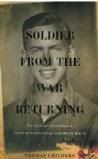
A new book paints a devastating picture of life for American veterans returning from war. "Soldier from the War Returning: The Greatest Generation's Troubled Homecoming from World War II" interweaves the stories of three families whose soldiers were, as the phrase goes, never the same after the war, and the effect that had on their families. Author Thomas Childers joins us for a Memorial Day conversation. Childers is professor of history at the University of Pennsylvania.


Book Description:
One of our most enduring national myths surrounds the men and women who fought in the so-called "Good War." The Greatest Generation, we're told by Tom Brokaw and others, fought heroically, then returned to America happy, healthy and well-adjusted. They quickly and cheerfully went on with the business of rebuilding their lives.

In this shocking and hauntingly beautiful book, historian Thomas Childers shatters that myth. He interweaves the intimate story of three families—including his own—with a decades' worth of research to paint an entirely new picture of the war's aftermath. Drawing on government documents, interviews, oral histories and diaries, he reveals that 10,000 veterans a month were being diagnosed with psycho-neurotic disorder (now known as PTSD). Alcoholism, homelessness, and unemployment were rampant, leading to a skyrocketing divorce rate. Many veterans bounced back, but their struggle has been lost in a wave of nostalgia that threatens to undermine a new generation of returning soldiers.

Novelistic in its telling and impeccably researched, Childers's book is a stark reminder that the price of war is unimaginably high. The consequences are human, not just political, and the toll can stretch across generations.


Listening to the discussion the book isn't only about the mental stress of War but also what many returned to especially right after, living conditions and much more.

I than found the following:

Was there more to the man known as ‘town drunk’?

Henry David Thoreau wrote, “Most men lead lives of quiet desperation and go to the grave with the song still in them.”
One could only guess the unsung songs of Thomas Cecil Berzett when he crawled into the back of a parked Tennison taxicab to sleep off a night of drinking on March 26, 1975, and died...........


The above is the first, apparently, of a two part report about Thomas Cecil Berzett and his life after World War II, the second to be printed tomorrow, 5.26.09.

Earlier this morning I just caught a rather short report, on the top of the hour News, about an Ohio Mental Health Center. Tried to find some more about it as it mentioned soldiers, before the the time of Vietnam and the Finally realization of what we now call PTSD, Post Traumatic Stress. All I could come up with was this short local report.

Service to honor former patient

The Ridges Cemeteries in Athens

There are nearly 2,000 former mental health patients buried at The Ridges Cemeteries in Athens and, as locals do more research, they are finding that some of the men and women buried there were courageous war heroes before entering the Athens Mental Health Center.

Records reveal a number of veterans entered mental hospital post-war.

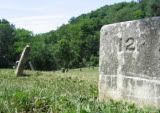
According to Tom Walker, chairman of the Ridges Cemeteries Committee, the 1,965 former patients buried at The Ridges have graves marked simply by small gravestones with numbers. He said the men and women were buried separately and given a numbered marker............


You have to be a subscriber to view the rest of the above. I do hope that what is found someone will bring out for others to read, and I'm sure similar can be found around this Nation, as well as others, to teach us much more!

And apparently this Athens Mental Health Center has quite a history, as well as being suspected of being haunted. If you do a search of it the web site links that pop up lean in that direction.

The following The Ridges Cemetery Project you can find more information, with links, about this project, along with these two audio discussions:

Click the players below to listen to a one hour Conversations from Studio B interview of NAMI member Tom Walker, by WOUB library archivist Doug McCabe (Oct 2008):

First half hour


Second half hour


Ceremony honors vets, others buried on OU's Ridges
A number of Athens residents gathered at the Ohio University Ridges’ cemeteries on Memorial Day to hold a ceremony in honor of the servicemen and servicewomen buried there.

Since 2005, these ceremonies have been held to honor the many veterans from the Mexican and Civil Wars through the Korean War who never previously received any such recognition.

Ridges Cemeteries Committee chair Tom Walker said the ceremonies the committee has been organizing are for the purpose of dignifying those buried on the Ridges, not just the vets but all 1,965.........


The more we ignore what War does the easier it is to be led into Wars of Choice by those that don't serve in them. We also need to better understand the lasting remnants of, not only for those who fight them but those that live where they take place. Leading to the understanding of what we now call Post Traumatic Stress and that it occurs to many who never serve in Wars but experience extreme Trauma Events in their lives, and live silently or lashing out on others, with the results from those events on their minds and lives.

Monday, May 25, 2009

The Greatest Generation’s Troubled Homecoming {UpDated}

I had a first hand view, though very young than, and like the rest of the extended family didn't realize it, of what War does to those that serve in them, and you then have to extend that to those that live in where they occur.

I won't go into the details but to say it was an Uncle who was one of my favorites, he was a gifted craftsman but a troubled soul. He was full of life trying to live it that way, than he suddenly snapped! He died alone in the little home he built, more the size of a shed it was supposedly to become, by the lake, shortly before I left Panama and went to 'Nam. There were a couple of other uncles who showed the results of serving in WWII in other ways as well, and like the book and articles, it was just said "They cam back different then how they left.". While in 'Nam I started to understand what he might possibly had been going through, understanding what the rest of the extended family, and his friends, didn't. And probably still do, as I'm the only one of the recent branch of the family, especially my large immediate family, till a couple of younger distant cousins kids served in Gulf War I, that has served in a combat/occupation theater.

Caught a discussion of a new book on NPR's "Here and Now" and did abit of searching for some more information.

Book looks at the effects of combat stress on WWII vets

But there’s something else Gold keeps from the war that you can’t see, not unless you’re with the 88-year-old retired obstetrician in the dark of morning. That’s when his nightmares come — and he’s back in a burning bomber in which two friends were killed, or back in that German prison and starving. That’s when Gold shows his greatest WWII keepsake: post-traumatic stress disorder (PTSD). Actually it comes at other, less private times, too. Take for instance, a meal. “Don’t mess with my food,” he says...........


Technically no one during WWII or immediately after it suffered from PTSD; because it didn’t exist. The disorder wasn’t officially recognized until 1980. So before that, few sought help for something they didn’t have. They just suffered in silence............


Found the above after the discussion and book info linked below.

Memorial Day {this link brings up their player page to listen}

{You can also click here to listen with Real Player or here to listen with Windows Media Player }

A new book paints a devastating picture of life for American veterans returning from war. "Soldier from the War Returning: The Greatest Generation's Troubled Homecoming from World War II" interweaves the stories of three families whose soldiers were, as the phrase goes, never the same after the war, and the effect that had on their families. Author Thomas Childers joins us for a Memorial Day conversation. Childers is professor of history at the University of Pennsylvania.


Book Description:
One of our most enduring national myths surrounds the men and women who fought in the so-called "Good War." The Greatest Generation, we're told by Tom Brokaw and others, fought heroically, then returned to America happy, healthy and well-adjusted. They quickly and cheerfully went on with the business of rebuilding their lives.

In this shocking and hauntingly beautiful book, historian Thomas Childers shatters that myth. He interweaves the intimate story of three families—including his own—with a decades' worth of research to paint an entirely new picture of the war's aftermath. Drawing on government documents, interviews, oral histories and diaries, he reveals that 10,000 veterans a month were being diagnosed with psycho-neurotic disorder (now known as PTSD). Alcoholism, homelessness, and unemployment were rampant, leading to a skyrocketing divorce rate. Many veterans bounced back, but their struggle has been lost in a wave of nostalgia that threatens to undermine a new generation of returning soldiers.

Novelistic in its telling and impeccably researched, Childers's book is a stark reminder that the price of war is unimaginably high. The consequences are human, not just political, and the toll can stretch across generations.


Listening to the discussion the book isn't only about the mental stress of War but also what many returned to especially right after, living conditions and much more.

I than found the following:

Was there more to the man known as ‘town drunk’?

Henry David Thoreau wrote, “Most men lead lives of quiet desperation and go to the grave with the song still in them.”
One could only guess the unsung songs of Thomas Cecil Berzett when he crawled into the back of a parked Tennison taxicab to sleep off a night of drinking on March 26, 1975, and died...........


The above is the first, apparently, of a two part report about Thomas Cecil Berzett and his life after World War II, the second to be printed tomorrow, 5.26.09.

Earlier this morning I just caught a rather short report, on the top of the hour News, about an Ohio Mental Health Center. Tried to find some more about it as it mentioned soldiers, before the the time of Vietnam and the Finally realization of what we now call PTSD, Post Traumatic Stress. All I could come up with was this short local report.

Service to honor former patient

The Ridges Cemeteries in Athens

There are nearly 2,000 former mental health patients buried at The Ridges Cemeteries in Athens and, as locals do more research, they are finding that some of the men and women buried there were courageous war heroes before entering the Athens Mental Health Center.

Records reveal a number of veterans entered mental hospital post-war.

According to Tom Walker, chairman of the Ridges Cemeteries Committee, the 1,965 former patients buried at The Ridges have graves marked simply by small gravestones with numbers. He said the men and women were buried separately and given a numbered marker............


You have to be a subscriber to view the rest of the above. I do hope that what is found someone will bring out for others to read, and I'm sure similar can be found around this Nation, as well as others, to teach us much more!

And apparently this Athens Mental Health Center has quite a history, as well as being suspected of being haunted. If you do a search of it the web site links that pop up lean in that direction.

The following The Ridges Cemetery Project you can find more information, with links, about this project, along with these two audio discussions:

Click the players below to listen to a one hour Conversations from Studio B interview of NAMI member Tom Walker, by WOUB library archivist Doug McCabe (Oct 2008):

First half hour


Second half hour


Ceremony honors vets, others buried on OU's Ridges
A number of Athens residents gathered at the Ohio University Ridges’ cemeteries on Memorial Day to hold a ceremony in honor of the servicemen and servicewomen buried there.

Since 2005, these ceremonies have been held to honor the many veterans from the Mexican and Civil Wars through the Korean War who never previously received any such recognition.

Ridges Cemeteries Committee chair Tom Walker said the ceremonies the committee has been organizing are for the purpose of dignifying those buried on the Ridges, not just the vets but all 1,965.........


The more we ignore what War does the easier it is to be led into Wars of Choice by those that don't serve in them. We also need to better understand the lasting remnants of, not only for those who fight them but those that live where they take place. Leading to the understanding of what we now call Post Traumatic Stress and that it occurs to many who never serve in Wars but experience extreme Trauma Events in their lives, and live silently or lashing out on others, with the results from those events on their minds and lives.

Tuesday, March 24, 2009

"Uncle Charlie's War"

He came home in 1947 suffering from shell shock. Laurica says her grandmother talked about how "the war made my son crazy." Uncle Charlie wandered off into the woods and did other things that scared people.


Greensboro, NC -- This is the story of a World War II veteran and his family who is desperately trying to get him home. We have come to know him as Uncle Charlie. He was lost in the system for years. Now his family wants to bring him back to North Carolina, but no one can seem to help, not the Veterans Administration or even a US Congressman.

Sunday, May 25, 2008

Ilona meet Ilana, Ilana meet Ilona - Combat PTSD Research

Teen PTSD researcher Ilana Rice


Why do I get the feeling you two are destined to meet? And by all means don't change your first names!


Many already know Ilona Meagher, many have worked with her, and she posts on many of these boards, when not the busy young lady she's become with her dedication to her new found much needed cause as she joined many of us who had already been trying to get others to pay attention to. She has done wonders, as have all those who joined her from ePluribus Media, in their research and their PTSD, and other, Timelines which are used by many.


For those who don't know Ilona, I won't go into a book writing here, she's done enough in a short few years that could turn into a personal history book, already, but will say that she hosts her own well visited site PTSD Combat: Winning the War Within and she has written a great referance book Moving A Nation to Care: Post-Traumatic Stress Disorder and America's Returning Troops


Visit her site to find out more about this remarkable young woman if you hadn't before.


This post is an introduction, not only to Ilona about Ilana but for all to meet, to what seems to be another remarkable young lady, a very young lady with a growing dedication beyond her years.


Yesterday, 5-24-08, I had NPR on while driving back from getting some work done on my van. Weekend America was on and in the second hour of the show, when I caught "PTSD Research" and I thought "Ilona" as the name given, had the radio down low as my cell had rang. Thought that Ilona was being interviewed and hadn't told anyone about it, than I heard the voice, it seemed much younger and not how Ilona sounded, as we've heard her being interviewed before. Than the name was said again and it was Ilana.


As soon as I got home I brought up the Weekend America site.


This was the title of this short interview and report Teen Researcher Targets PTSD Treatment


A New York researcher hopes that veterans of the current wars in Iraq and Afghanistan won't take decades to work through their Post-Traumatic Stress Disorder (PTSD) issues. Maybe her youth as something to do with her impatience -- Ilana Rice is only 16.
For the past year and a half, she's been studying how relationships can help heal PTSD. The high school junior hopes her study will help fill in the gaps in the research about the disease.
She became interested in the subject through her mother's work as a psychologist at a Veteran's hospital. Weekend America's Desiree Cooper asked Ilana to describe the focus of her study:


She has a unique approach to her PTSD research and study, through relationships, and a very intelligent approach I might add, she really has paid attention watching and listening to her mother.


Ilana, why are you interested in PTSD?
When I was younger, my mom is actually a VA psychologist. So that's why I've become so passionate about Post-Traumatic Stress Disorder in combat veterans. I used to send them Veteran Day cards every year, and some of them saw these cards and offered to meet me. And I've known some of them for many years and when I got older, someone of them shared their stories with me.


I love it when a youngster says "when I was younger", but in this case she's is matured well beyond her young years, with it seems more understanding than the majority of adults who think they are adult.


How hard has it been to find people to fill out the questionnaire?
That has been the single most difficult part of this project. I think it's... a lot of it has to do with the fact that I am a high school student. My resources are not that extensive. I'm really working with a lot of local organizations when it comes to actually finding people. Originally I was looking only at the most current Iraq and Afghanistan veterans, and there are simply not enough of them to fill out a questionnaire so my study would be valid and that my data would be accepted. So I had to expand it to include Vietnam vets, veterans of the Korean War, Desert Storm, as well as the two most recent conflicts in Iraq and Afghanistan. And it's also very difficult to find people who have non-veteran romantic partners who are married to or living with them. Sometimes these partners don't want to fill out the survey.


These are but a few cuts of a short important interview, there's abit more at the subject link as well as backtrack links to important PTSD information.


At the bottom, in case some might miss it, you'll find this:


If you are interested in participating in Ilana Rice's study, please Click Here to fill out our contact form.


To Listen to the podcast visit the site link


Earlier they had another report on, that is equally important and also on the subject of PTSD, but this one is covering the Combat Vets of the past before Vietnam.


Decades Later, Haunted by PTSD


Leslie Martin, at the head of the table, is director of PTSD Outpatient Services for Los Angeles Veterans Affairs. She runs the support group for older vets with PTSD. Here she is with "her guys," as she affectionately calls them.
Credit: Krissy Clark


A white cap, gray trousers and a navy-blue jacket, pinned with medals -- that's what Don LaFond will be wearing this weekend when he attends a Memorial Day ceremony in Los Angeles. He goes every year, and he always wears his Purple Heart.
Don earned that medal in World War II in the battle for Saipan. He showed incredible courage -- but also fear:
"You never know where the bullets coming from -- over here, over here, coming overhead. Like mortar shells, bombs, artillery. You're frightened. Anybody who says they're not afraid when they go into combat, they're a big... they're a liar, you know."
Don is 84 years old, and like many veterans of his generation, he has never been too open with his emotions about the war -- until recently. Now, he talks about them every Friday, in a support group for older vets. Weekend America's Krissy Clark dropped in on them:


Every one of these men is in his 70s or 80s. Every one fought in a war that ended more than a half century ago. And every one has been living with strange symptoms since then: constant nightmares, anxiety, emotional numbness. Most of these men had never given the collection of feelings a name. They've discovered recently it is called Post Traumatic Stress Disorder, or PTSD.
"I'm 84-years-old now, and all this stuff happened when I was in my early 20s," LaFond says. "It makes you wonder, gee whiz, if it will ever leave your mind."


We could have been much more advanced in treating PTSD once it was finally taken for the serious result of War after Vietnam if the Nation had paid much moree attention to those Veterans who took up the cause and Especially the civilians, to few in numbers, who recognized how serious it is and how common to Veterans of all conflicts. The advancements would have been felt worldwide and understood in the civilian population of those who live through traumatic life events and develope their own PTSD, suffering in silence!


The Veteran's Administration now estimates one in 20 veterans of World War II -- the "good" war -- probably have symptoms similar to LaFond's and probably suffer from PTSD. The numbers are vague, because most older vets were never diagnosed.


Sometimes Martin asks herself why now, after all these years? She thinks there are two main triggers. First, retirement: Men who long buried their war traumas under work and responsibilities have more time to dwell on old fears. Second, because we're at war again now. "It's everywhere," Martin says. "There are movies about it, it's on television." And it brings things up again for her guys.


"Not too many people know that I come to meetings," he says. "People think it's a weakness. I don't want to be classified as such. Macho thing, I guess." But Medina says he does have fewer nightmares since he's come to meetings.


To listen to this podcast visit the site link


There's abit more at the site visit and read, you won't be sorry, it isn't long but it is powerful and informative, especially those who have returned, are still there, or in rotation for another tour In-Country. These two present day conflicts OIF and OEF, and especially with the multiple tours and stop loss, I fear will cause even greater problems for the individuals, their families, their communities as well as the Nation if we all don't step up and give the care promised, for All related War injuries, physical and mental!


We will have many more stories like this, Iraq put his life on the trigger


But the carousing masked Morris' troubled state. His PTSD was so severe, his friends said, that he couldn't sleep. He had terrifying visions of people he had killed in combat.

Morris showed his friends horrific photos from Iraq -- "people with their heads blowed off . . . guts ripped out on barbed wire . . . bullet holes in every piece of body," said a friend, Dustin Newton.

Sometimes, friends said, Morris would show the photos and laugh.


Video Presentations and More


Picking Up the Pieces

With Jane Pauley
Meet the families of wounded veterans of the wars in Iraq and Afghanistan. Soldiers' loved ones are making inspiring and often shocking sacrifices to care for them. Jane Pauley talks to some family members and also interviews ABC News anchor Bob Woodruff and his wife, Lee, who share their personal story of recovery and healing.


When Wounded Vets Come Home

Hosted by Sheliah Kast
Families of veterans disabled in Iraq and Afghanistan are becoming their primary caregivers, and support from the federal government and the military is, in many cases, woefully inadequate. "Inside E Street" visits families, talks to members of Congress, the Wounded Warrior Project, and Veterans of Foreign Wars about the challenges these servicemen and women and their loved ones face.


Resources for Family Caregivers of Vets

Numerous organizations and agencies provide assistance to Iraq- and Afghanistan-era veterans and their families.


And Much More


And from NPR Morning Edition:
Army Hospitals Struggle to Stop Drug Overdoses

Eleven medications were found in Nichols' body, including painkillers to treat his physical wounds from an explosion in Iraq and drugs to ease the nightmares, insomnia and memory loss caused by his post-traumatic stress disorder and traumatic brain injury.
You can listen here

Tuesday, April 15, 2008

Still fighting war stress:

VA granting more first-time disability claims to veterans in their 80s than ever before

They beat Hitler, turned back the tide of Japanese imperialism and when the war ended, returned to civilian life to forge careers and raise families while seemingly unfazed by the horrors of combat many witnessed.

As World War II veterans have aged, and reflected on the dreadful experiences of war and carnage, more and more exhibited the symptoms of a malady unheard of when they went off to battle 65 years ago: post traumatic stress disorder.


Download and Listen to Report

Read the rest of the Report Here

Watch a Short Video with Report